

Stem Cell Activity in Hair Follicles: Why Regrowth Potential Declines in Women
Hair follicles are not static structures. They rely on a small but powerful population of stem cells that decide whether hair grows, pauses, or disappears over time. When these stem cells function well, hair renews itself naturally. When they slow down, regrowth potential drops, even if follicles are still present.
In women, this decline often begins quietly. Hair does not vanish overnight. Instead, it grows slower, thinner, and shorter with each cycle. Understanding why this happens requires looking at stem cell behaviour rather than surface-level hair care.
Hair Follicle Stem Cells Are the Real Growth Switch
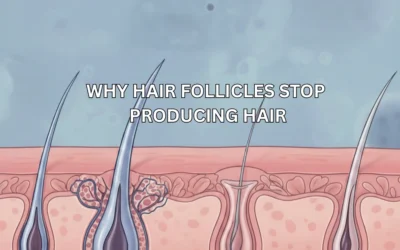
Every hair follicle contains a reserve of stem cells located in a protected region near the root. These cells do not produce hair directly. Instead, they send activation signals that tell the follicle when to enter a growth phase.
When stem cell signalling is strong, hair cycles restart efficiently. When signalling weakens, follicles remain inactive longer between cycles.
Hair loss in many women is not caused by follicle death, but by stem cells that have become inactive or unresponsive.
Why Stem Cell Activity Declines in Women
Stem cell performance depends on its surrounding environment. Several factors gradually interfere with this environment in women.
Hormonal fluctuations alter cellular messaging and reduce activation signals. Chronic stress disrupts communication between stem cells and surrounding tissue. Reduced scalp circulation limits oxygen delivery. Inflammation changes the chemical balance around follicles. Nutrient depletion weakens cellular energy production.
None of these destroy follicles outright. Instead, they place stem cells into a low-activity state.
Age Is Not the Only Trigger
Many women assume stem cell decline is purely age-related. In reality, biological ageing of the scalp often begins earlier than expected.
Women in their 20s and 30s can experience reduced stem cell responsiveness due to lifestyle pressure, hormonal suppression, repeated stress cycles, or prolonged inflammation. This is why thinning can begin early even when genetics are not severe.
Chronological age matters less than cellular environment.
Why Hair Grows Back Thinner Each Time
When stem cells are partially active, follicles restart growth but at reduced capacity. Each cycle produces a finer strand than the previous one.
This leads to:
• shorter growth length
• reduced shaft thickness
• slower visible regrowth
• difficulty maintaining density
Over time, hair appears weaker even though follicles are still alive.
Why Traditional Hair Products Cannot Fix This
Shampoos, oils, and supplements work on the surface or bloodstream. Stem cells respond to local biological signals within the scalp.
Without direct stimulation:
• inactive stem cells remain dormant
• follicles stay in prolonged rest
• regrowth potential continues to decline
This is why many women see no improvement despite consistent hair care routines.
Regenerative Treatments That Reactivate Stem Cell Signalling
To restore regrowth potential, treatments must communicate directly with the follicle environment.
PRP for Hair: PRP delivers growth signals that help reawaken stem cell activity and restart hair cycling in suppressed follicles.
GFC Hair Therapy: GFC provides a more concentrated regenerative signal, supporting stem cell responsiveness when decline has persisted longer.
Exosome Therapy: Exosomes assist cellular communication by delivering biological instructions that guide stem cells back toward active behaviour.
Vitamin Injections: Stem cells require high metabolic energy. Targeted vitamin delivery supports the internal processes that allow activation to occur.
IV Drip Therapy: IV therapy supports cellular hydration and micronutrient balance, creating a healthier environment for stem cell recovery.
Does Reduced Stem Cell Activity Mean Hair Cannot Return?
No. Reduced activity is not the same as loss. Stem cells can remain dormant for long periods and still respond when conditions improve.
Early intervention restores signalling before follicles permanently miniaturise.
If regrowth feels stalled and nothing seems to work, chat now for a personalised assessment to help identify whether stem cell suppression is the underlying issue.
Conclusion
Hair regrowth in women depends less on the presence of follicles and more on the activity of follicle stem cells. When these cells lose their ability to activate properly, hair becomes thinner, slower, and harder to regrow.
By restoring the scalp environment and cellular communication, regrowth potential can return.
Cosmeticstar in Leeds offers advanced regenerative hair treatments designed to reactivate follicle stem cell signalling and support long-term hair health.
GDPR Notice: All treatments comply with GDPR standards. Personal data is handled securely. Clicking the WhatsApp chat link redirects you externally. Please review our Privacy Policy.
Disclaimer: This content is for educational purposes only and does not replace professional medical advice. Always consult a qualified practitioner before starting treatment.
FAQ
Q: Can hair follicles exist but fail to regrow hair?
A: Yes, follicles can remain present while stem cell activity is suppressed.
Q: Does thinning always mean follicles are dead?
A: No, many follicles are inactive rather than destroyed.
Q: Can stress affect stem cell behaviour?
A: Yes, prolonged stress can reduce stem cell responsiveness.
Q: Do regenerative treatments target stem cells directly?
A: They support the signalling environment stem cells rely on.
Q: Is stem cell-related hair thinning reversible?
A: In many cases, yes, when treated before long-term miniaturisation occurs.
0 Comments