

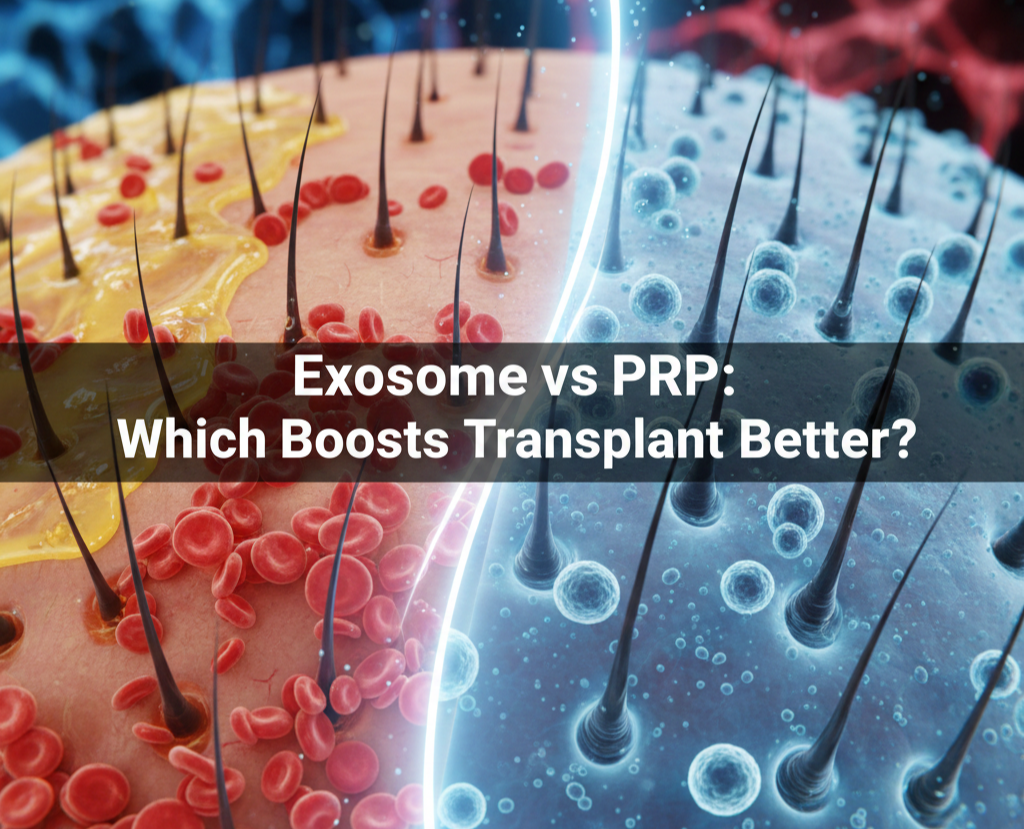
Exosome therapy in Leeds shows stronger signals for post-transplant tissue repair and immune modulation than PRP, when quality control, timing, and patient condition are appropriate. Exosomes carry microRNAs, proteins, and lipids that help modulate inflammation and support vascular integration, potentially improving early graft tolerance. PRP offers growth factors to accelerate healing but can vary with preparation and timing. Consider clinic expertise, access, and monitoring requirements; more on how to choose and optimize your plan ahead.
Exosome Therapy in Leeds: Do You Have a Clear Post-Transplant Choice?

Exosome therapy in Leeds raises a key question for patients weighing post-transplant options: do you have a clear, evidence-based choice between exosomes and traditional therapies? You seek certainty that your post-transplant plan harmonizes with verified data, safety profiles, and practical access. In Leeds, exosome therapy presents a targeted option grounded in regenerative science, with potential to support tissue repair and immune modulation. You’ll compare it to conventional approaches, weighing mechanism claims, trial outcomes, and risk considerations. This discussion centers on accessibility, clinician expertise, and patient-centered care that cultivates belonging and informed participation. Consider how exosome therapy, Leeds, integrates with your travel, costs, and monitoring needs. When exploring options, ask for transparent data, treatment plans, and follow-up protocols. prp therapy, Leeds remains a relevant comparator in your decision-making.
How Exosome Therapy Works After Transplants in Leeds
How does exosome therapy function after transplantation in Leeds? You’re guided by a mechanism that uses extracellular vesicles to modulate inflammation and promote repair signals. After transplant, exosomes carry microRNAs, proteins, and lipids that influence recipient cells, potentially supporting vascular integration and immune tolerance. In practice, delivery aims to support wound healing timelines without adding excessive immune activation, aligning with exosome safety principles. You’ll find that potency depends on product quality, timing, and patient condition. When considering combination approaches, prp timing may be chosen to complement sequential signaling without duplicating effects. Evidence suggests improved microenvironment conditions at the graft site, though benefits vary by individual factors and procedure type. You seek trustworthy, technically grounded care within a community that values safety, precision, and shared outcomes.
How PRP Therapy Supports Healing After Transplants in Leeds
PRP therapy supports healing after transplants by delivering a concentrated mix of platelets and growth factors directly to the graft site, aiming to accelerate tissue repair whereas modulating inflammation. In Leeds, you’ll find post transplant prp protocols designed to support tissue integration and reduce recovery time while aligning with your broader care plan. This approach complements existing regimens and keeps you at the center of the recovery journey, fostering a sense of belonging within the patient community.
- Focused delivery targets the graft zone for efficient healing
- Growth factors drive cell proliferation and matrix formation
- Anti-inflammatory modulation supports smoother recovery
- Compatibility with exosome therapy as part of a holistic plan
Evidence and Safety: What Leeds Patients Should Know
Are exosome and PRP therapies safe and effective for Leeds patients, and what should you know before choosing a course of treatment? In this section, you’ll find evidence-led clarity about safety and outcomes. Current research supports exosome safety in many contexts, though manufacturing variability and participant selection influence results. PRP efficacy tends to depend on preparation methods, leukocyte content, and timing relative to transplantation. Both approaches carry procedural risks, such as injection-site discomfort and rare inflammatory reactions, which should be discussed with your clinician. High-quality data comparing post-transplant recovery are still evolving; interpret findings with caution and seek trials or registries when possible. Your informed choice rests on transparent risk–benefit discussions and align with your recovery goals.
Availability, Access, and Cost of Exosome and PRP in Leeds
In Leeds, access to exosome and PRP therapies is shaped by local clinic availability, regulatory status, and patient referral pathways, making it important to understand where these options can be pursued and how costs are structured. availability insights and cost considerations guide your choices as you plan post-transplant care.
- Identify registered clinics offering exosome and PRP treatments within Leeds and nearby areas.
- Confirm regulatory approvals, treatment indications, and practitioner credentials before proceeding.
- Compare consultation fees, procedure costs, and potential follow-up requirements.
- Explore potential funding, insurance coverage, or NHS pathways that may reduce out-of-pocket expenses.
You’ll find that transparency on pricing and access pathways supports a sense of belonging as you evaluate practical options and plan next steps.
A Simple Framework for Choosing Exosomes or PRP in Leeds
In Leeds, your choice between exosomes and PRP hinges on practical aims, patient factors, and the latest evidence guiding each option. We’ll map Exosome vs PRP basics to Leeds-specific considerations, then apply a concise decision framework that weighs mechanism, safety, and logistical factors. This discussion starts with a clear, evidence-led framework to help you align treatment goals with local access, costs, and clinician expertise.
Exosome vs PRP Basics
Exosome vs PRP basics: what’s the simple framework you should use to decide between them in Leeds? You’ll compare mechanism, practicality, and goals using evidence-led criteria. This overview anchors your choice in core definitions: Exosome basics focus on cell-to-cell signaling vesicles; PRP basics center on autologous platelet-rich plasma and growth factors.
- Mechanisms: consider how each therapy modulates inflammation and healing.
- Source and preparation: assess accessibility, costs, and process complexity.
- Evidence strength: weigh clinical data, transplant context, and patient-reported outcomes.
- Practical fit: align with scheduling, convenience, and follow-up needs.
Leeds-Specific Considerations
So, what Leeds-specific factors shape choosing between exosomes and PRP? In Leeds, patient age, comorbidity prevalence, and transplant-center protocols influence therapy selection. You’ll weigh exosome limits, such as standardized sourcing, potency, and scalable dosing, against PRP variance, including preparation inconsistencies and activation methods. Local regulatory expectations and access to validated products shape feasibility, while hospital turnover and follow-up capacity affect monitoring needs. Consider patient expectations around rapid recovery, potential for repeat treatments, and incremental gains versus procedural burden. Tissue site, regeneration goals, and prior interventions further constrain choices, guiding a personalized plan that fosters a Leeds-aligned clinical pathway. By grounding decisions in local evidence, you foster trust, belonging, and shared responsibility for post-transplant outcomes.
Practical Decision Framework
What’s the simplest way to decide between exosomes and PRP for a Leeds patient? A practical framework helps you compare core factors quickly. Ground your choice in exosome basics and PRP basics, then map to your goals, resources, and transplant context.
- Define objectives: healing speed, immunity, and scar reduction.
- Assess biology: exosome basics emphasize signaling molecules; PRP basics focus on growth factors.
- Consider logistics: cost, availability, and clinic experience in Leeds.
- Weigh risk and timing: potential for immune response, and post-transplant scheduling.
This framework keeps decisions transparent, aligns with your sense of belonging to a patient community, and anchors choices in evidence-led, Leeds-specific realities.
Real-World Outcomes: What Leeds Clinics and Specialists Report
Real-world outcomes from Leeds clinics provide a practical benchmark for comparing exosome and PRP therapies in routine care. You’ll see how patient-reported improvements align with objective measures across local practice, with attention to procedure specifics and follow-up routines. This section will summarize patterns reported by clinicians and identify gaps that warrant further, standardized data.
Real-World Outcomes
In Leeds clinics and among local specialists, real-world outcomes for exosome therapy and PRP therapy are assessed through patient-reported results, functional metrics, and adverse event monitoring outside controlled trials.
- Exosome ethics and PRP regulations inform practice patterns and consent processes.
- Patient-reported pain, mobility, and quality-of-life shifts guide real-world effectiveness.
- Functional metrics quantify restoration or maintenance of joint and tissue function.
- Adverse events are tracked to balance safety with anticipated benefits.
You’ll see cautious adoption where data aligns with expectations, with transparent reporting guiding selection. While outcomes vary by indication, clinicians emphasize individualized care, ongoing monitoring, and patient education to foster trust and belonging within reference networks. This real-world signal supports evidence-led decisions for future transplant-support strategies.
Local Clinic Insights
Are Leeds clinics converging on a shared picture of real-world outcomes for exosome and PRP therapies? You’ll find a cautious, evidence-led signal from local specialists, reflecting pragmatic improvements after transplant. Across clinics, exosome definitions align around standardized markers, while PRP composition varies by preparation method, yet outcomes converge on reduced inflammation and enhanced early graft tolerance. You’ll notice consistency in functional gains and patient-reported belonging, even as protocols differ. Below, a compact snapshot synthesizes patterns from Leeds practice.
| Clinic | Reported outcome trend | Key notes |
|---|---|---|
| A | Early improvement stable at 3–6 months | Emphasis on exosome definitions |
| B | Mixed pain scores, steady function | PRP composition variability |
| C | Rapid regeneration signals | Coordinated post-op care |
This cross-section supports evidence-led decisions in your local care pathway.
Frequently Asked Questions
How Do Exosome and PRP Therapies Differ in Mechanism Post-Transplant?
Exosome and PRP therapies differ in mechanism post-transplant by delivering distinct modulators: exosome bioactivity targets intercellular signaling through vesicle cargo, while PRP concentration delivers plate-derived growth factors directly to the site. You’ll see exosomes influence immune and repair pathways more selectively, whereas PRP acts broadly on healing cascades. This difference matters for precision vs. generalized support in recovery, enabling a sense of shared progress as you participate with evidence-led options.
Which Therapy Minimizes Rejection Risk for Leeds Recipients?
You minimize rejection risk for Leeds patients by choosing therapies with strong immunomodulatory data and careful monitoring. Exosome therapy may offer targeted signaling with potentially lower immune activation, while PRP provides growth factors that support healing without the same level of foreign material exposure. In practice, you should consult your transplant team, compare evidence on rejection risk, consider underlying conditions, and ensure closely supervised, individualized treatment plans aligned with your medical history and risk tolerance.
Are There Specific Transplant Types Best Suited to Exosomes?
Exosomes show promise for various transplant types, but suitability hinges on organ-specific biology and patient factors. You’ll find data most compelling in contexts with robust immunomodulation and clear measurable endpoints. Transplant timelines and postoperative eligibility influence when exosome therapy is considered, with evidence best when administered alongside standard care. You can expect customized protocols for heart, kidney, and liver transplants, yet applicability requires rigorous clinical criteria and ongoing monitoring to optimize outcomes and safety.
What Lifestyle Factors Influence Post-Transplant Recovery With These Therapies?
Undoubtedly, lifestyle factors influence post-transplant recovery with these therapies. You’ll optimize outcomes by managing lifestyle stress and prioritizing sleep quality, since stress and poor sleep can blunt immune and healing responses. You should maintain consistent routines, balanced nutrition, and regular gentle activity as advised. Stay engaged with your care team, monitor symptoms, and adjust activities to your recovery pace. By aligning habits with medical guidance, you foster resilience and a sense of belonging in your healing journey.
How Soon After Transplant Can Patients Start Exosome or PRP Treatment?
You should not start exosome or PRP treatment immediately after transplant. Typically, the start time after transplant is guided by your medical team and healing progress, often waiting several weeks to months. Your recovery timeline strategy emphasizes careful monitoring, infection prevention, and graft stability. You’ll discuss risks, benefits, and timing to fit your unique recovery, ensuring treatments conform with your overall plan and support your sense of belonging in the care team.
Disclaimer: This content is for educational purposes only. Individual results may vary. Always consult a qualified practitioner before starting treatment.