
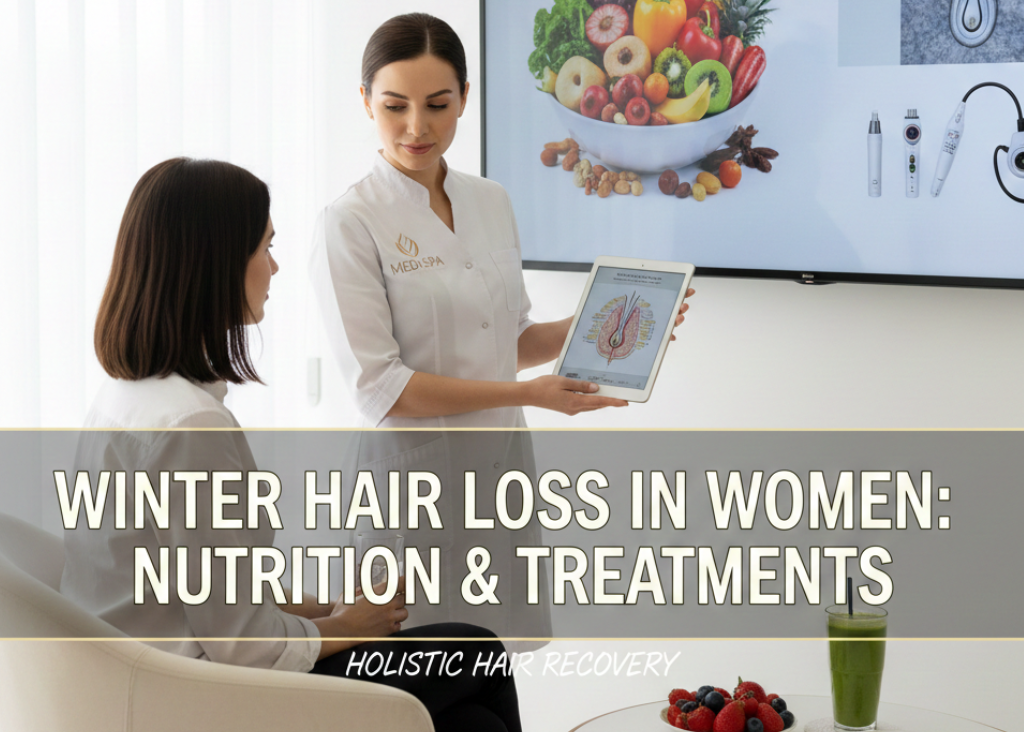
Winter hair loss in women stems from drier air, reduced sebum, and slower scalp recovery. You support resilience with gentle cleansing, barrier care, and hydration, while 8- to 12-week nutrient timing aligns keratin synthesis with the hair cycle. Pair high-quality protein, omega-3s, iron, zinc, and vitamin C with noninvasive aesthetic treatments to improve scalp environment and microcirculation. Track response and adjust seasonally; a coordinated plan helps you sustain growth—more strategies unfold as you continue.
Winter Hair Health: What Changes in Cold Weather
Winter introduces several changes that can affect hair health, including reduced humidity, indoor heating, and colder temperatures that can alter scalp blood flow and oil production. In winter weather, you may notice drier scalp, increased shedding, and less luster, even when your overall health is stable. These shifts stem from drier air, slower sebaceous activity, and subtle shifts in hormonal and circadian patterns that influence hair follicles. You can support resilience through consistent, gentle cleansing and barrier restoration, plus mindful nutrient timing to align meals with your body’s needs. Emphasize hydration from within and, where appropriate, fortified foods rich in biotin, zinc, and omega-3s. For personalized guidance, track symptoms and review these habits with your clinician to maintain comfort and belonging.
The Hair Growth Cycle: Key Nutrients You Need
Appreciating the hair growth cycle is crucial for targeting nutrition that supports each phase—anagen, catagen, and telogen. You’ll learn which nutrients reinforce steady growth, while respecting individual variation and wellbeing. In practice, focus on evidence-based fundamentals that influence the cycle, including balance and consistency in intake. You’ll notice how proper nutrition harmonizes with aesthetic goals and overall health, reducing unnecessary anxiety around shedding. By prioritizing patterns of intake, you support resilience in hair follicles and a healthier scalp environment. Remember that essential minerals play a foundational role, complementing other dietary strategies and medical guidance. Your personalized plan should reflect your values, preferences, and real-world feasibility.
Appreciate the hair cycle to tailor steady, balanced nutrition for thriving follicles.
- Hair growth cycle overview, with nutrient timing
- Essential minerals supporting follicular function
- Evidence-based food sources and supplementation considerations
- Monitoring response and adjustment strategies
Winter-Ready Foods for Strong Strands

As the dry, cold months place extra demands on hair and scalp, focusing on winter-ready foods helps support strength and resilience across the hair shaft. You’ll benefit from a nourishment-focused approach that emphasizes bioavailable nutrients shown to support keratin, sebum production, and follicular health. Prioritize high-quality protein sources, such as lean fish, eggs, and legumes, to supply amino acids essential for hair structure. Include omega-3 rich foods like salmon or walnuts to support scalp hydration and anti-inflammatory balance. Pair iron- and zinc-rich options (red meat, fortified grains, leafy greens) with vitamin C to enhance absorption. Add vitamin A and biotin in moderation, within dietary ranges. Hydration remains foundational; aim for steady intake alongside a varied, nutrient-dense pattern to promote ongoing resilience.
Common Winter Nutrition Gaps and Fixes
Are winter diets leaving your hair nutrition gaps unaddressed, and if so, what fixes are most evidence-based for maintaining keratin integrity and follicular health? You’re not alone: seasonal changes can thin intake of key nutrients, affecting growth, and resilience. Focusing on targeted gaps helps you support both hair structure and scalp function during winter weather, with practical, evidence-informed choices. Prioritize vitamin D, iron, zinc, biotin, and omega-3s to support keratin formation and follicle health. Pair with protein-rich foods and fortified options to maximize absorption and sustainability. Small, consistent adjustments yield clearer benefits, without overwhelming your routine.
- Prioritize vitamin D-rich foods or supplementation as needed
- Ensure adequate iron and zinc intake from diverse sources
- Include lean protein and omega-3–rich fats daily
- Monitor overall caloric and nutrient balance during winter weather
Scalp Care for Shedding: Practical Steps
Winter’s nutrition gaps can influence hair structure and scalp function, so it makes sense to address shedding with practical scalp care alongside dietary fixes. You’ll focus on scalp shedding management through gentle cleansing, calibrated washing frequency, and soothing products that support barrier health. Use a mild, non-irritating shampoo and rinse thoroughly to reduce irritation that can worsen shedding. Incorporate lightweight moisturizers or serums containing humectants and ceramides to counter winter dryness without clogging follicles. Avoid harsh rubbing; pat dry and minimize heat styling to protect the scalp. Consider targeted scalp massages to stimulate circulation, but keep sessions brief to prevent irritation. If shedding persists, consult a clinician to assess underlying factors and tailor evidence-based strategies. Belonging and consistency support adherence to care plans.
Gentle Aesthetic Treatments That Complement Nutrition
Gentle aesthetic treatments can support your nutrition plan by enhancing scalp conditions that affect hair growth, creating a receptive environment for nutrients to work. You’ll benefit from a concise, evidence-based approach that emphasizes synergy between nutrition-treatments pairing and safer, minimally invasive options. This discussion will explore practical combinations and how they complement dietary goals to optimize winter hair health.
Gentle Treatments Synergy
When combined with proper nutrition, gentle aesthetic treatments can support and optimize hair recovery by addressing scalp environment and strand integrity without imposing harsh procedures. You’ll notice how selective modalities align with your goals, creating a collaborative recovery plan that respects your pace and values. In this synergy planning approach, clinicians tailor interventions to reinforce nourishment, scalp microcirculation, and follicular resilience. The evidence base supports noninvasive options that minimize disruption while promoting measurable improvement. Your participation matters, and outcomes hinge on consistent sessions and clear communication about concerns. Gentle treatments act as a complementary framework, not a replacement, fostering confidence and continuity. They help you feel seen, supported, and empowered throughout your winter hair-restoration journey.
- Synergy planning across modalities
- Scalp environment optimization
- Noninvasive, results-focused sessions
- Patient-centered progress monitoring
Nutrition-Treatments Pairing
Nutrition and gentle aesthetic treatments can work in tandem to support hair recovery, with each component reinforcing the other’s effects on follicular health and strand quality. When you combine evidence-based nutrition with targeted treatments, you create a coherent treatment pairing that supports growth phases and minimizes shedding. Focus on a balanced intake of protein, iron, zinc, and biotin, alongside vitamins A, D, and E, to sustain keratin production and follicle resilience. Gentle interventions—low-level light therapy, scalp massage, and botanical serums—can improve nutrient delivery and enhance scalp environment without disruption. This nutrition synergy fosters consistency, encouraging adherence and a sense of shared progress. Partner with your clinician to tailor protocols, monitor responses, and reinforce your commitment to holistic hair care.
Build Your 8-Week Winter Hair Plan
To support your 8-week plan, align a Nutrient Timing Plan with 定times for targeted vitamins and minerals to optimize hair cycles. Follow a Treatment Schedule Guide that coordinates in-clinic procedures with at-home care, reducing disruption during winter. Establish a Winter Hair Care Routine that integrates these elements with consistent scalp protection, product science, and evidence-based expectations.
Nutrient Timing Plan
Ideal nutrient timing supports hair cycles during winter by coordinating intake with metabolism and growth phases. You’ll align meals and supplements with your daily rhythm to support follicles in anagen and maintenance during colder months. This plan emphasizes predictable, evidence-based patterns rather than strict rigidity, fostering a sense of belonging to a cohesive care approach.
- stagger protein portions across the day to sustain keratin synthesis
- pair carbohydrates with fiber-rich foods to modulate insulin and growth signaling
- time micronutrient-rich meals around aesthetic timing for max uptake
- schedule omega-3 and antioxidant intake to support inflammation control
Treatment Schedule Guide
If you’re aiming to strengthen winter hair health, this eight-week Treatment Schedule Guide pairs targeted in-clinic or at-home interventions with your ongoing nutrition plan to optimize follicle activity and minimize shedding. Week-by-week, you’ll implement evidence-based steps: professional treatments when indicated, plus at-home topical regimens and gentle, science-backed supplements aligned with your nutrient timing. Prioritize consistent sessions to monitor progress, adjust dosing, and address potential adverse effects early. Emphasize winter hydration as a cornerstone, integrating hydration goals with scalp-targeted care to support barrier function. Supportive strategies also nurture the scalp microbiome, reducing inflammation and promoting a healthier environment for growth. Track outcomes with objective notes on shedding, density, and comfort, fostering a sense of belonging in a collaborative care journey.
Winter Hair Care Routine
Winter can stress hair health, but a structured routine can support both strength and comfort: this eight-week plan combines practical in-clinic and at-home steps with your nutrition goals to sustain follicle function and minimize shedding.
- Establish a gentler washing cadence and use a sulfate-free shampoo to reduce irritation while maintaining scalp moisture.
- Incorporate a targeted conditioner and weekly scalp massage to promote microcirculation without buildup.
- Synchronize meals with seasonal nutrition, emphasizing iron, zinc, and biotin-rich foods to support keratin.
- Track changes weekly, adjust styling products, and reinforce sun- and temperature-protection for a durable winter hair routine.
Track Progress and Adjust With the Seasons
Tracking progress across seasons matters as hair health is dynamic and responds to both nutrition and treatment changes. You’ll benefit from a structured record of symptoms, shedding patterns, and scalp condition, reviewed quarterly with your clinician. Track winter tracking indicators like density changes, shedding rate, and breakage, then compare with spring and autumn baselines to identify meaningful shifts. Seasonal adjustment may involve tweaking protein intake, micronutrient balance, or topical therapies, guided by evidence and your tolerance. Document adverse effects and adherence, so your care plan remains aligned with current seasons and personal goals. Use objective measures when possible (photos, scalp exams, validated questionnaires) and engage in shared decisions. With consistent monitoring, you can optimize outcomes, feel supported, and maintain a sense of belonging in your care journey.
Frequently Asked Questions
Can Hormones Influence Winter Hair Shedding Despite Good Nutrition?
Hormonal fluctuations can influence winter hair shedding even with good nutrition. You may notice shedding tied to monthly cycles, thyroid balance, or cortisol shifts during stress. While nutrient interaction supports follicle health, hormones can modulate timing and duration of shedding. Acknowledge these shifts with a clinician, track patterns, and optimize diet, sleep, and stress management. Evidence suggests tailored treatments help, and you belong in a supportive care plan addressing both hormonal and nutritional factors.
Do Weather Changes Affect Hair Dye and Treatments Seasonally?
Yes, weather changes can influence hair dye and treatments seasonally, and you should adjust application timing accordingly. You’ll notice that temperature, humidity, and UV exposure affect color uptake and product efficacy. Ensure treatments seasonally are compatible with your dye routine, choosing formulas designed for seasonal use. Check product compatibility, follow manufacturer guidance, and patch-test whenever seasons shift. If you have sensitivities, discuss updates with your clinician to maintain quality, consistency, and scalp comfort.
Are Supplements Safe During Pregnancy or Breastfeeding in Winter?
“Like a careful navigator, you should pause before supplements.” In pregnancy and breastfeeding, supplement safety matters. Generally, avoid high-dose vitamins unless advised; choose prenatal vitamins with folic acid, iron, and iodine as recommended. Winter-specific needs aren’t universal, so talk to your clinician about safe options. You should not take herbal or unregulated products. Ensure any supplements align with pregnancy breastfeeding guidance, and monitor for side effects, ensuring your and your baby’s wellbeing.
How Does Stress From Holidays Impact Hair Loss and Recovery?
Holiday stress can worsen shedding temporarily, but you can recover with structured recovery strategies. You’ll benefit from addressing nutritional factors, like balanced protein and iron, and prioritizing sleep and hydration. Consider evidence-based aesthetic treatments to support scalp health as needed. Stay connected with supportive providers who confirm your experience and tailor plans. Regular check-ins, mindfulness, and gradual activity help reduce stress responses, promoting a steady recovery trajectory and a sense of belonging in your care team.
Can Exercise Timing Alter Winter Hair Growth Trends?
Like clockwork, you can influence winter growth by timing exercise, but effects are modest and individual. Yes, timing exercise may align with circadian and metabolic signals to support scalp health, though robust gains require consistency and overall nutrition. In practice, you should schedule regular sessions, avoid late-night workouts, and prioritize moderate intensity before dawn or after work. This approach promotes winter growth while fostering shared, evidence-based care and a welcoming, belonging-focused vibe.
Disclaimer: This content is for educational purposes only. Individual results may vary. Always consult a qualified practitioner before starting treatment.