
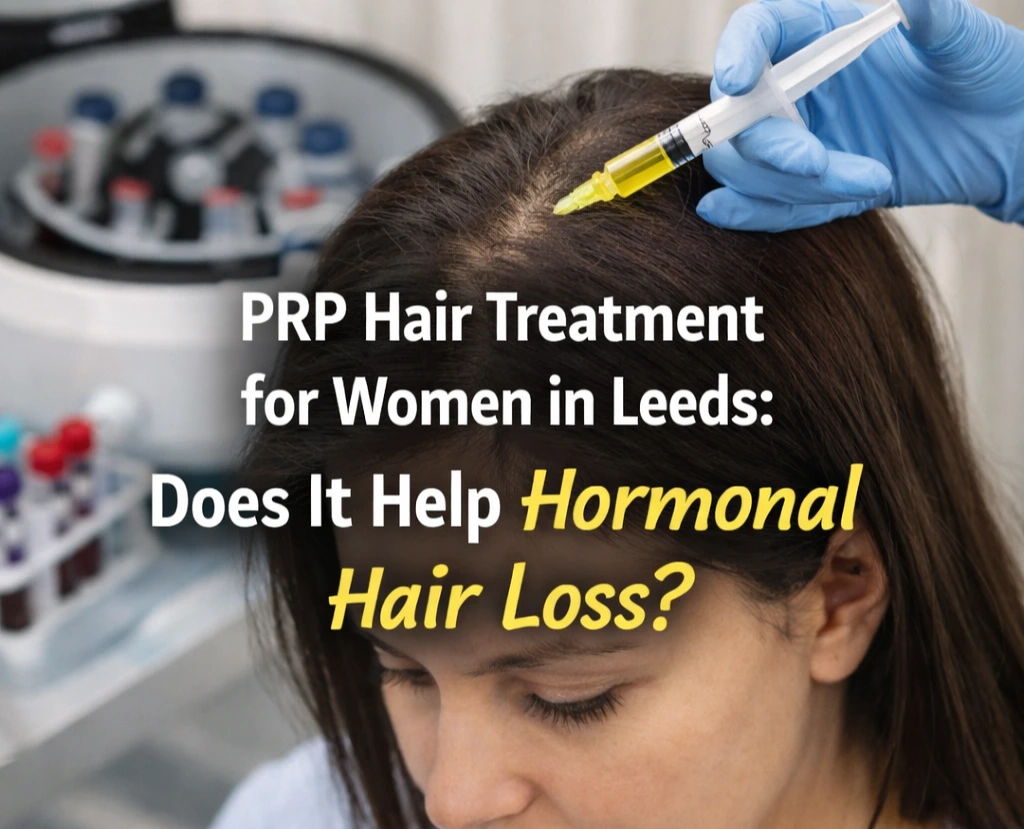
PRP Hair Treatment for Women in Leeds: Does It Help Hormonal Hair Loss?
Hair loss in women can be confusing and often distressing, especially when it develops gradually without a clear reason. Many women notice thinning hair, increased shedding, or a visible reduction in volume, only to later discover that hormones are playing a significant role.
Hormonal changes can affect the hair growth cycle at different stages of life, including early adulthood, after pregnancy, and during menopause. As a result, concerns such as excessive hair loss in women and hormonal hair thinning are becoming more common.
PRP (platelet-rich plasma) therapy is widely used as a non-surgical hair treatment for hair loss. However, when hormonal factors are involved, results can vary depending on individual conditions.
This blog explores how PRP works in cases of hormonal hair loss, when it is effective, and how to approach treatment in a more informed way.
What causes hormonal hair loss in women?
Hormonal hair loss occurs when changes in hormone levels disrupt the natural hair growth cycle. Hair typically grows in phases, but when this cycle is affected, the growth phase becomes shorter and shedding increases.
This can lead to:
- Noticeable thinning across the scalp
- Increased hair falling out during daily activities
- Reduced hair density over time
- Slower regrowth
Common causes include:
- Polycystic ovary syndrome (PCOS)
- Thyroid imbalances
- Post-pregnancy hormonal changes
- Menopause
- Long-term stress
These factors often contribute to ongoing hair loss and, in some cases, more rapid shedding patterns.
How PRP supports hair growth
PRP works by using a concentrated form of platelets derived from your own blood. These platelets contain growth factors that help stimulate weakened hair follicles.
When applied to the scalp, PRP helps to:
- Improve blood circulation
- Strengthen existing follicles
- Extend the growth phase of hair
- Support thicker and healthier strands
Unlike a hair transplant, PRP does not replace lost hair. Instead, it improves the condition of existing follicles, making it suitable for early to moderate hair loss and thinning.
Does PRP work for hormonal hair loss?
PRP can be effective for hormonal hair loss, but it is important to understand its role.
It does not directly correct a hormonal imbalance. Instead, it supports the follicles so they can function better despite underlying changes.
When PRP is likely to be effective
PRP tends to show better results when:
- Hair thinning is in the early stages
- Hair follicles are still active
- Hormonal imbalance is being managed
In these situations, PRP can help:
- Reduce hair shedding
- Improve thickness
- Support gradual regrowth
When results may be limited
PRP may not deliver strong results if:
- Hormonal imbalance is severe and untreated
- Hair loss has progressed over a long period
- Follicles are no longer active
This is often seen in advanced cases, including long-term hair loss after menopause.
Why results vary from person to person
PRP outcomes are not the same for everyone, and this is usually due to underlying factors rather than the treatment itself.
Hormonal balance
Ongoing hormonal imbalance can continue to affect the hair cycle, even during treatment.
Nutritional health
Deficiencies in key nutrients such as iron or vitamin D can weaken hair and slow down regrowth.
In such cases, combining PRP with supportive options like vitamin injections and IV drip therapy can help improve internal balance and enhance results.
Timing of treatment
Early intervention gives better outcomes. Delayed treatment reduces effectiveness.
Consistency
PRP requires regular sessions. Irregular treatment can interrupt progress.
What results can you expect?
PRP works gradually, and visible changes take time.
Many women may experience:
- Reduced shedding within the first few weeks
- Improved hair texture after a few sessions
- Gradual increase in density over a few months
Consistency and patience are essential for achieving noticeable improvement.
How to improve PRP results for hormonal hair loss
To get the best results, a structured approach is important:
- Start treatment early when thinning begins
- Monitor and manage hormonal health
- Maintain a balanced diet
- Follow the recommended treatment schedule
- Avoid practices that damage hair or scalp
These steps support long-term improvement and help reduce further hair loss.
Conclusion
PRP can be a valuable option for women experiencing hormonal hair loss, particularly when treatment is started early and combined with the right internal support. However, it should not be seen as a standalone solution.
Addressing hormonal health, maintaining proper nutrition, and following a consistent treatment plan are key to achieving meaningful and long-lasting results.
If you are looking for a reliable non-surgical aesthetic clinic in Leeds that focuses on personalised hair restoration, Cosmeticstar offers tailored treatments designed to support natural and effective hair recovery.
Not sure if PRP is suitable for your hair condition or hormonal hair loss? 👉 Chat now to get professional guidance based on your specific needs.
GDPR Notice: All treatment-related information is handled in a GDPR-compliant manner. Your personal data is securely protected. Clicking the WhatsApp link will redirect you to an external platform. Please review our Privacy Policy for more details.
Disclaimer: This blog is for educational purposes only. Always consult a qualified professional before starting any treatment.
FAQs
Q: Can PRP work if the hormonal imbalance is not treated?
A: It may provide some improvement, but results are more consistent when hormonal issues are managed.
Q: Is PRP suitable for early hair thinning?
A: Yes, it is most effective when follicles are still active.
Q: Can PRP help after menopause?
A: It can help in certain cases, depending on the follicle condition and overall scalp health.
Q: Do nutrients affect PRP results?
A: Yes, nutritional deficiencies can slow down progress and affect outcomes.
Q: How long should PRP treatment continue?
A: A structured course followed by maintenance sessions is usually recommended.