
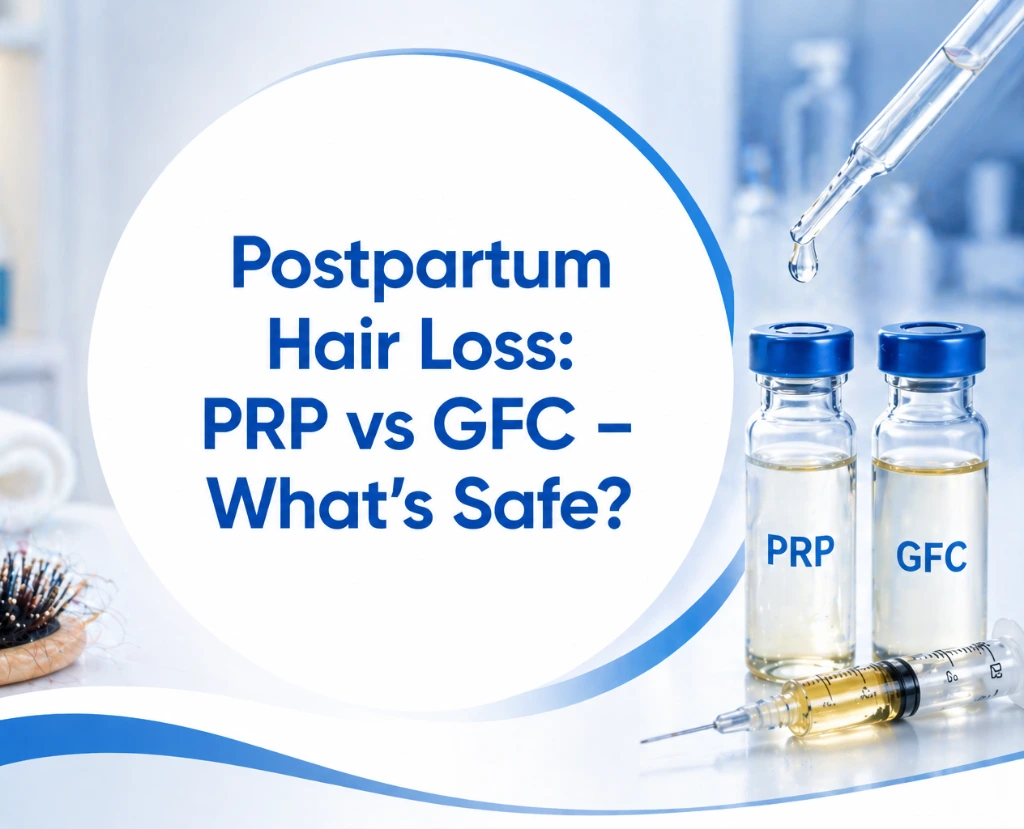
Postpartum Hair Loss: PRP vs GFC – What’s Safe?
For many new mothers, the months following childbirth bring an unexpected and distressing change: significant hair shedding. Postpartum hair loss is one of the most common yet least discussed aspects of the post-pregnancy experience. It can begin as early as six weeks after delivery and, in some cases, continues for several months — affecting confidence, wellbeing, and overall quality of life during an already demanding period.
As PRP and GFC therapy become increasingly mainstream hair restoration treatments in Leeds and across the UK, many postpartum women are asking a natural question: are these treatments safe after pregnancy, and which is the better option? This blog provides an educational, evidence-informed answer.
Understanding Postpartum Hair Loss
Postpartum hair loss — clinically referred to as postpartum telogen effluvium — is a temporary but often dramatic form of hair shedding that occurs as a direct consequence of hormonal changes following childbirth. During pregnancy, elevated oestrogen and progesterone levels significantly extend the anagen (growth) phase of the hair cycle, which is why many women enjoy thicker, fuller hair during the second and third trimesters.
After delivery, oestrogen and progesterone levels drop sharply. This hormonal withdrawal causes a disproportionate number of follicles to shift simultaneously from the growth phase into the telogen (resting) phase. Approximately two to four months later, those follicles shed — producing the often alarming increase in hair loss that many new mothers experience.
In most cases, postpartum hair loss resolves naturally within six to twelve months as hormone levels stabilise and the hair growth cycle rebalances. However, in some women — particularly those with an underlying predisposition to androgenetic alopecia, nutritional deficiencies, or thyroid dysfunction — the shedding may be more prolonged or more severe, and professional intervention becomes appropriate.
Is PRP Safe for Postpartum Hair Loss?
PRP therapy is contraindicated during pregnancy itself — not because it is inherently dangerous, but because of the lack of clinical data establishing safety in pregnant women, and out of an abundance of caution given the hormonal complexity of pregnancy. However, PRP hair treatment is generally considered safe to begin in the postpartum period, provided certain conditions are met.
The primary considerations are:
- Breastfeeding: PRP uses the patient’s own blood components. There is no pharmaceutical agent introduced into the body, and no evidence that the treatment affects the composition of breast milk. Most practitioners consider PRP safe for breastfeeding mothers, though individual clinical advice from the treating specialist is essential.
- Timing: Beginning PRP before hormone levels have had time to stabilise — typically before three to four months postpartum — may produce suboptimal results, as the scalp environment is still in flux. A clinical assessment will determine the most appropriate starting point.
- Underlying health: Postpartum blood count, iron levels, and thyroid function should be assessed before beginning treatment, as nutritional deficiencies common in the postpartum period can limit treatment response.
Is GFC Safe for Postpartum Hair Loss?
GFC therapy carries the same fundamental safety profile as PRP in the postpartum context — since it also uses the patient’s own blood-derived components without introducing synthetic pharmaceuticals. The considerations around breastfeeding and timing apply equally to GFC.
Where GFC may hold an advantage in the postpartum setting is in its clinical efficacy. Because GFC delivers a higher concentration of targeted growth factors with reduced inflammatory components, it tends to produce more pronounced results within a shorter treatment course. For new mothers managing the demands of early parenthood alongside recovery, a treatment that requires fewer sessions to achieve meaningful results can be a significant practical benefit.
GFC hair therapy in Leeds at Cosmeticstar is performed in a controlled clinical environment, and every postpartum patient is assessed individually to ensure the timing, protocol, and combination of treatments is appropriate for their specific circumstances.
What About Other Treatments — Are They Safe Postpartum?
Minoxidil
Minoxidil is classified as Category C for use during pregnancy and is generally not recommended for use whilst breastfeeding, as there is a risk of systemic absorption and potential transfer to breast milk. Women who used Minoxidil prior to pregnancy are typically advised to avoid resuming it until they have finished breastfeeding.
Exosome Therapy
Exosome therapy in the postpartum context follows similar caution to PRP and GFC. Whilst there is no evidence of harm, the clinical evidence base in postpartum patients specifically is still developing. Individual consultation is recommended before proceeding.
Treatment Options at Cosmeticstar, Leeds
PRP Hair Treatment
Safe, autologous, and effective for postpartum telogen effluvium — using your own blood’s growth factors to reactivate dormant follicles. Learn about PRP Hair Treatment in Leeds.
GFC Hair Therapy
A more concentrated growth factor treatment — ideal for postpartum patients seeking stronger results in fewer sessions. Explore GFC Hair Therapy in Leeds.
Exosome Therapy
Cellular-level regeneration for patients experiencing more persistent or complex postpartum hair loss. Discover Exosome Therapy in Leeds.
IV Drip Therapy
Rapidly correcting the nutritional deficiencies — particularly iron, B12, and vitamin D — that commonly accompany the postpartum period and compound hair loss. View our IV Drip Therapy in Leeds.
Vitamin Injections
Targeted injections to correct postpartum nutritional gaps that oral supplements often fail to address adequately. Learn about our Vitamin Injections in Leeds.
Prevention and Maintenance
- Have full blood work done postpartum — particularly ferritin, thyroid function, and vitamin D — before beginning any hair treatment.
- Prioritise nutritional recovery postpartum through diet and supplementation before adding clinical scalp treatments.
- Allow hormone levels time to stabilise — beginning treatment too early may produce reduced results.
- Consult a specialist before resuming any pre-pregnancy hair loss treatments, particularly Minoxidil.
Speak to Cosmeticstar in Leeds
Postpartum hair loss can feel overwhelming, particularly during a period that is already physically and emotionally demanding. At Cosmeticstar in Leeds, we approach postpartum hair restoration with a careful, individualised protocol — taking into account your hormonal recovery, nutritional status, and personal circumstances before recommending any treatment. Chat now — click the link and you will be redirected straight to WhatsApp.
Conclusion
Postpartum hair loss is common, distressing, and — crucially — treatable. Both PRP and GFC therapy in Leeds represent safe, effective options for new mothers once the appropriate postpartum window has passed. GFC offers the advantage of stronger results in fewer sessions, whilst both treatments avoid the systemic exposure concerns associated with Minoxidil during breastfeeding. Cosmeticstar in Leeds is here to support you through postpartum recovery with honest, evidence-led care.
Privacy Notice: Your data is handled in accordance with UK GDPR. Please review our Privacy Policy for full details.
Disclaimer: This blog is for educational purposes only. Always consult a qualified professional before beginning any treatment.
Frequently Asked Questions
Q: When is it safe to start PRP or GFC treatment after giving birth?
A: Most specialists recommend waiting until at least three to four months postpartum — allowing hormone levels to begin stabilising — before commencing treatment.
Q: Can I have PRP or GFC whilst breastfeeding?
A: Both treatments use your own blood components and do not introduce pharmaceutical agents, making them generally considered safe during breastfeeding — though individual clinical advice is essential.
Q: Will postpartum hair loss stop on its own without treatment?
A: In most cases, yes — postpartum telogen effluvium typically resolves within six to twelve months. Treatment is recommended when shedding is severe, prolonged, or occurring alongside an underlying hair loss condition.
Q: Why is Minoxidil not recommended whilst breastfeeding?
A: Minoxidil is absorbed systemically through the scalp and may transfer to breast milk — making it generally contraindicated during breastfeeding until clinical guidance advises otherwise.