
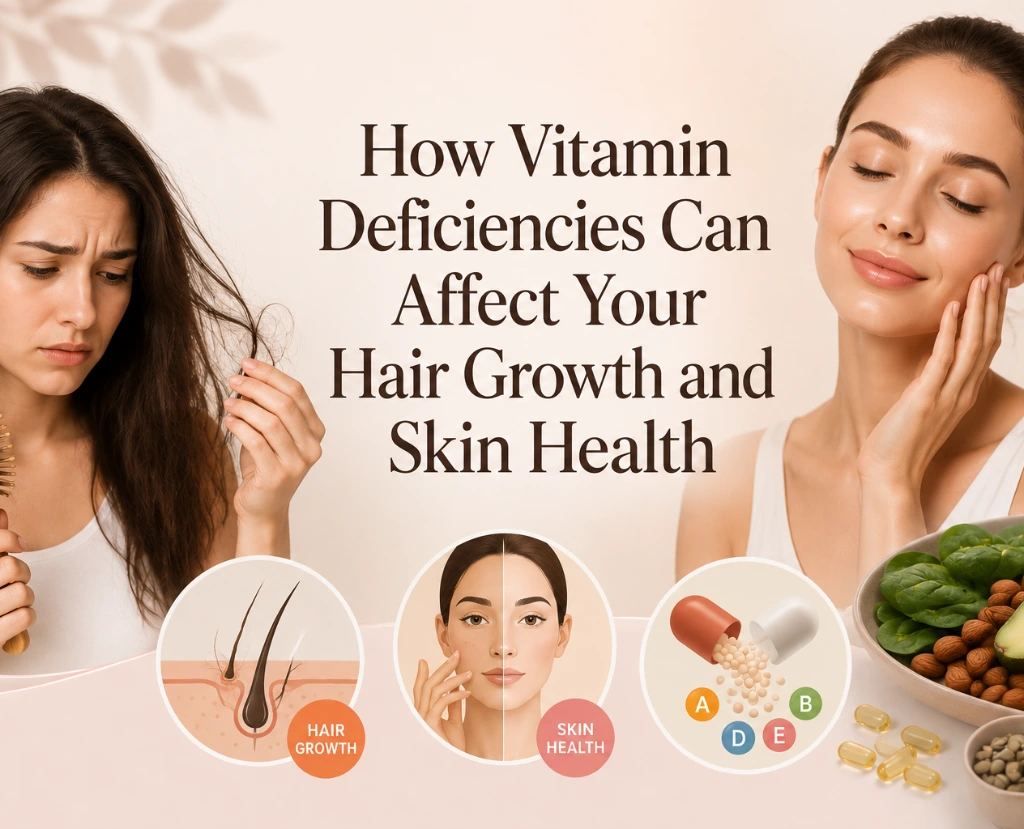
How Vitamin Deficiencies Can Affect Your Hair Growth and Skin Health
There is a version of this story that a lot of women know personally. Hair that was once thick starts shedding more than it should. Skin that used to look healthy begins to look tired or uneven. Nails that were strong start splitting. And despite trying new products, changing shampoos, and spending more on skincare, nothing really shifts. The reason, more often than not, is not what you are putting on your body — it is what is missing inside it.
Vitamin and mineral deficiencies are one of the most common and most frequently overlooked drivers of hair loss and skin decline in women. At Cosmeticstar in Leeds, we see this pattern regularly — patients who arrive having tried numerous topical approaches, only to discover through proper blood testing that their body has simply not had the nutritional resources it needs to maintain healthy hair and skin.
The Link Between Nutrition and Hair Growth
Hair follicles are biologically demanding structures. They divide rapidly, require significant energy, and depend on a steady supply of specific nutrients to complete healthy growth cycles. When those nutrients are in short supply, the body prioritises essential organ function — and hair, being non-essential to survival, is one of the first things to be deprioritised. The British Skin Foundation’s overview of skin nutrition highlights how closely skin and hair health are connected to the body’s internal nutritional environment.
The result of nutritional insufficiency in the follicle is not usually sudden, dramatic hair loss — it is a gradual shift. The hair growth phase shortens. Strands become finer. The volume you once had slowly decreases over months or years. By the time most women notice and act on it, the deficiency has often been present for a considerable period.
The Key Deficiencies and How They Affect Hair and Skin
Iron and Ferritin Deficiency
Ferritin — the stored form of iron — is arguably the most impactful nutritional deficiency when it comes to hair loss in women. Hair follicles contain ferritin-binding receptors and actively use stored iron to sustain the anagen growth phase. When ferritin levels fall below approximately 70 micrograms per litre, follicles begin to shift prematurely into the resting phase, causing increased shedding and reduced hair density over time. Many women with ferritin-related hair loss have been told their iron is ‘fine’ because standard tests do not always capture this. A specific ferritin test is essential.
Vitamin D Deficiency
Vitamin D has a direct role in follicular cycling — vitamin D receptors are expressed on hair follicle cells, and without adequate levels, the follicle’s ability to initiate and sustain the growth phase is impaired. For skin, vitamin D deficiency is associated with reduced skin barrier function, increased susceptibility to inflammation, and slower wound healing. In the UK, where sun exposure is limited for much of the year, low vitamin D is extremely common — and often undetected without specific testing.
Vitamin B12 Deficiency
B12 is essential for the formation of healthy red blood cells, which carry oxygen and nutrients to every tissue in the body — including hair follicles and skin cells. A shortage of B12 reduces this delivery system, effectively starving follicles of what they need to maintain active growth. Diffuse hair shedding, premature greying, and a persistently dull or sallow complexion are all recognised presentations of B12 deficiency. It is particularly prevalent among women who follow plant-based diets, have digestive conditions like coeliac disease, or are over 40.
Zinc Deficiency
Zinc plays a regulatory role in the hair growth cycle and is involved in the synthesis of proteins needed for both hair shaft formation and skin tissue repair. Insufficient zinc is associated with increased hair shedding, scalp inflammation, delayed healing, and skin conditions including acne. It is one of the nutrients that tends to be depleted during periods of prolonged physical or psychological stress — which is one of the reasons stress and hair loss are so frequently linked.
Biotin Deficiency
Biotin (B7) is required for keratin production — the primary structural protein of the hair shaft and nail plate. Whilst severe biotin deficiency is rare, low-grade insufficiency can contribute to hair that breaks easily, grows slowly, and lacks strength. For skin, biotin supports the fatty acid metabolism that underlies healthy barrier function. Women on long-term antibiotics, those who are pregnant or breastfeeding, and those who consume raw egg whites regularly are at higher risk of biotin insufficiency.
Vitamin A Deficiency (and Excess)
Vitamin A supports sebum production in the scalp — the natural oil that lubricates hair follicles and keeps the scalp healthy. Too little vitamin A leads to a dry, flaky scalp and sluggish hair growth. However, it is worth noting that excess vitamin A — particularly from high-dose supplements — is one of the few vitamins that can actually cause hair shedding rather than prevent it. Balance is key, and supplementation should always be guided by blood levels.
How Cosmeticstar in Leeds Addresses Deficiency-Related Hair and Skin Concerns
Vitamin Injections
For targeted correction of specific deficiencies, our Vitamin Injections in Leeds deliver B12, vitamin D, biotin, and other key nutrients directly into the muscle for complete absorption — bypassing the digestive system where absorption issues often compound the original deficiency.
IV Drip Therapy
Where multiple deficiencies are present, our IV Drip Therapy in Leeds provides a comprehensive, intravenously delivered blend of vitamins, minerals, and amino acids tailored to the individual patient’s needs. It is the most efficient and reliable way to restore nutritional status quickly.
PRP Hair Treatment
Once nutritional deficiencies are addressed, PRP Hair Treatment in Leeds provides the growth factor stimulus needed to reactivate follicles that have been dormant or underperforming during the deficiency period.
GFC Hair Therapy
For patients with more significant hair thinning, GFC Hair Therapy in Leeds delivers a more potent regenerative treatment that complements nutritional recovery and accelerates the return to healthy hair growth.
Practical Steps to Take Now
- Request a full nutritional blood panel — specifically including ferritin, vitamin D, B12, zinc, and folate
- Do not rely solely on topical products when the issue is internal — no serum corrects a ferritin deficiency
- Seek injectable or IV correction if oral supplementation has not produced improvement after three months
- Combine nutritional correction with clinical hair treatment for the fastest and most complete recovery
Speak to Cosmeticstar in Leeds
If you suspect that a nutritional deficiency may be behind your hair thinning or skin concerns, Cosmeticstar in Leeds offers thorough consultations that identify the root cause and guide you towards the right solution. Chat now — click the link and you will be redirected straight to WhatsApp.
Conclusion
Vitamin deficiencies are not a cosmetic problem — they are a biological one, and they need to be addressed at the biological level. Understanding which deficiencies are affecting your hair and skin is the first and most important step. Cosmeticstar in Leeds provides the testing guidance, injectable nutritional support, and advanced hair treatments needed to address the problem properly — from the inside out.
Privacy Notice: Your data is handled in accordance with UK GDPR. Please review our Privacy Policy for full details.
Disclaimer: This blog is for educational purposes only. Always consult a qualified professional before beginning any treatment.
Frequently Asked Questions
Q: How do I know if a vitamin deficiency is causing my hair loss?
A: A targeted blood panel — including ferritin, vitamin D, B12, and zinc — is the only reliable way to identify whether deficiencies are contributing to your hair shedding.
Q: Can vitamin deficiencies affect skin as well as hair?
A: Yes — vitamin D, B12, zinc, and vitamin C all have significant effects on skin health, including barrier function, collagen production, and the speed of skin cell renewal.
Q: How long does it take to correct a vitamin deficiency?
A: It depends on the deficiency and the method of correction. Injectable vitamins and IV therapy can begin correcting levels within days. Hair improvements typically take three to five months to become visible.
Q: Is it worth taking a general multivitamin for hair and skin?
A: Multivitamins provide broad coverage but are not targeted. If a specific deficiency is identified, a targeted supplement or injection will always be more effective than a general multivitamin.