
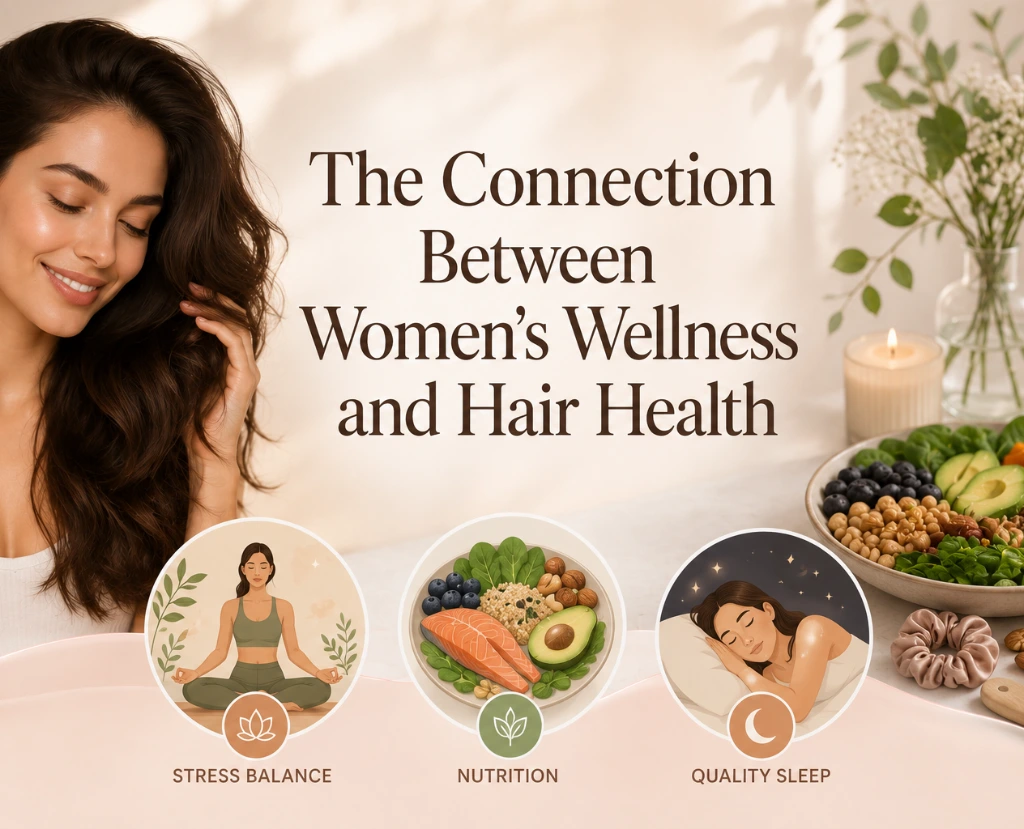
The Connection Between Women’s Wellness and Hair Health
It would be easy to treat hair loss as a purely cosmetic concern — something to address with a better shampoo or a different supplement. But for most women, hair health is a much more meaningful indicator of what is happening internally. The condition of your hair reflects your hormonal balance, your nutritional status, your stress levels, and the overall state of your physical wellbeing in a way that few other outward signs do.
At Cosmeticstar in Leeds, we take a genuinely holistic view of hair health. In our experience, the patients who achieve the best and most lasting results from hair treatment are the ones who address the wider wellness picture alongside the scalp-level treatment. This blog explores that connection in practical, honest terms.
Your Hair Is a Barometer for Your Health
Hair follicles complete thousands of growth cycles over a lifetime, and each cycle is influenced by the internal environment — the hormonal signals, the nutrient availability, the inflammatory status, and the stress response of the body at that moment in time. This is why significant life events — a difficult pregnancy, a period of intense work stress, a thyroid diagnosis — so often coincide with noticeable changes in hair density and quality. The connection is not coincidental; it is biological. Mind’s resource on the physical effects of stress offers useful context on how chronic stress affects the body physically — including the hair.
The Key Wellness Factors That Shape Hair Health in Women
Hormonal Balance
Of all the factors influencing hair health in women, hormones are among the most significant. Oestrogen and progesterone play a protective role in the hair growth cycle — they extend the anagen (growth) phase and maintain follicular density. When these hormones fluctuate or decline — during the postpartum period, perimenopause, or as a result of conditions like PCOS or thyroid dysfunction — hair loss often follows. Addressing hormonal health is not always straightforward, but identifying whether a hormonal imbalance is present is an essential early step.
Chronic Stress
Prolonged psychological or physical stress is one of the most common triggers for hair loss in women — specifically a condition called telogen effluvium, where large numbers of follicles are simultaneously pushed into the resting phase by elevated cortisol levels. What makes this particularly difficult is that the shedding typically occurs two to four months after the stressful period, meaning women often cannot identify the link. Managing stress — whether through sleep, exercise, therapy, or structural lifestyle changes — is a genuine part of hair health management, not a peripheral consideration.
Nutrition and Gut Health
A diet that does not consistently provide adequate iron, protein, zinc, biotin, and vitamins B12 and D will eventually manifest in the hair. But it is not just about what you eat — it is about what your gut absorbs. Women with gut conditions, those who have been on long-term medications, and those who have recently been through significant physical changes may be absorbing far less than they consume. This is why injectable and IV nutritional support can make a meaningful difference where dietary changes alone have not.
Sleep
Chronic poor sleep elevates cortisol, disrupts growth hormone release, and impairs the body’s repair processes — all of which can negatively affect follicular health over time. The relationship between sleep quality and hair growth is not as well-publicised as other factors, but it is real and clinically supported. Women who make consistent improvements to their sleep hygiene frequently report improvements in hair quality alongside broader health benefits.
Exercise and Circulation
Regular moderate exercise improves circulation — including scalp blood flow — and supports the hormonal balance that underpins healthy hair growth. It also helps to regulate cortisol and supports insulin sensitivity, both of which have downstream effects on hair follicle health. The caveat is that excessive high-intensity exercise without adequate nutritional support can have the opposite effect, increasing physiological stress and depleting key nutrients.
How Cosmeticstar Supports Women’s Wellness and Hair Health in Leeds
Vitamin Injections
Targeted Vitamin Injections in Leeds provide rapid, fully absorbed correction of the nutritional deficiencies that most commonly underlie wellness-related hair loss — including B12, vitamin D, and biotin.
IV Drip Therapy
Our IV Drip Therapy in Leeds delivers a comprehensive blend of vitamins, minerals, and amino acids intravenously — restoring the nutritional foundation that supports healthy hair growth, better energy, and improved skin from the inside out.
PRP Hair Treatment
When wellness factors have contributed to hair thinning, PRP Hair Treatment in Leeds provides a direct follicular stimulus to support regrowth — working alongside the nutritional and lifestyle interventions to accelerate recovery.
GFC Hair Therapy
For women whose hair thinning is more pronounced, GFC Hair Therapy in Leeds delivers an advanced, more potent growth factor treatment that can produce a stronger and faster follicular response.
Exosome Therapy
Where hair loss has been more significant or persistent, Exosome Therapy in Leeds provides a cellular-level regenerative treatment that goes beyond what PRP and GFC deliver — particularly effective for complex or longer-standing cases.
Small Changes That Support Hair Health Every Day
- Prioritise seven to nine hours of quality sleep consistently — it is not optional for good hair health
- Eat adequate protein — hair is made of keratin, which is a protein, and low protein intake directly compromises hair strength
- Address stress actively, not just when it becomes overwhelming — chronic low-level stress is just as damaging as acute episodes
- Get your hormone levels checked if you are experiencing unexplained hair changes — PCOS, thyroid dysfunction, and perimenopause are all commonly missed
- Use your hair as feedback — when it changes without an obvious reason, something internal has likely shifted
Talk to Cosmeticstar in Leeds
If your hair health has declined and you want a genuinely thorough assessment of what might be driving it, Cosmeticstar in Leeds takes the full wellness picture seriously — not just the scalp. Chat now — click the link and you will be redirected straight to WhatsApp.
Conclusion
Hair health and women’s wellness are inseparable. When one is struggling, the other usually reflects it. Getting the foundations right — hormones, nutrition, stress, sleep — is not a background concern; it is the core of a lasting hair health strategy. Cosmeticstar in Leeds helps women address both layers, combining internal wellness support with the most advanced non-surgical hair treatments available.
Privacy Notice: Your data is handled in accordance with UK GDPR. Please review our Privacy Policy for full details.
Disclaimer: This blog is for educational purposes only. Always consult a qualified professional before beginning any treatment.
Frequently Asked Questions
Q: Can stress really cause significant hair loss in women?
A: Yes — telogen effluvium triggered by chronic stress can cause substantial and distressing hair shedding. The good news is that it is typically reversible when the stressor is managed and nutritional support is in place.
Q: How does perimenopause affect hair health?
A: The decline in oestrogen during perimenopause shortens the anagen phase of the hair growth cycle, resulting in thinner, slower-growing hair. PRP and GFC treatment in Leeds can provide meaningful support during this transition.
Q: Is IV therapy beneficial for hair health?
A: For women with multiple nutritional deficiencies, IV drip therapy provides a more comprehensive and immediately absorbed nutritional correction than oral supplements — which has a direct positive effect on follicular function.
Q: How long before lifestyle changes affect hair health?
A: Hair responds slowly — changes in nutrition, stress, and sleep take three to six months to produce visible effects in the hair, as improvements need to work through the hair growth cycle.