
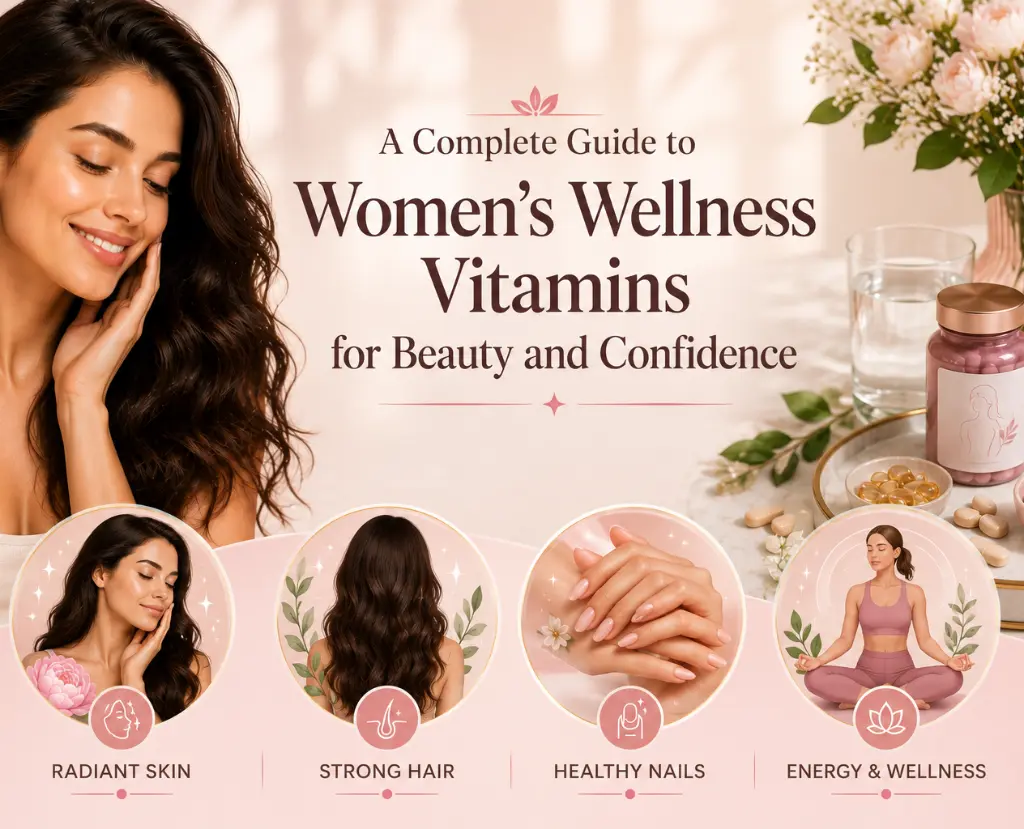
A Complete Guide to Women’s Wellness Vitamins for Beauty and Confidence
There is something important that gets lost in the way beauty and wellness are typically marketed to women: the idea that looking good and feeling good are two separate pursuits. In reality, they are driven by exactly the same internal processes. The vitamins that support your energy levels and mood also support your hair growth. The nutrients that maintain your immune system also maintain your skin’s clarity and resilience. Confidence, for most women, is not just a mindset — it is a biological state, and it is profoundly influenced by how well nourished the body is.
At Cosmeticstar in Leeds, we work with women across a wide range of ages and health backgrounds. The pattern we see consistently is that women who address their nutritional foundation — properly, not through guesswork — experience improvements in hair, skin, energy, and overall confidence that no topical product could replicate. This guide covers the full landscape of what those vitamins are and how to get them most effectively.
Why Women’s Nutritional Needs Are Distinct
Women’s bodies navigate a series of significant hormonal transitions across a lifetime — puberty, reproductive years including pregnancy and postpartum recovery, perimenopause, and menopause. Each transition alters the body’s nutritional requirements, its ability to absorb and utilise certain nutrients, and its vulnerability to specific deficiencies. The NHS Women’s Health Strategy for England acknowledges the persistent gap in how women’s specific health needs — including nutritional health — are understood and addressed clinically. Understanding your own nutritional picture is, in many ways, an act of self-advocacy.
The Complete Vitamin and Mineral Framework for Women’s Wellness
Biotin (B7) — Beauty’s Building Block
Biotin is the vitamin most directly linked to hair shaft integrity, nail strength, and the fatty acid metabolism that supports skin health. Women with biotin insufficiency tend to experience brittle nails, hair that breaks easily and sheds excessively, and a dull or dry skin texture. Pregnancy, breastfeeding, and long-term antibiotic use are among the most common causes of biotin depletion in women.
Vitamin D — The Hormone-Like Vitamin
Vitamin D functions more like a hormone than a traditional vitamin — it modulates gene expression in hundreds of cell types, including immune cells, mood-regulating neurons, and — importantly — hair follicle cells. Deficiency is associated with hair shedding, low mood, impaired immune function, weakened bones, and poor skin barrier function. In the UK, where UVB exposure is limited for half the year, maintaining adequate vitamin D genuinely requires active management through supplementation or injectable correction.
Vitamin B12 — The Cellular Energy Vitamin
B12 is essential for DNA synthesis and the formation of healthy red blood cells — meaning it underpins the delivery of oxygen and nutrients to every cell in the body, including follicles and skin cells. Deficiency manifests across multiple systems: persistent fatigue, poor concentration, hair thinning, premature greying, and a complexion that looks consistently tired despite adequate sleep. B12 deficiency is particularly prevalent in women over 40, those on plant-based diets, and those on certain long-term medications.
Iron and Ferritin — The Hair Growth Essential
Ferritin — stored iron — is the nutrient that hair follicles use as fuel to sustain the active growth phase. When ferritin falls below functional levels, follicles produce finer strands and shed at a higher rate. The clinical frustration is that standard blood tests often miss this: haemoglobin can be within range whilst ferritin is depleted. Women of reproductive age, those with heavy periods, and women who are vegetarian or vegan are at highest risk.
Vitamin C — Collagen and Confidence
Vitamin C drives collagen synthesis — the structural protein that maintains skin firmness, elasticity, and resilience. As a potent antioxidant, it also protects skin cells from oxidative damage and supports the immune system. For hair, vitamin C plays an important supporting role by enhancing iron absorption — making it a valuable complement to any iron supplementation protocol. A woman who is deficient in vitamin C will notice it in her skin texture and the speed at which her skin heals, long before any other obvious symptoms develop.
Zinc — Stress Protection for Hair and Skin
Zinc supports the enzymatic processes that regulate both the hair growth cycle and skin cell repair. It plays a protective role against DHT-driven follicular miniaturisation and helps to maintain the scalp’s sebum balance. Women under prolonged stress — physical or psychological — tend to deplete zinc faster than the diet can replenish it, which is one of the reasons stress and poor hair and skin quality tend to go together.
Omega-3 Fatty Acids — The Inflammation Regulators
Omega-3s are not vitamins in the traditional sense, but their impact on both hair and skin health is significant enough to include in any serious wellness framework. They reduce systemic inflammation — a common underlying driver of hair loss — and support the skin’s lipid barrier, which determines how well the skin retains moisture and resists irritation. Women who do not regularly consume oily fish are frequently low in omega-3s without realising it.
The Most Effective Ways to Get These Nutrients
Vitamin Injections
For targeted, reliably absorbed correction of specific deficiencies, our Vitamin Injections in Leeds deliver B12, vitamin D, biotin, and other key nutrients intramuscularly — bypassing the gut for complete uptake. Particularly effective for women who have not responded to oral supplementation or who have known absorption issues.
IV Drip Therapy
For a comprehensive and immediate nutritional top-up, our IV Drip Therapy in Leeds delivers a personalised blend of vitamins, minerals, amino acids, and antioxidants directly into the bloodstream. Patients frequently report improvements in energy, clarity, skin hydration, and hair shedding rate within the first few weeks of treatment.
PRP Hair Treatment
Where nutritional deficiencies have contributed to hair thinning, PRP Hair Treatment in Leeds delivers concentrated growth factors directly to the follicle — reactivating dormant or weakened follicles alongside the nutritional support.
GFC Hair Therapy
For women whose hair thinning is more pronounced, GFC Hair Therapy in Leeds provides the most advanced non-surgical hair restoration available in Leeds — delivering a stronger, more refined growth factor stimulus for measurable hair recovery.
Exosome Therapy
For the most advanced regenerative support — particularly for complex or persistent hair loss — Exosome Therapy in Leeds works at a cellular communication level to stimulate deep follicular regeneration.
Daily Habits That Support Your Wellness Vitamins
- Eat a varied diet with adequate protein — it is the most underrated factor in hair and skin quality
- Test your key levels at least once a year — ferritin, vitamin D, B12, and thyroid function are a good baseline
- Take vitamin D from October to March at minimum — the NHS recommends this for everyone in the UK
- Do not dismiss fatigue, brain fog, or dull skin as ‘just stress’ — they are frequently nutritional signals worth investigating
- Seek injectable or IV support if oral supplements have not shifted your levels or produced visible results after three months
Start Your Wellness Journey at Cosmeticstar, Leeds
If you want to address your beauty and wellness from the inside out — with proper clinical guidance and treatments that actually work — Cosmeticstar in Leeds is the place to start. We combine nutritional wellness support with advanced non-surgical hair and skin treatments for results that go deeper than any topical product can reach. Chat now — click the link and you will be redirected straight to WhatsApp.
Conclusion
Women’s wellness vitamins are not a beauty trend — they are a biological foundation. When the right nutrients are present in sufficient quantities, the results show in hair strength, skin clarity, nail health, energy, and confidence in ways that are genuine and lasting. Cosmeticstar in Leeds is here to help every woman find out exactly what her body needs — and get it in the most effective way possible.
Privacy Notice: Your data is handled in accordance with UK GDPR. Please review our Privacy Policy for full details.
Disclaimer: This blog is for educational purposes only. Always consult a qualified professional before beginning any treatment.
Frequently Asked Questions
Q: Which vitamins are most important for women’s beauty and confidence?
A: Biotin, vitamin D, B12, iron (ferritin), and vitamin C form the core nutritional framework for hair strength, skin health, and the energy that underpins genuine confidence.
Q: Can vitamin injections help with low energy as well as hair and skin?
A: Yes — B12 and vitamin D injections in particular are well known for their positive effects on energy levels, mood, and mental clarity alongside their benefits for hair and skin.
Q: How often do I need vitamin injections for ongoing hair and skin benefits?
A: This depends on the specific nutrient and your individual levels. Most patients begin with a course and move to maintenance injections every one to three months at Cosmeticstar in Leeds.
Q: Can I combine vitamin injections with PRP or GFC hair treatment?
A: Yes — and at Cosmeticstar we frequently recommend this combination. Correcting nutritional deficiencies alongside clinical hair treatment produces significantly better and more sustained outcomes.