
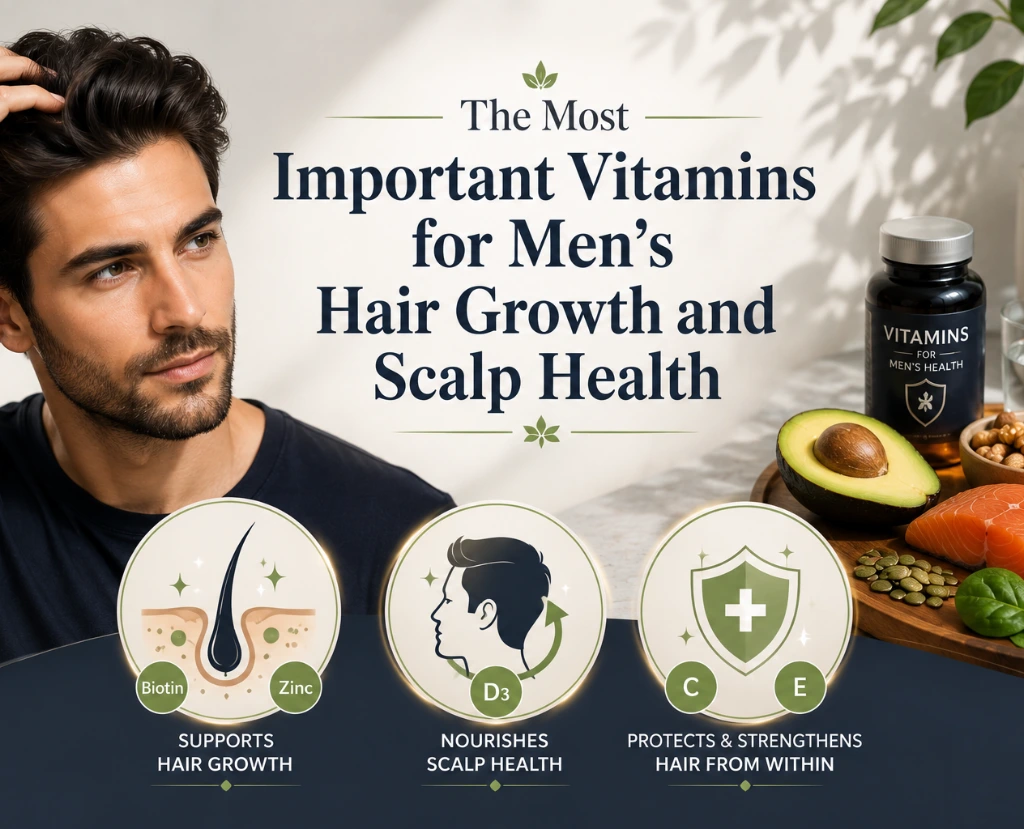
The Most Important Vitamins for Men’s Hair Growth and Scalp Health
Most men who start noticing hair thinning tend to look outward first — better shampoos, scalp serums, thickening sprays. And whilst some of those products have their place, what the hair actually needs to grow properly is largely determined by what is happening internally. Vitamins and minerals are not a secondary consideration when it comes to hair growth; they are a primary one.
At Cosmeticstar in Leeds, we regularly see men whose hair thinning has a significant nutritional component — and who have been managing the cosmetic side of the problem without addressing its roots. This blog covers the vitamins and nutrients that genuinely matter for men’s hair growth and scalp health, what they each do, and the most effective ways to ensure your levels are adequate.
Why Nutrition and Hair Growth Are More Connected Than Most Men Think
Hair follicles are among the most metabolically active cell populations in the human body. They require significant energy and a consistent supply of specific nutrients to complete healthy growth cycles. When those nutrients are insufficient, follicles compromise — they produce finer, weaker strands, shift into the resting phase earlier than they should, and recover more slowly between cycles. The NHS overview of hair loss in men focuses primarily on genetic and hormonal factors — both of which are real — but nutritional deficiency as a contributing or compounding factor is frequently underappreciated in the clinical picture.
The Vitamins and Nutrients That Matter Most for Men’s Hair
Vitamin D
Vitamin D deficiency is significantly more widespread among men in the UK than most people realise — and its effects on hair health are direct. Vitamin D receptors are present on hair follicle cells, and adequate vitamin D is required for follicles to move efficiently through the growth cycle. Low levels have been associated with increased hair shedding, slower regrowth, and a higher incidence of alopecia areata. For scalp health specifically, vitamin D supports the skin barrier and reduces inflammatory signalling — relevant for men dealing with seborrhoeic dermatitis or scalp dryness.
Vitamin B12
B12 is involved in red blood cell production, DNA synthesis, and the function of every cell in the body — including hair follicles. Without adequate B12, the delivery of oxygen and nutrients to follicular tissue is impaired. Men who follow plant-based diets, those who train intensively, and those over 40 are at higher risk of B12 insufficiency. The impact on hair tends to be diffuse — overall thinning and reduced growth rate rather than a specific pattern — and is frequently attributed to stress or genetics without the underlying deficiency being investigated.
Zinc
Zinc has a particularly important role in men’s hair health because of its involvement in regulating the enzymes that control DHT levels in the scalp. DHT — dihydrotestosterone — is the hormone responsible for follicular miniaturisation in androgenetic alopecia. Adequate zinc helps to modulate DHT activity at the follicular level, offering some degree of natural protection against the miniaturisation process. Zinc also supports sebum production in the scalp and is involved in the repair of damaged follicular tissue. Men who train frequently, are under significant stress, or consume a diet low in animal products are at higher risk of zinc depletion.
Iron and Ferritin
Whilst iron deficiency and low ferritin are more commonly discussed in women, they are a more frequent contributor to hair loss in men than is generally acknowledged. Men who follow plant-based or vegetarian diets, those who train at high intensity, and those with gut absorption issues can develop low ferritin with genuine consequences for hair growth. Ferritin is the stored form of iron used by follicles as fuel during the active growth phase — and when stores are low, follicles underperform.
Biotin (Vitamin B7)
Biotin is a coenzyme involved in keratin production — the structural protein that makes up the hair shaft. Low biotin contributes to hair that breaks easily, grows slowly, and lacks thickness. Whilst severe deficiency is uncommon in men who eat a varied diet, stress, alcohol consumption, and certain medications can deplete biotin over time. The scalp also benefits from adequate biotin, which supports the health of the skin cells surrounding the follicle.
Vitamin A
Vitamin A supports sebum production in the scalp — the natural oil that lubricates hair follicles and maintains scalp hydration. Insufficient vitamin A contributes to a dry, flaky scalp environment that is less than ideal for hair growth. It is worth noting, however, that excess vitamin A from high-dose supplementation can actually exacerbate hair loss — balance and proper testing are important.
Vitamin C
For men, vitamin C is relevant both as an antioxidant that protects follicular tissue from oxidative stress, and as an enhancer of iron absorption. Men who train frequently produce more free radicals, making antioxidant support — including vitamin C — more important than a sedentary individual would require.
Treatment Options at Cosmeticstar, Leeds
Vitamin Injections
For men with identified deficiencies in B12, vitamin D, or zinc, our Vitamin Injections in Leeds deliver targeted nutrients intramuscularly for complete absorption — bypassing the gut and ensuring therapeutic levels are reached quickly.
IV Drip Therapy
For a comprehensive nutritional approach, our IV Drip Therapy in Leeds provides an intravenously delivered blend of vitamins, minerals, and amino acids tailored to each patient’s profile — the most efficient way to address multiple nutritional factors simultaneously.
PRP Hair Treatment
Once nutritional foundations are in place, PRP Hair Treatment in Leeds delivers concentrated growth factors directly to thinning follicles — reactivating dormant hair and improving density alongside the internal nutritional support.
GFC Hair Therapy
For men whose hair thinning is more advanced or progressing more quickly, GFC Hair Therapy in Leeds offers a more potent growth factor treatment — the most advanced non-surgical option available for restoring men’s hair.
Practical Steps for Men
- Get a blood panel including vitamin D, B12, ferritin, zinc, and testosterone — this takes less than thirty minutes and gives you a clear picture
- Do not assume your diet is providing everything your hair needs — even well-intentioned diets have gaps
- If oral supplements have not shifted your levels or improved your hair after three months, consider injectable or IV correction
- Address nutritional deficiencies alongside clinical hair treatment for the best combined outcome
Consult Cosmeticstar in Leeds
If you want to understand the full nutritional picture behind your hair health and get proper guidance on the most effective treatment approach, Cosmeticstar in Leeds offers thorough, honest consultations. Chat now — click the link and you will be redirected straight to WhatsApp.
Conclusion
The vitamins that matter most for men’s hair growth are well understood — but knowing which ones you are actually deficient in requires testing, not guessing. Getting the nutritional foundations right, combined with clinical hair treatment at Cosmeticstar in Leeds, gives men the best possible chance of meaningful, lasting improvement in hair growth and scalp health.
Privacy Notice: Your data is handled in accordance with UK GDPR. Please review our Privacy Policy for full details.
Disclaimer: This blog is for educational purposes only. Always consult a qualified professional before beginning any treatment.
Frequently Asked Questions
Q: Which vitamin deficiency most commonly causes hair loss in men?
A: Vitamin D deficiency is the most commonly identified nutritional driver of hair shedding in men, followed by zinc insufficiency and, in some groups, low B12 and ferritin.
Q: Can improving vitamin levels reverse male pattern baldness?
A: Nutritional optimisation can slow progression and improve the quality of existing hair, but it does not reverse established genetic alopecia on its own. Combined with PRP or GFC treatment in Leeds, it produces significantly better outcomes.
Q: Are vitamin injections worthwhile for men with hair loss?
A: For men with identified deficiencies, vitamin injections provide reliable, complete absorption that oral supplements often cannot match — particularly for B12 and vitamin D.
Q: How long before nutritional improvements affect hair growth?
A: Nutritional improvements take three to five months to produce visible effects on the hair, as they need to work through the hair growth cycle.