
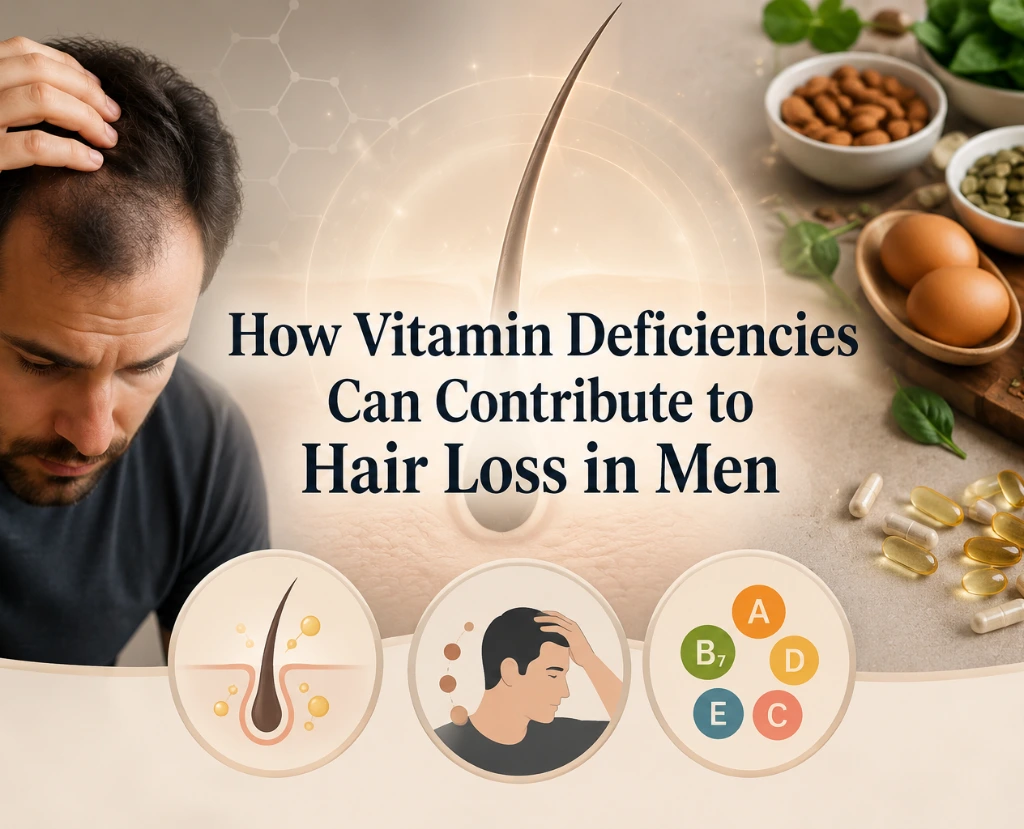
How Vitamin Deficiencies Can Contribute to Hair Loss in Men
The narrative around male hair loss tends to be dominated by one word: genetics. And whilst androgenetic alopecia is genuinely the most common cause of hair loss in men, it is rarely the only factor at play. Vitamin and mineral deficiencies compound genetic predisposition — they accelerate progression, reduce the hair’s ability to recover, and create a scalp environment that is actively hostile to healthy follicular function. Addressing them is not a substitute for clinical treatment, but ignoring them is leaving a significant variable unmanaged.
At Cosmeticstar in Leeds, we routinely identify nutritional factors contributing to men’s hair loss — factors that would continue undermining treatment results if they were not addressed alongside clinical intervention. This blog explains which deficiencies matter most, how they contribute to hair loss, and what effective correction looks like.
How Nutritional Deficiencies Affect the Hair Follicle
Hair follicles operate in growth cycles that require consistent energy and nutrient supply. When specific nutrients are insufficient, follicles shorten the active growth phase, produce finer and weaker strands, and shed earlier than they should. In men already predisposed to androgenetic alopecia, this nutritional compromise can significantly accelerate the visible progression of hair loss. The American Academy of Dermatology’s resource on hair loss acknowledges the role of nutritional deficiency alongside genetic and hormonal factors in a well-rounded clinical assessment.
The Key Deficiencies That Contribute to Men’s Hair Loss
Vitamin D
The vitamin D–hair loss connection is one of the most well-evidenced nutritional links in dermatological research. Vitamin D receptors on follicular cells regulate the initiation of the anagen growth phase. Without adequate vitamin D, follicles cycle less efficiently — spending more time dormant and less time actively producing hair. In men who are already genetically predisposed to androgenetic alopecia, this follicular inefficiency adds to the DHT-driven miniaturisation that is already underway. UK men, given the climate and the significant proportion who work indoors, are at higher risk than many people appreciate.
Zinc
Zinc has a direct relationship with DHT — the hormone primarily responsible for follicular miniaturisation in male pattern baldness. Zinc inhibits the activity of 5-alpha reductase, the enzyme that converts testosterone to DHT. Sufficient zinc levels therefore offer a degree of natural modulation of the DHT-driven process. Conversely, zinc deficiency allows 5-alpha reductase activity to proceed relatively unchecked. Men who train intensively lose zinc through sweat, and those who are under chronic stress deplete zinc more rapidly than their diet can typically replace it.
Vitamin B12
B12 deficiency reduces the efficiency of oxygen and nutrient delivery to follicular tissue by impairing red blood cell production. This functional under-nutrition at the follicular level is often gradual and subtle — manifesting as slower hair growth, reduced strand thickness, and an overall decline in hair density that can take months to become obviously visible. Men on plant-based diets, those taking metformin for diabetes, and those over 40 — whose intrinsic factor production naturally declines — are at the highest risk.
Iron and Ferritin
Whilst the link between ferritin deficiency and hair loss in women is well documented, the same association exists in men — just with less clinical attention paid to it. Men who train at high intensity, follow plant-based diets, or have gut conditions affecting iron absorption can develop low ferritin with genuine consequences for follicular function. Ferritin is the stored iron that hair follicles use as fuel during the anagen phase — when it falls below functional levels, the follicle’s ability to sustain active growth is directly impaired.
Biotin
Biotin is required for keratin synthesis — and without it, the structural quality of the hair shaft deteriorates. Men with low biotin tend to notice hair that breaks easily, grows slowly, and lacks the resilience it once had. Alcohol consumption, stress, and certain medications can all deplete biotin over time. The scalp also benefits from adequate biotin levels, which support the health of the skin cells that surround and protect each follicle.
Selenium
Selenium is a less commonly discussed but clinically relevant nutrient for hair health in men. It acts as an antioxidant that protects follicular cells from oxidative damage and plays a role in thyroid hormone metabolism — which itself has a significant impact on hair growth cycles. Selenium deficiency has been associated with hypothyroidism-related hair loss and a general deterioration in hair texture and growth rate. As with vitamin A, excessive selenium supplementation can conversely cause hair loss — making testing before supplementing particularly important.
Treatment Options at Cosmeticstar, Leeds
Vitamin Injections
For targeted correction of specific deficiencies identified through testing, our Vitamin Injections in Leeds provide reliable, fully absorbed delivery of B12, vitamin D, zinc, biotin, and other key nutrients — without the absorption variability of oral supplements.
IV Drip Therapy
Where multiple deficiencies are present — which is often the case in men with hair loss — our IV Drip Therapy in Leeds provides a comprehensive intravenous nutritional correction, tailored to the individual patient’s needs and delivered for complete systemic uptake.
PRP Hair Treatment
Nutritional correction creates the right internal environment; PRP Hair Treatment in Leeds provides the direct follicular stimulus to reactivate dormant or underperforming follicles alongside it.
GFC Hair Therapy
For men with more significant or faster-progressing hair loss, GFC Hair Therapy in Leeds delivers a more potent, more targeted growth factor treatment that produces a stronger follicular response than standard PRP.
What Men Should Do Right Now
- Request a specific blood panel — ask for vitamin D, B12, ferritin, zinc, selenium, and thyroid function (TSH)
- Do not assume genetics is the whole story if your hair loss has accelerated recently — nutritional changes can trigger or worsen loss
- Address identified deficiencies through injectable or IV correction if oral supplements have not produced measurable improvement
- Combine nutritional support with clinical hair treatment for a significantly better outcome than either approach alone
Speak to Cosmeticstar in Leeds
If you want an honest, thorough assessment of the nutritional and clinical factors behind your hair loss, Cosmeticstar in Leeds is here to help. Chat now — click the link and you will be redirected straight to WhatsApp.
Conclusion
Vitamin deficiencies do not cause male pattern baldness on their own — but they contribute to it, accelerate it, and significantly limit the effectiveness of any clinical treatment that does not address them. Cosmeticstar in Leeds takes the full nutritional and clinical picture seriously for every patient.
Privacy Notice: Your data is handled in accordance with UK GDPR. Please review our Privacy Policy for full details.
Disclaimer: This blog is for educational purposes only. Always consult a qualified professional before beginning any treatment.
Frequently Asked Questions
Q: Can correcting vitamin deficiencies reverse hair loss in men?
A: Correction alone is unlikely to reverse established androgenetic alopecia, but it can slow progression, improve hair quality, and significantly enhance the results of PRP or GFC treatment in Leeds.
Q: Does zinc really help with DHT and hair loss?
A: Zinc inhibits the enzyme that converts testosterone to DHT — so adequate zinc levels do offer a degree of natural modulation of the DHT-driven process. It is not a substitute for clinical treatment but is a meaningful supporting factor.
Q: Is vitamin D deficiency common in men who exercise regularly?
A: Yes — indoor training, high SPF sunscreen use, and limited outdoor exposure all reduce vitamin D synthesis. Men who train intensively indoors year-round are among the most commonly deficient groups.
Q: How do I know which deficiency is contributing to my hair loss?
A: A targeted blood panel — specifically requesting ferritin, vitamin D, B12, zinc, and thyroid function — is the only reliable way to identify nutritional contributors to your hair loss.