
Beyond the Needle: Unmasking the Myths of Modern Aesthetics cuts through hype with a secular, evidence-based lens. You’ll see how taste shifts under Enlightenment legacy, media, and social platforms, while real confidence rests on wellness-first choices and self-acceptance. Debunk common myths that sensationalize procedures, and prioritize health, consent, and ethical practices. Diverse beauty standards matter, and personal playbooks help you navigate trends without sacrificing values. If you keep exploring, you’ll gain clearer guidance for authentic self-expression.
The Origins of Modern Aesthetics

The origins of modern aesthetics emerge from a confluence of philosophical inquiry, empirical study, and cultural shifts in early modern Europe. You will trace how aesthetic thought coalesced from Enlightenment critiques of taste, the science of perception, and the arts’ evolving institutions. This lineage links Kantian reflections on judgment to later empirical investigations, creating an origins origins framework that clarifies how value judgments became subjects of rational inquiry. You encounter sources that map aesthetics lineage across disciplines, showing continuity from classical theories to contemporary discussions of beauty, form, and style. You’ll find that secular, evidence-based perspectives anchor debates about taste, reducing superstition while highlighting social context. This grounding fosters belonging through shared, careful reasoning about how beauty and meaning arise.
Who Defines Beauty Today?
Beauty today isn’t fixed; it’s shaped by evolving cultural standards, media, and consumer industries. You’ll see that what’s considered desirable changes across communities, time periods, and platforms as norms shift. This discussion examines who sets those standards and how evidence from research, markets, and policy informs the picture.
Who Sets Beauty
Who defines beauty in today’s world, and how do those definitions shift across cultures, platforms, and industries? You observe a mosaic where media, markets, and institutions influence standards, yet individual perception remains central. Across cultures, platforms, and industries, definitions diversify, reframing beauty through lived experience, demographics, and evolving norms. Evidence shows social media accelerates trend cycles, while medical and cosmetic sectors formalize procedures; traditional media retains influence, though in more fragmented ways. You shape your own criteria by evaluating authenticity validation and the credibility of sources, not just popularity. Audience responsibility emerges as a collective practice: question algorithms, seek diverse voices, and contextualize trends. By prioritizing transparent messaging and reproducible findings, you contribute to a more inclusive, evidence-based dialogue about beauty.
Cultural Standards Evolve
Cultural standards of beauty are not fixed; they change as societies, platforms, and industries redefine what’s desirable. You observe how conversations, data, and representation shift public perception, revealing a cultural shift rather than a universal decree. Beauty today is defined by diverse voices—creators, scientists, educators, and communities—whose counter-narratives push the sphere toward inclusion. Evidence shows evolving norms across regions, ages, and identities, with social media amplifying underrepresented aesthetics and challenging historic hierarchies. This is not a referendum on worth but a trajectory toward plural criteria of value, where health, agency, and authenticity matter alongside appearance. You belong to a global audience negotiating standards, affirming that beauty is a dynamic construct, continually renegotiated through dialogue, critique, and shared experiences.
Debunking Aesthetic Myths That Undermine Confidence
There’s a lot of hype around aesthetics, but most so-called truths aren’t supported by solid evidence. You deserve clear, evidence-based guidance that honors your need for belonging, not fear or trend-chasing. In this piece, we debunk common myths that undermine confidence—like the idea that a single procedure guarantees lasting happiness or that beauty standards track fixed milestones. Instead, you’ll see how aesthetic choices interact with personal context, values, and realistic outcomes. We highlight practical, measurable approaches: confidence metrics that reflect resilience, self-efficacy, and aligned goals. Myth busting rituals can guide informed decisions without overpromising miracle results. By evaluating claims critically, you steward your time, finances, and wellbeing, cultivating a grounded sense of self that remains steady across evolving standards.
Wellness-First Aesthetics: Health Before Shine
Wellness should guide aesthetic choices, not the promise of an instant glow. You’re choosing practices rooted in evidence, not hype, and that keeps your routine sustainable over time. Wellness-first aesthetics means weighing benefits against risks, prioritizing intact skin barriers, and recognizing limits of testimonials. You’ll encounter “wellness myths” that overpromise results, but health first remains the baseline: balanced nutrition, sleep, stress management, and sun protection inform outcomes more reliably than quick fixes. Ethical skincare and non toxic rituals reduce exposure to unnecessary chemicals while supporting skin’s natural function. This approach nurtures belonging through shared values of safety, transparency, and consent. By focusing on verifiable tools, you harmonize beauty goals with long-term well-being, rather than chasing fleeting trends or external validation.
How Ads and Celebrities Drive the Hype Cycle
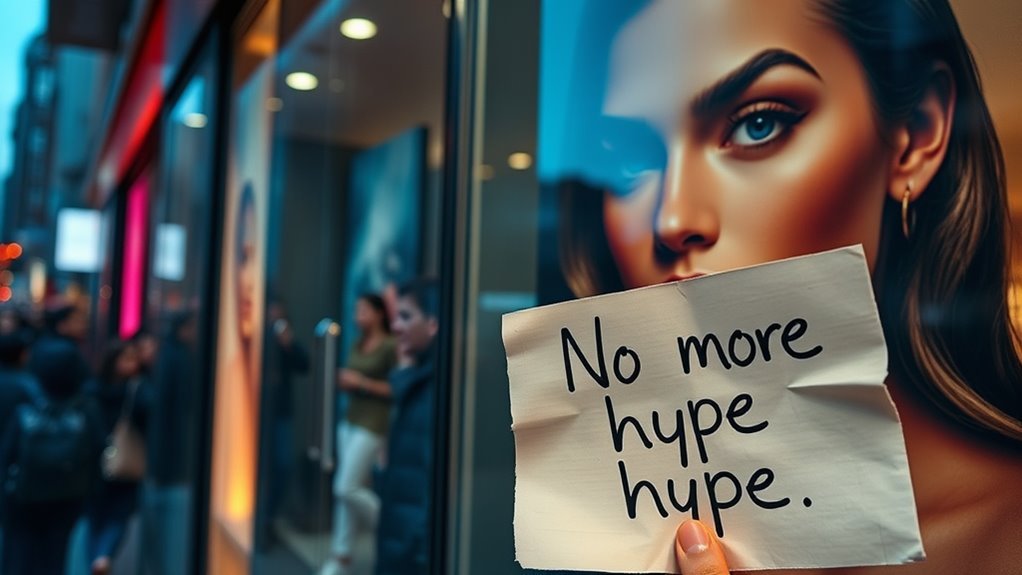
You observe how celebrity-driven hype waves shape public interest and remodeling of beauty norms. Ad patterns coordinated to amplify messaging create a predictable cycle that fuels demand and curiosity. This discussion will examine the evidence around celebrity influence and strategic advertising, focusing on how these elements interact to sustain the hype.
Celebrity-Driven Hype Waves
Celebrity-driven hype often follows a predictable arc: ads and endorsement deals boost visibility, spark social media chatter, and nudge consumer demand before skeptics have a chance to scrutinize the claims. You observe how Celebrity endorsements concentrate attention around a product, then fade into routine consumer cultures as novelty wears off. In this cycle, platforms amplify momentum with shareable clips, influencer features, and narrative framing that emphasizes lifestyle resonance over technical proof. Instagram filters can exaggerate perceived outcomes, reinforcing desirability without substantiation. Yet evidence accumulates slowly, and independent reviews seldom align with celebrity narratives. You seek belonging through balanced choices, not borrowed gloss. A critical eye, informed by data and transparency, helps you participate in trends without surrendering skepticism or your agency.
Ad Patterns Orchestrated Buzz
Ad patterns choreograph buzz by weaving ads, endorsements, and platform mechanics into a self-reinforcing hype cycle. You observe how marketing ecosystems align celebrity influence with algorithmic boosts, creating predictable waves of interest that feel communal. Evidence shows ad patterns leverage social proof, timing, and cross-promotion to sustain attention beyond initial novelty. This orchestrated buzz often reinforces consumer norms, shaping perceptions of desirability and legitimacy. Critics argue that hype cycles can obscure objective quality, yet data reveals repeatable mechanics: sequenced releases, influencer participation, and shared creator ecosystems. You’re invited to scrutinize where hype ends and value begins, recognizing both the collaborative benefits and the risks of conformity. Informed engagement promotes belonging without surrender to quick excitement, grounding judgments in transparent, secular analysis of ad patterns and celebrity influence.
Diverse Visions of Beauty and Real Confidence
Are there truly as many visions of beauty as there are individuals? You, like many readers, seek genuine belonging through evidence-based understanding. Diverse perceptions of beauty exist across cultures, ages, and contexts, and research shows these standards shift with media, community norms, and personal experience. Real confidence emerges when you recognize beauty pluralism—that multiple, valid ideals can coexist without a single verdict of worth. Inner validation arises from aligning self-worth with intrinsic qualities, not conformity to a fixed standard. Studies emphasize that self acceptance, adaptive coping, and reflective appraisal predict resilience in appearance-related challenges. By embracing varied ideals, you reduce comparison harm and cultivate a nuanced self-view. This secular framing supports inclusive, nonjudgmental exploration of your evolving sense of beauty.
Safe, Ethical, Personal Aesthetic Choices
How can you steer aesthetic choices that are safe, ethical, and truly personal? You evaluate risks, seek credible sources, and prioritize autonomy over trend. Evidence suggests that informed consent, reputable practitioners, and transparent processes reduce harm and dissatisfaction, while supporting long-term well-being. Ethical decisions include respecting cultural contexts, avoiding coercion, and avoiding unsafe practices. Personal expression can flourish through intentional material choices, fit, and care routines that coincide with values. Consider unconventional textures as a way to convey mood without invasive procedures, and use private expression to foster confidence grounded in self-understanding rather than external validation. Balance aesthetic goals with health, privacy, and measurable outcomes, documenting preferences and revisiting them as circumstances change. This approach promotes belonging through responsible, thoughtful self-presentation.
Build Your Personal Aesthetic Playbook
What should your personal aesthetic playbook include to guide safe, authentic choices?
A clear framework helps you navigate trends while honoring your values. Your playbook should combine evidence-based boundaries, personal preferences, and cultural awareness to cultivate artful confidence and a healthier global body image.
- Core values and goals for style
- Boundaries against risky procedures and pressure
- Methods to assess trends critically
- Practices that reinforce belonging without conformity
Use this living document to reflect, adjust, and document outcomes. Revisit seasonally to track impact on self-esteem, social connections, and comfort in your skin. Embrace diverse influences to broaden global body image perspectives. Prioritize practicality, cost, and safety in decisions. The result is a portable, secular guide that supports authentic expression and shared confidence.
Frequently Asked Questions
How Do Trends Influence Individual Aesthetic Decisions Today?
Trends influence how you weigh appearance, but your decisions remain your own. You’re influenced by social norms, media, peer validation, and accessibility, yet you assess risks and benefits through evidence and personal values. Your individual choices reflect you and your goals, not just hype. An ethical messaging approach supports informed consent, while clinicians clarify options, limits, and outcomes. The clinician role is to provide unbiased information, validate preferences, and aid you in making grounded, culturally affirming choices.
Can Beauty Standards Harm Mental Health and Self-Worth?
Yes, beauty standards can harm mental health and self-worth. When you compare yourself to idealized images on social media, you may spiral into body image concerns, loneliness, or anxiety. But the evidence also shows resilience: seek diverse role models, limit exposure, and practice critical appraisal of media. You deserve belonging, not perfection. Prioritize self-compassion, support networks, and professional help if needed, recognizing that health and value aren’t defined by appearance or trends.
What Role Do Clinicians Play in Ethical Aesthetic Choices?
Clinicians safeguard patient autonomy by clearly informing options and risks, avoiding coercion, and supporting informed choice. Ethics education helps you recognize power dynamics, manage conflicts of interest, and uphold beneficence and nonmaleficence in aesthetic care. You should assess expectations, provide evidence-based guidance, and respect diverse values. In practice, you document consent, revisit decisions, and ensure cultural inclusivity. This approach fosters trust, belonging, and patient-centered outcomes grounded in rigorous ethics and transparent communication.
How Can Someone Personalize Aesthetics Beyond Hype and Ads?
You can personalize aesthetics by prioritizing personal expression and evidence over hype, guided by mindful branding that harmonizes with your values. Gather diverse, reputable sources on outcomes, risks, and satisfaction, then compare options against your long‑term goals. Seek clinician input for safety and realism, track results, and adjust as needed. You belong when choices reflect you, not trends. Build a plan rooted in data, transparency, and self‑awareness, embracing gradual, patient, and authentic changes.
Are Natural-Looking Results Truly Sustainable Long-Term?
Natural-looking results can be sustainable long-term when you choose careful technique, quality products, and proper upkeep. Evidence suggests natural longevity depends on gradual improvements, skillful planning, and realistic expectations—not hype. Cosmetic sustainability relies on consistent aftercare, safe procedures, and periodic re-evaluation. You’ll belong to a community that values balanced choices and measurable outcomes, not fleeting trends. With patience and informed decisions, you can maintain authentic appearance while minimizing risk and downtime.
Disclaimer: This content is for educational purposes only. Individual results may vary. Always consult a qualified practitioner before starting treatment.