


IV therapy for athletes supports fast recovery and peak performance by rapidly restoring intravascular volume, optimizing hydration and electrolytes, and delivering targeted micronutrients under medical supervision. Protocols synchronize infusion timing with training phases to augment glycogen replenishment, reduce oxidative stress, and improve immune resilience. Treatments emphasize safety, aseptic technique, individualized dosing, and monitoring biomarkers. Clinic or at-home options exist, each with clear protocols and consent. If you want to explore how to tailor this approach for you, more details follow.
What IV Therapy Is for Athletes: A Recovery and Performance Primer

Intravenous (IV) therapy for athletes involves delivering fluids, electrolytes, vitamins, and sometimes medications directly into the bloodstream to support hydration, recovery, and performance. In this primer, you’ll learn how IV therapy can restore fluid balance after intense sessions and reduce fatigue, with attention to timing, dosing, and safety. Evidence supports improved rehydration rates and faster subjective recovery when IV administration is clinically appropriate and properly monitored. You’ll also understand who administers therapy, where it’s done, and how logistics—ensuring sterile technique, proper infusion rates, and equipment readiness—affect outcomes. Ethical considerations matter: transparency about indications, consent, and avoiding performance-enhancing misuse protect you and your team. IV logistics influence consistency, while ethical practices safeguard trust within your athletic community.
Key Components of an Athlete IV Formula
In an athlete-focused IV formula, you start with optimized hydration and electrolytes to restore fluid balance and support nerve and muscle function. You then add antioxidants and micronutrients to reduce oxidative stress and support metabolic recovery. This combination targets immediate rehydration and longer-term performance through evidence-based, precise dosing strategies.
Hydration and Electrolytes
Hydration and electrolytes are the foundation of an effective athlete IV formula, delivering rapid restoration of intravascular volume and cellular function. You’ll appreciate how balanced fluids support performance, recovery, and training consistency, especially after intense sessions. Evidence shows that precise electrolyte profiles prevent cramping, optimize nerve conduction, and sustain VO2 max. Your IV protocol targets hydration strategies that match sweat losses, while maintaining electrolyte balance to protect intracellular processes. Clinically, you monitor serum markers and adjust composition to individual needs, minimizing post-exercise fatigue and edema risk. With this approach, you support steady plasma osmolality and improved nutrient transport, preserving performance during density training cycles. You’ll feel integrated, informed, and confident in your recovery strategy.
- Hydration strategies
- Electrolyte balance
- Individualized dosing
- Post-exercise restoration
- Monitoring and adjustment
Antioxidants and Micronutrients
Antioxidants and micronutrients are essential components of an athlete IV formula, supporting cellular resilience and recovery after intense training. You optimize delivery of vitamin C, B-complex, zinc, magnesium, and trace elements to bolster antioxidant defenses and enzymatic function. Evidence suggests targeted micronutrients reduce oxidative stress, support mitochondrial efficiency, and aid repair processes without delaying readiness. In practice, your regimen emphasizes appropriate dosing, timing, and individualized needs, guided by clinical assessment and safety considerations. You benefit from precise hydration status monitoring to maximize uptake and minimize complications, while avoiding excess that could provoke adverse effects. Hydration myths aside, IV safety remains paramount: trained clinicians ensure aseptic technique, appropriate catheter placement, and monitoring for rare reactions. By understanding micronutrient roles, you foster performance consistency and a sense of belonging within a science-driven recovery culture.
Hydration and Electrolytes for Peak Performance
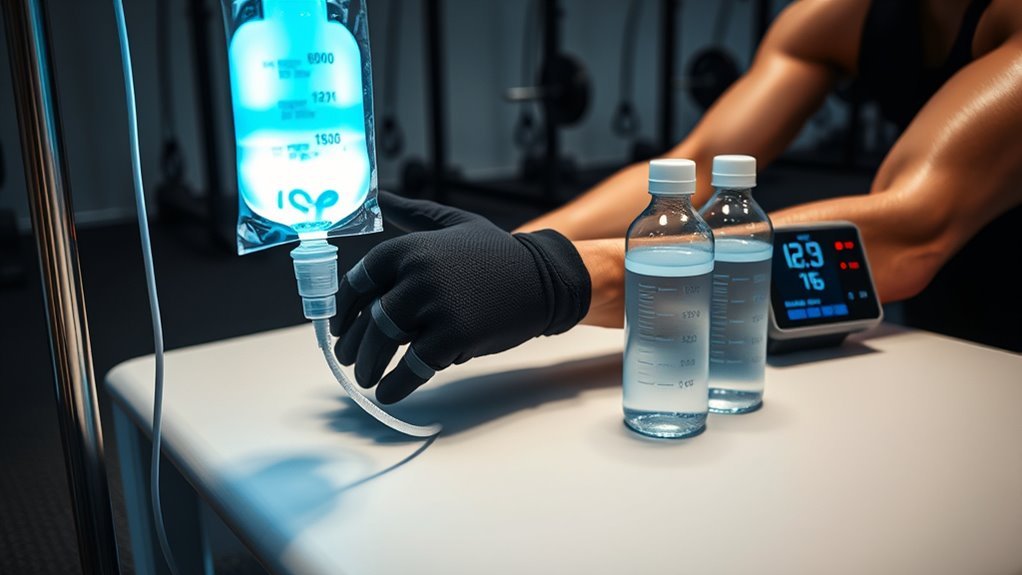
Optimal hydration sustains intravascular volume and sweat rate, which supports sustained performance and thermoregulation. Electrolyte balance, particularly sodium and potassium, is essential for nerve transmission, muscle contraction, and timely recovery. In practice, IV or oral strategies should align fluid and electrolyte delivery with individual sweat profiles to optimize performance and recovery.
Hydration for Performance
Ever wonder how fluids and electrolytes influence performance and recovery? You’ll optimize training and competition by prioritizing hydration focus and electrolyte balance. In practice, individualized fluid plans match sweat rate, climate, and exertion, reducing GI distress and early fatigue. Aim for consistent intake before, during, and after effort to maintain plasma volume and temperature regulation. Electrolyte-aware fluids support nerve signaling and muscle contraction, improving precision and endurance without cramping. Post-exercise rehydration should restore body mass and optimize recovery velocity, not just prove immediate comfort. Consider sip rates, palatability, and access to fluids in your sport setting to sustain adherence. Hydration strategies are a foundation for performance, conditioning you to perform with composure and confidence.
- Tailor fluids to your sweat rate and environment
- Prioritize steady intake before and during activity
- Choose electrolyte-balanced fluids
- Monitor body mass changes post-exercise
- Align hydration with training goals and recovery cues
Electrolytes and Recovery
Do electrolytes actually accelerate recovery, or is hydration alone enough to sustain performance? In practice, both elements matter. You need fluids to replace intravascular volume losses and maintain tissue perfusion, but electrolytes—sodium, potassium, chloride, and small amounts of magnesium—prevent hyponatremia, support nerve transmission, and optimize cellular function. Within a sports science framework, a tailored hydration strategy considers sweat rate, climate, and exercise intensity, aligning fluid and electrolyte intake with individual needs. IV therapy can rapidly restore deficits when oral intake is limited, yet evidence supports balanced oral rehydration as effective for most athletes. Prioritize timing around training, monitor osmolality, and avoid overcorrection. By integrating hydration strategy with electrolyte monitoring, you enhance recovery without compromising safety or performance. This approach fosters belonging through evidence-based, precise practice.
Micronutrients for Energy, Immunity, and Recovery
Micronutrients play a crucial role in sustaining energy, supporting immunity, and accelerating recovery in athletes. You benefit from targeted micronutrient support when used to complement macros and hydration, with evidence guiding dose ranges and safety. In practice, you’ll see improvements in reaction time, reduced illness duration, and faster muscle repair, provided you align with proper assessment and monitoring. Emphasize nutrient timing to maximize cellular utilization, and prioritize forms with proven bioavailability. Infusion safety remains essential: standardized protocols, aseptic technique, and clinician oversight minimize risk while enhancing consistency. Your choices should be individualized, data-informed, and transparently communicated within your training team.
Micronutrient optimization enhances energy, immunity, and recovery through evidence-based, individualized dosing and safe infusion practices.
- Vitamin and mineral balance supports endurance and immune resilience
- Bioavailable forms optimize uptake during recovery
- Monitoring prevents deficiencies and excesses
- Evidence-based dosing aligns with training load
- Clear consent and safety protocols sustain trust
Optimal Timing of IV Infusions Across Training Phases

Timing IV infusions should align with your training phase to maximize benefits, from base-building to peak competition. We’ll explore infusion scheduling strategies that optimize the recovery window, reduce downtime, and support consistent performance gains. This discussion focuses on practical timing considerations across phases and the evidence guiding when to infuse for best outcomes.
Timing Across Training Phases
Ideal IV timing harmonizes with the athlete’s training cycle to maximize recovery signals and minimize downtime. Across phases, you’ll align infusion timing to match intense blocks, taper weeks, and competition windows, reducing wasted sessions. Evidence supports phase-specific windows where fluid support complements tissue repair, glycogen replenishment, and immune resilience. Be mindful of timing mismatches that can erode perceived benefits, such as infusions delivered during peak workload or near key workouts. Clarity around dosage and schedule matters; avoid dosage ambiguity by confirming target concentrations and intervals with your clinician. Your goal is consistent, measured administration that respects recovery markers and training load.
- Align infusions with high-demand training blocks and rest weeks
- Use clear, pre-approved timing windows to reduce variability
- Document response to each session for trend analysis
- Coordinate with nutrition and sleep to maximize effects
- Prioritize individualized, phase-aware protocols
Infusion Scheduling Strategies
Infusion scheduling should align with each phase of training to optimize recovery signals while minimizing downtime. You’ll optimize dosing windows by matching microcycle demands to nutrient repletion, repair markers, and GI tolerance, reducing unnecessary sessions while maintaining cumulative benefits. In early base phases, prioritize steady, lower-volume infusions to support endurance adaptations without fatigue carryover. As intensity climbs, time infusions to post-session periods where muscle perfusion is high, maximizing substrate delivery and waste clearance. Mid-season peaks demand tighter coordination; schedule with travel, sleep, and meals to sustain consistent adherence. Maintain explicit infusion logistics, including site rotation and line maintenance, to ensure safety and comfort. The scheduling paradox arises when flexibility is needed for travel yet consistency supports signal reliability. Plan, reassess, and adjust collaboratively.
Recovery Window Optimization
How can you optimize recovery windows to maximize IV infusion benefits without adding unnecessary sessions? Optimal timing aligns IV sessions with training phases to support adaptation, minimize fatigue, and prevent overlap with peak soreness. Across cycles, base decisions on objective markers, not routine habit, ensuring dosing aligns with recovery needs and performance goals. Evidence suggests that strategic infusions can complement nutrition and sleep, while avoiding placebo effects through transparent expectations. Confidence in dosing, schedules, and mineral balance enhances adherence and outcomes. Tailor timing to inflammation, tissue repair, and glycogen replenishment, using short, targeted infusions when benefits are most likely to translate to performance.
- Align sessions with heavy-load days to support recovery
- Schedule post-match or race windows for pinnacle restoration
- Use objective markers to guide cadence and interval
- Communicate expectations to mitigate placebo effects
- Build dosing confidence through consistent monitoring
Safety, Dosing, and Medical Guidance for Athletes
When considering safety, dosing, and medical guidance for athletes, it’s essential to distinguish evidence-backed practices from unproven claims and to tailor recommendations to individual health status, sport, and governing rules. You’ll benefit from scrutinizing ingredients, infusion rates, and medical oversight to minimize safety concerns and novice misunderstandings. Dose decisions should align with goal, hydration, and electrolyte balance, avoiding dosing patterns that exceed recommendations. Always require qualified medical supervision, and verify facility compliance with sport regulations and anti-doping rules. Below, a concise framework highlights core considerations.
| Element | Guidance |
|---|---|
| Safety focus | Medical supervision, allergy checks, infection prevention |
| Dosing principles | Individualized, goal-aligned, avoid excess |
Clinic vs. At-Home IV: Pros, Cons, and What to Expect
Choosing between clinic-based IV therapy and at-home administration hinges on safety, supervision, and convenience. You’ll find that clinic-based care provides professional monitoring, sterile setup, and rapid access to emergency resources, which matters if you’re optimizing peak performance. At home, you may prioritize comfort, schedule flexibility, and privacy, though support varies by provider. The decision hinges on your confidence in the dosing plan, your access to trained staff, and your ability to manage aftercare. Expect clear protocols, informed consent, and documentation in either setting. Consider your recovery timeline, travel demands, and your comfort with home safety requirements.
Clinic-based IV therapy offers expert monitoring, while at-home care emphasizes comfort and flexibility.
- Enhanced supervision vs. autonomous administration
- Sterile technique standards
- Time and scheduling flexibility
- Emergency response availability
- Privacy and comfort considerations
Measuring Benefit: Recovery, Performance, and Biomarker Outcomes
Measuring benefit in IV therapy for athletes requires a structured appraisal of recovery, performance, and biomarker changes. You’ll track recovery timelines, including fatigue scales, muscle soreness, and return-to-training readiness, alongside objective performance metrics. Use standardized performance metrics—time-to-exhaustion, sprint speed, and interval work capacity—to quantify impact. Biomarker monitoring should focus on recovery biomarkers such as lactate clearance, inflammatory markers, and hematologic indices, interpreting shifts against baseline for individualized insight. Ensure consistent timing of assessments relative to sessions and supplementation. Synthesize subjective reports with objective data to determine clinically meaningful benefits, avoiding overinterpretation of isolated values. This approach fosters evidence-based decisions, supports shared goal-setting, and reinforces a sense of belonging within your team by aligning expectations with measurable outcomes.
Common Misconceptions About IV Therapy for Athletes
IV therapy for athletes has attracted interest as a fast track to recovery and performance gains, but several common misconceptions can mislead decision-making. You deserve clear, evidence-based guidance that respects safety and practicality. Misconception clarity matters: benefits vary by context, and IV therapy isn’t a universal fix. Safety positioning emphasizes trained administration, sterile techniques, and individualized dosing. When used appropriately, IV therapy can support hydration and micronutrient delivery without overestimating its impact on performance.
- IV therapy guarantees rapid, universal performance gains
- More fluids always equal better recovery
- Side effects are rare with any clinic
- Supplements replace balanced nutrition
- IV therapy substitutes sleep and rest
Note: This topic avoids specifics about integrated sleep/nutrition plans.
Building a Recovery Plan: Sleep, Nutrition, and IV Integration
What does an integrated recovery plan look like when sleep, nutrition, and IV therapy are coordinated to support performance? You align sleep optimization with targeted nutrition to restore glycogen, reduce catabolism, and stabilize cortisol. IV infusions serve as a timely adjunct, replenishing fluids and micronutrients depleted by training while minimizing GI burden during fatigue periods. Your schedule emphasizes consistent bedtimes, light exposure management, and a pre-sleep routine to enhance dream quality and circadian alignment. Nutrition focuses on protein, complex carbohydrates, and hydration strategies that sustain recovery between sessions. IV integration is data-guided, not routine, with plans adjusted after workouts, sleep metrics, and subjective recovery scores. This holistic approach fosters belonging through shared goals, clear benchmarks, and evidence-based practices that support durable performance gains.
Frequently Asked Questions
Do IV Therapies Speed up Long-Term Athletic Adaptation?
No, IV therapies don’t meaningfully speed up long term adaptation. You’ll likely see transient benefits from improved hydration or micronutrient delivery, but sustained adaptation relies on training stimulus, nutrition, and recovery quality. When considering IV timing, guarantee it harmonizes with evidence-based recovery plans rather than chasing quick fixes. You belong in a science-informed program that prioritizes long term adaptation, not shortcuts; discuss risks and expectations with your medical team to optimize outcomes.
Can IVS Replace Solid Nutrition During Training Cycles?
No, IVs can’t replace solid nutrition during training cycles. You still need whole foods and balanced macronutrients for sustained energy, gut health, and long-term adaptation. IV nutrition might supplement recovery, not substitute meals. Cold exposure can complement recovery strategies, but it doesn’t fix nutrient gaps. Rely on evidence-based fueling: whole foods, timing around training, and individualized plans. If you consider IVs, discuss with a clinician to avoid imbalances and ensure it fits your performance goals and sense of belonging in your team.
Are There Performance Bonuses Beyond Recovery and Energy Boosts?
You might think IV perks stop at recovery, but performance bonuses exist beyond energy. In allegory, envision your body as a trusted team; timely hydration status and reduced recovery latency push the game forward. You may experience sharper focus, steadier mood, and better decision-making during high workload. Evidence suggests improvements correspond with optimized hydration and recovery timelines, not magic. You’ll feel more connected to your training as your crew operates with clinic‑precision.
How Do IVS Affect Drug Testing and Anti-Doping Rules?
IV therapy can trigger testing implications if infusions exceed permitted thresholds or include prohibited substances, so you should know anti-doping rules and avoid banned components. You’ll face potential sanctions if labs detect non-compliant fluids. Stay informed about IV therapy risks, document all treatments, and consult your medical team and anti-doping authority beforehand. By understanding these rules, you’ll protect your integrity while pursuing peak performance and feel a sense of belonging in compliant, evidence-based care.
What Are Hidden Costs or Subscription Requirements for Regular Infusions?
Like a quiet forecast, you’ll face hidden costs and subscription requirements that aren’t upfront. You’ll want transparent pricing, so ask for itemized fees, IV solutions, admin, and any credentialed nurse time. Common hidden costs include follow-up visits, overage charges, and dilute discounts. Subscription plans may lock you in, with cancellation fees or minimum months. You deserve clarity, so request a written breakdown and compare plans before committing.