
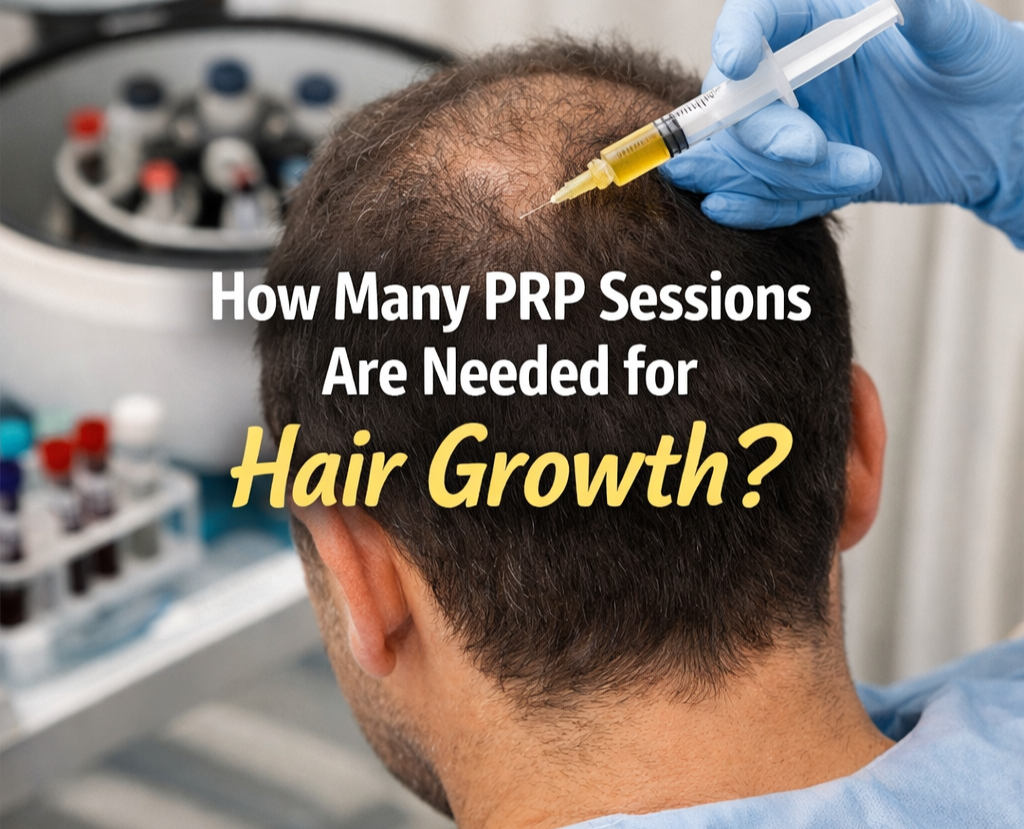
How Many PRP Sessions Are Needed for Hair Growth?
Hair loss can feel unpredictable and frustrating. Whether you are dealing with hair thinning in women, hair loss in women, or noticing increased hair falling out, one of the most common questions is:
How many PRP sessions are actually needed for visible hair growth?
PRP (Platelet-Rich Plasma) therapy is widely used as a non-surgical hair treatment for hair loss, especially for female hair loss, hormonal hair loss, and early thinning hair. However, results depend heavily on the number of sessions, consistency, and individual factors.
This blog explains how PRP works over time, how many sessions are typically required, and how to maximise results for stronger hair regrowth.
Understanding PRP Hair Treatment
PRP therapy uses your body’s own platelets to stimulate weak hair follicles. These growth factors improve blood supply and activate follicles that are still alive but not functioning optimally.
It is commonly recommended for:
- Hair loss and hair thinning
- Excessive hair loss in women
- Hair loss in 20s female
- Early stages of hormonal hair thinning
PRP is not a one-time solution. It works gradually, making multiple sessions essential for noticeable hair growth for women.
How Many PRP Sessions Are Typically Needed?
✔ Initial Treatment Phase
Most individuals require:
3 to 4 PRP sessions spaced 4–6 weeks apart
This phase focuses on:
- Reducing excessive hair loss
- Strengthening weak follicles
- Slowing down hair shedding
This is especially effective for:
- Rapid hair loss cases
- Early female hair loss
- Sudden hair thinning in females
✔ Maintenance Phase
After the initial sessions, maintenance is important.
1 session every 4–6 months is usually recommended to:
- Maintain hair growth
- Prevent further hair loss and hair thinning
- Support long-term hair loss
What Happens After Each PRP Session?
After 1 Session
- Minimal visible change
- Slight reduction in hair shedding
After 2–3 Sessions
- Noticeable reduction in hair falling out
- Improvement in hair texture
- Early signs of hair regrowth
After 4+ Sessions
- Improved density
- Stronger hair strands
- Visible hair growth
Factors That Affect the Number of Sessions
Severity of Hair Loss
Mild thinning hair responds faster, while severe hair loss in women may require more sessions.
Age and Hormonal Factors
Conditions like:
- Hair loss in women over 40
- Hair loss after menopause
may require longer treatment plans due to hormonal hair loss.
Nutritional Health
Deficiencies can slow results. Issues like:
- Excessive hair loss in women
- Poor hair growth
They are often linked to internal imbalances.
👉 Combining PRP with vitamin injections and IV drip therapy can help correct deficiencies and enhance overall outcomes.
Consistency of Treatment
Skipping sessions reduces effectiveness. Regular treatments are key for:
- Hair shedding treatment
- Sustained hair regrowth
Can PRP Work Alone?
PRP is highly effective, but results improve when the underlying cause of hair loss is addressed.
For example:
- Hormonal hair loss needs proper management
- Nutritional deficiencies must be corrected
- Lifestyle factors should be improved
When combined with internal support like vitamin injections and IV drip therapy, PRP outcomes can become more consistent and long-lasting.
How to Maximise PRP Results
✔ Start Early
PRP works best in the early stages of:
- Hair loss in 20s
- Thinning hair
- Poor hair growth
✔ Maintain a Healthy Diet
Proper nutrition supports:
- Hair growth for women
- Stronger follicles
- Better treatment response
✔ Stay Consistent
Completing all sessions ensures:
- Reduced hair shedding
- Improved hair growth
- Better long-term results
✔ Manage Hormonal Health
Addressing hormonal hair thinning improves treatment success, especially in:
- Hair loss in women in their 40s
- Hair loss after menopause
Prevention and Long-Term Care
To maintain results and reduce hair loss and hair thinning:
- Follow a consistent treatment plan
- Maintain nutritional balance
- Manage stress
- Monitor hormonal health
These steps support:
- Female hair loss prevention
- Long-term hair regrowth
- Reduced excessive hair loss
Conclusion
PRP is not a quick fix but a progressive treatment that delivers results over time. Most individuals require 3–4 initial sessions followed by maintenance treatments to achieve optimal hair growth treatment.
The number of sessions varies depending on the severity of female hair loss, underlying causes like hormonal hair loss, and overall health.
Combining PRP with supportive approaches such as vitamin injections and IV drip therapy can significantly enhance results by addressing internal deficiencies that contribute to hair loss in women.
Cosmeticstar is a trusted aesthetic clinic in Leeds offering personalised solutions for hair loss, helping individuals achieve healthier, fuller hair with advanced treatment approaches.
Chat now for personalised assistance.
GDPR Notice: All treatment-related information is handled in a GDPR-compliant manner. Your personal data is securely protected. Clicking the WhatsApp link redirects you to an external platform. Please review our Privacy Policy for more details.
Disclaimer: This blog is for educational purposes only. Always consult a qualified professional before starting any treatment.
FAQs
Q: Can fewer PRP sessions still give results?
A: Some improvement may occur, but completing the full course is essential for long-term hair growth.
Q: Does PRP stop hair loss completely?
A: PRP helps control hair loss and hair thinning, but maintenance is needed to sustain results.
Q: Can PRP help with hormonal hair loss?
A: Yes, but results improve when treatment for hormonal hair loss is managed alongside PRP.
Q: Do vitamin deficiencies affect the number of sessions needed?
A: Yes, deficiencies can slow progress, which is why combining with vitamin injections can help.
Q: Is PRP effective for older women?
A: It can help, but results vary in female hair loss over 60 hair loss depending on follicle health.