
PRP Hair Treatment in Leeds: Procedure, Benefits and What to Expect
Hair loss does not always happen suddenly. For many people, it begins with small changes such as reduced volume, finer strands, or more hair shedding than usual. Over time, these signs can become more noticeable and affect overall confidence.
PRP hair treatment is widely used as a non-surgical solution to manage hair loss and thinning hair. It works by improving the condition of existing hair follicles and supporting natural hair growth.
This guide explains how PRP works, who it is suitable for, and what you can expect from the treatment.
What is PRP hair treatment?
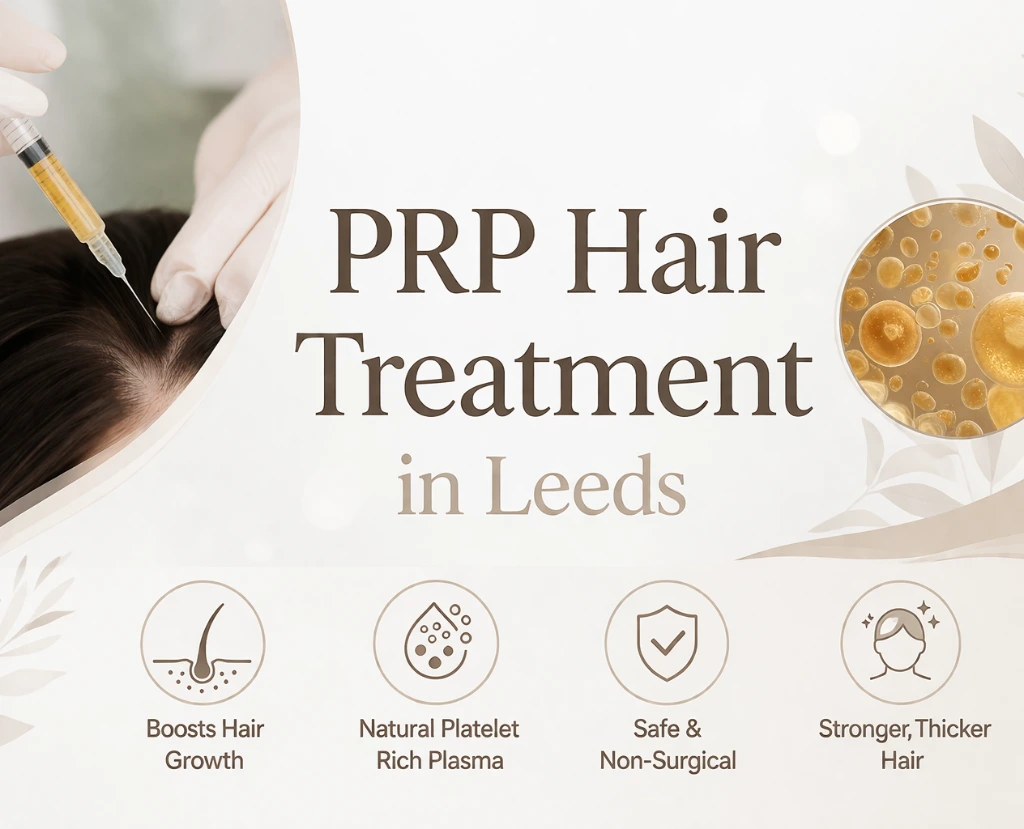
PRP (platelet-rich plasma) therapy uses a concentrated portion of your own blood to support hair follicles.
This plasma contains growth factors that help improve how hair follicles function. Instead of creating new hair artificially, PRP helps existing follicles become stronger and more active.
It is commonly used for:
- Hair thinning in women
- Female hair loss
- Hormonal hair loss
- General hair loss and hair thinning
How PRP hair treatment works
The procedure is simple and performed in a clinical setting.
Step 1: Blood collection
A small blood sample is taken in a clinical setting.
Step 2: Plasma separation
The sample is processed to extract platelet-rich plasma.
Step 3: Scalp injections
The prepared PRP is injected into areas where hair thinning or hair loss is visible.
The session usually takes less than an hour and does not require significant downtime.
Who is PRP suitable for?
PRP works best when hair follicles are still present but not functioning at their full potential.
It is suitable for:
- Hair thinning women
- Hair loss in women over 40
- Hair loss in 20s female cases
- Rapid hair loss in female patterns
- Thinning hair caused by stress or lifestyle changes
It can also be used alongside hair transplant procedures to support better results.
Benefits of PRP hair treatment
PRP is a popular choice because it supports natural hair regrowth.
Key benefits include:
- Non-surgical hair loss treatment
- Uses your body’s own biological material
- Helps reduce excessive hair loss in women
- Improves hair thickness and density
- Supports long-term hair regrowth
- Minimal recovery time
- Suitable for both men and women
It is often considered one of the best treatments for female hair loss when started early.
PRP benefits after hair transplant
PRP hair treatment is often recommended after a hair transplant to support recovery and improve overall results. After the procedure, the scalp needs time to heal, and PRP helps by improving circulation and supporting the transplanted follicles.
It can:
- Support faster healing of the scalp
- Improve graft survival
- Reduce temporary shedding after transplant
- Improve overall hair density and appearance
This makes PRP an effective addition to post-transplant care.
PRP treatment plan and results
PRP hair treatment is usually carried out in a structured course to achieve noticeable improvement.
Typical PRP plan:
- 3–4 sessions spaced 4–6 weeks apart
- Maintenance sessions every 6–8 months
What you may notice over time:
- Reduced hair shedding after the initial sessions
- Improvement in hair strength and texture
- Gradual increase in hair density and overall volume
Results vary depending on individual hair condition and consistency of treatment.
Pre-treatment care
Before your PRP session:
- Avoid alcohol and caffeine for 24 hours
- Stay well hydrated
- Eat a light meal
- Avoid anti-inflammatory medication unless advised
- Wash your hair before the appointment
Post-treatment care
After the treatment:
- Avoid washing your hair for 24–48 hours
- Avoid heat, sun exposure, and intense activity for two days
- Avoid hair products and colouring for a few days
- Follow the aftercare instructions provided
Mild redness or sensitivity may occur, but usually settles quickly.
PRP hair treatment cost in Leeds
The cost of PRP hair treatment depends on:
- Number of sessions required
- Individual hair condition
- Clinic expertise
A consultation is recommended to determine a personalised plan.
Conclusion
PRP hair treatment is an effective non-surgical option for managing hair loss and thinning hair. Improving the condition of existing hair follicles, it supports natural hair growth and helps restore hair density over time.
With consistent sessions, PRP can reduce shedding and improve overall hair quality.
If you are looking for a trusted non-surgical aesthetic clinic in Leeds, Cosmeticstar offers personalised PRP hair treatments designed to suit your individual needs.
Not sure how many PRP sessions you may need or whether the treatment is right for you? 👉 chat now for personalised guidance.
FAQs
Q: How soon can PRP results be seen?
A: Results usually appear gradually after a few sessions.
Q: Is PRP safe for hair loss treatment?
A: Yes, it uses your own plasma and is considered a safe procedure.
Q: How many sessions are required?
A: Typically, 3–4 sessions followed by maintenance sessions.
Q: Can PRP treat all types of hair loss?
A: It works best for early to moderate hair loss and thinning hair.
Q: Can PRP be used after a hair transplant?
A: Yes, it is commonly used to support healing and improve results.
GDPR Notice: All treatment-related information is handled in a GDPR-compliant manner. Your personal data is securely protected. Clicking the WhatsApp link will redirect you externally. Please review our Privacy Policy for more details.
Disclaimer: This blog is for educational purposes only. Always consult a qualified professional before starting any treatment.