
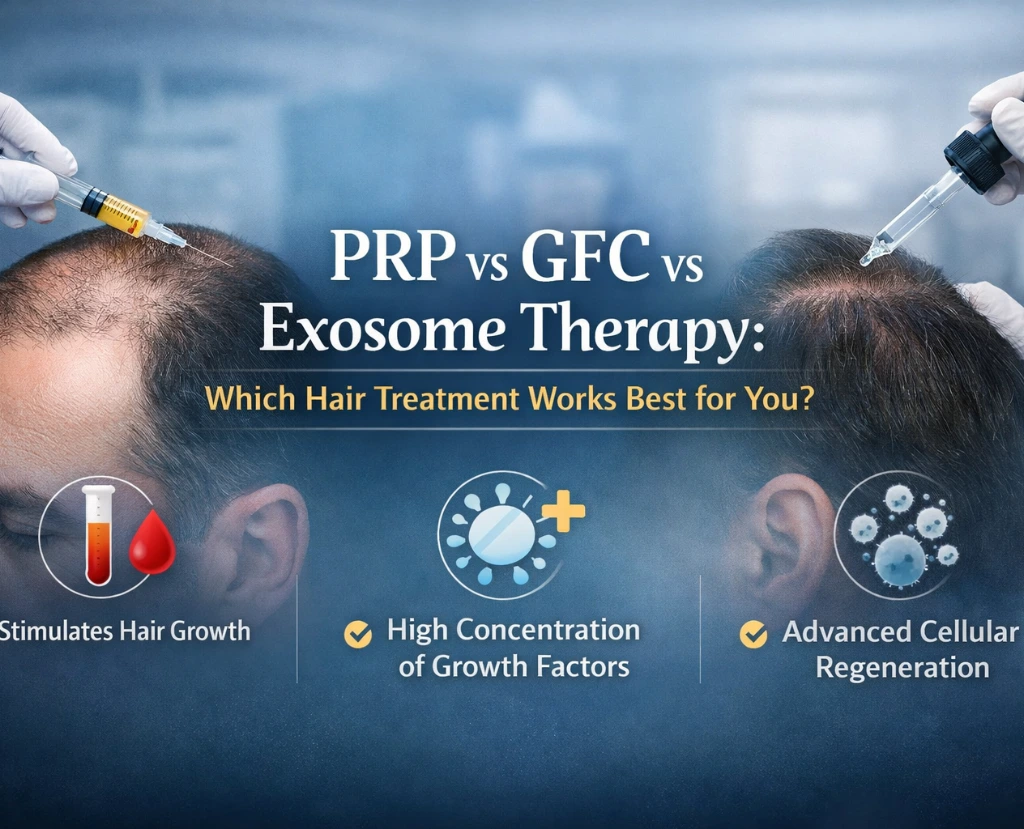
PRP vs GFC vs Exosome Therapy: Which Hair Treatment Works Best for You?
With the growing demand for non-surgical hair restoration, many women exploring treatment options often come across terms like PRP, GFC, and Exosome therapy. While all three are designed to improve hair growth, understanding how they differ can be confusing.
Hair loss is not the same for everyone. Some women experience gradual thinning, while others notice sudden shedding or reduced density over time. Because of this, choosing the right treatment depends on individual hair condition, underlying causes, and treatment goals.
This blog explains the differences between PRP, GFC, and Exosome therapy, and how they can be used individually or together to support better hair growth.
Understanding non-surgical hair restoration treatments
Non-surgical hair treatments focus on improving the function of existing hair follicles rather than replacing them.
These treatments aim to:
- Stimulate inactive or weak follicles
- Improve scalp health
- Support natural hair growth
- Reduce ongoing shedding
PRP, GFC, and Exosome therapy all fall into this category, but they work in slightly different ways.
What is PRP and how does it work?
PRP (platelet-rich plasma) is one of the most widely used treatments for hair loss.
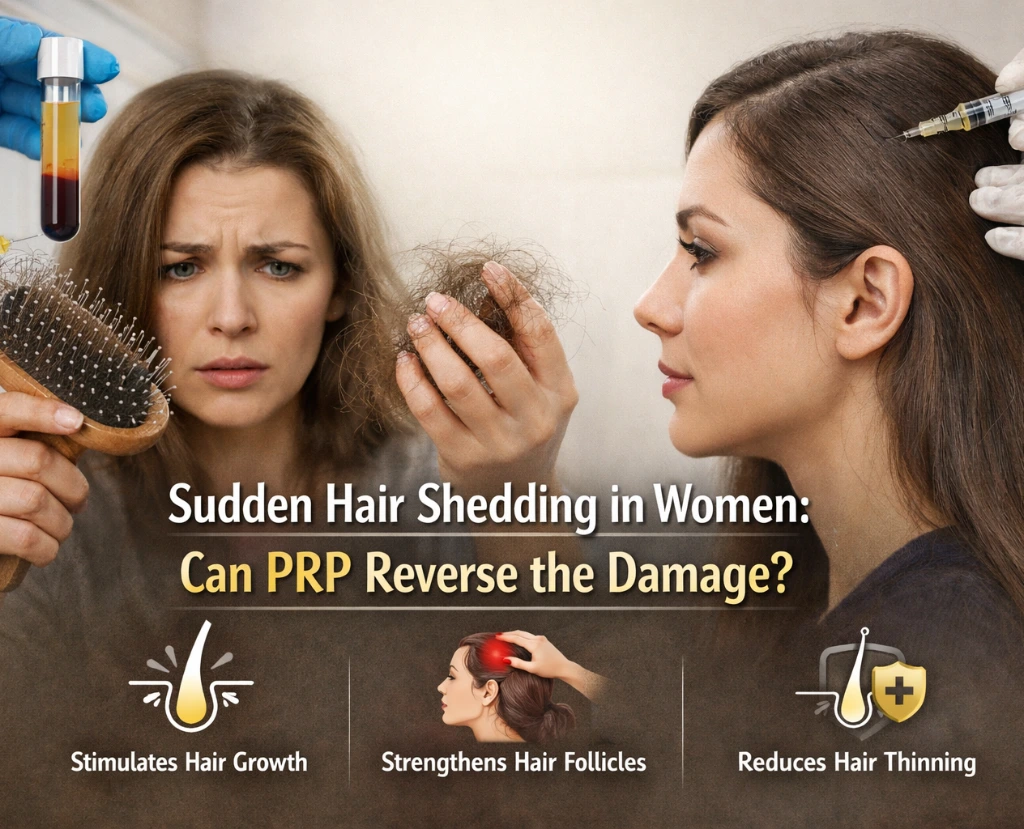
It involves extracting platelets from your own blood and using them to stimulate hair follicles. These platelets contain natural growth factors that help improve follicle activity.
PRP helps to:
- Strengthen hair roots
- Improve blood circulation in the scalp
- Reduce hair shedding
- Support gradual regrowth
It is often recommended as a first-line treatment for early to moderate hair loss.
What is GFC therapy?
GFC (growth factor concentrate) therapy is a more refined version of PRP. Instead of using whole plasma, it isolates a higher concentration of growth factors.
This makes GFC:
- More targeted in its action
- Less dependent on individual blood quality
- Potentially more consistent in certain cases
GFC can be useful for individuals who may not respond strongly to standard PRP or who require enhanced stimulation.
What is Exosome therapy?
Exosome therapy is a more advanced approach that focuses on cellular communication.
Exosomes are tiny signalling particles that help cells communicate and repair. When used in hair treatment, they help improve the overall environment of the scalp.
Exosome therapy supports:
- Cellular repair and regeneration
- Improved follicle health
- Enhanced response to other treatments
It is often used in combination with PRP or GFC rather than as a standalone solution.
Key differences between PRP, GFC, and Exosome therapy
Each treatment has its own role in hair restoration.
- PRP focuses on natural stimulation using your own platelets
- GFC provides a higher concentration of growth factors
- Exosome therapy supports deeper cellular repair and communication
Rather than competing treatments, they are often complementary and can be combined depending on the individual case.
Which treatment is best for you?
The right treatment depends on several factors:
Stage of hair loss
Early thinning often responds well to PRP, while more advanced cases may benefit from combination approaches.
Response to treatment
Some individuals respond well to PRP alone, while others may require GFC or Exosome support.
Underlying causes
Factors such as hormonal imbalance or nutritional deficiencies can affect how well treatments work.
Why internal support is essential
Even the most advanced treatments may not deliver optimal results if internal health is not addressed.
Hair growth depends on essential nutrients. Deficiencies can slow down progress and affect overall outcomes.
Supporting the body internally through vitamin injections and IV drip therapy can help:
- Improve nutrient levels
- Support faster recovery
- Enhance treatment effectiveness
Combining internal and external approaches often leads to more consistent results.
Can treatments be combined?
Yes, combination therapy is often recommended.
A structured approach may include:
- PRP as the primary treatment
- GFC for enhanced stimulation when needed
- Exosome therapy for improved scalp environment
- Internal support to optimise results
This personalised approach allows treatment to be adjusted based on individual progress.
What results can you expect?
Results vary depending on the treatment plan and individual condition.
Most individuals may notice:
- Reduced hair shedding in the early stages
- Improved hair strength and texture
- Gradual increase in density over time
Consistency and proper planning are key to achieving long-term results.
Conclusion
PRP, GFC, and Exosome therapy are all effective non-surgical options for hair restoration, but they are not one-size-fits-all solutions. Each treatment plays a different role, and the best approach often involves a combination tailored to the individual.
Understanding your hair condition and choosing the right treatment plan is essential for achieving meaningful results.
If you are looking for a clinic in Leeds that offers advanced, personalised hair restoration treatments, Cosmeticstar provides tailored solutions designed to suit your specific needs.
Not sure whether PRP, GFC, or Exosome therapy is right for you? 👉 chat now for professional advice and a personalised treatment plan.
GDPR Notice: All treatment-related information is handled in a GDPR-compliant manner. Your personal data is securely protected. Clicking the WhatsApp link will redirect you to an external platform. Please review our Privacy Policy for more details.
Disclaimer: This blog is for educational purposes only. Always consult a qualified professional before starting any treatment.
FAQs
Q: Is PRP better than GFC?
A: PRP is often the starting point, while GFC may be used for enhanced results depending on individual response.
Q: Can Exosome therapy replace PRP?
A: Exosome therapy is usually used alongside PRP rather than replacing it.
Q: How do I know which treatment I need?
A: The right treatment depends on your hair condition, the cause of hair loss, and response to previous treatments.
Q: Can these treatments be combined?
A: Yes, combination therapy is often used for better and more personalised results.
Q: Does internal health affect treatment results?
A: Yes, addressing nutritional deficiencies can significantly improve outcomes.