
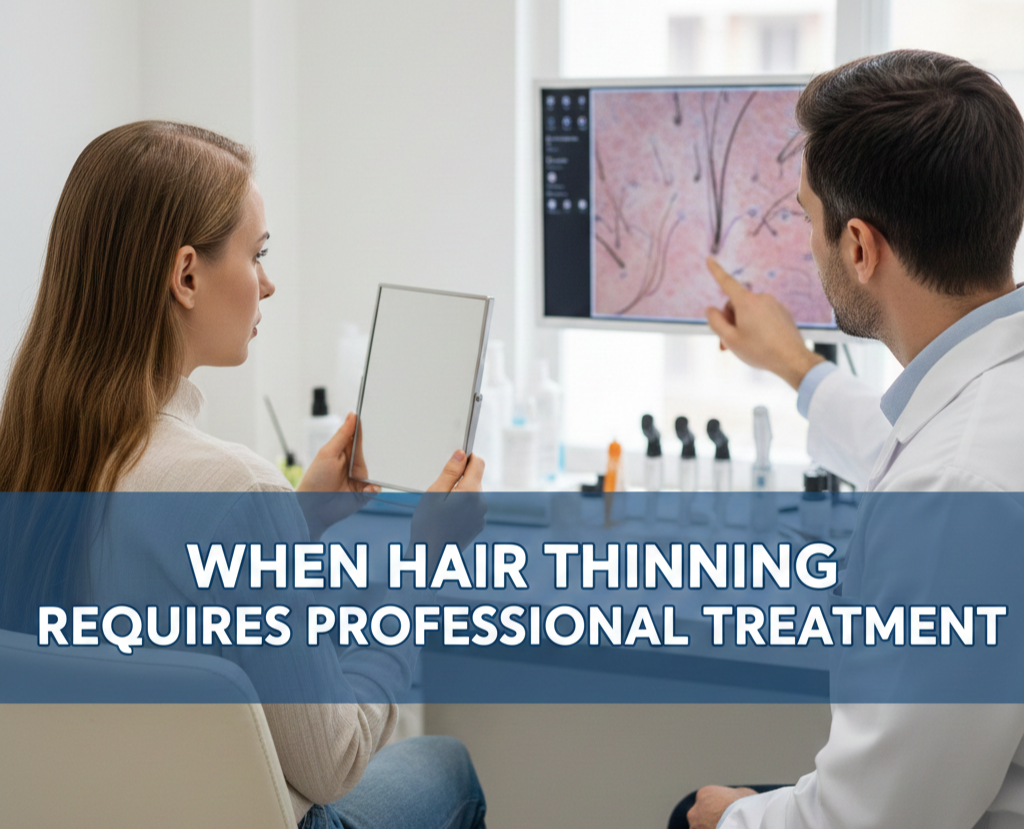
When Hair Thinning Requires Professional Treatment
Hair thinning does not always require immediate medical intervention. In many cases, temporary shedding resolves on its own. However, there comes a point where professional treatment becomes necessary to prevent long-term hair loss and support regrowth.
This is especially important because hair thinning often progresses differently in women, appearing as diffuse thinning and volume loss rather than obvious bald patches, which can delay action.
How Hair Thinning Typically Progresses
Hair thinning usually begins with subtle changes in hair behaviour rather than sudden loss.
Common early patterns include:
• Increased daily shedding
• Widening parting
• Reduced overall volume
• Slower regrowth after shedding
• Hair strands becoming finer
In women, these changes are often spread across the scalp, making them easier to overlook.
When Hair Thinning Is No Longer Temporary
Hair thinning may require professional treatment when:
• Shedding continues for more than three to four months
• Hair density keeps reducing despite lifestyle changes
• Scalp becomes more visible over time
• Hair texture weakens consistently
• Confidence or daily styling is affected
At this stage, follicles often need targeted support rather than cosmetic products.
Why Women Often Delay Professional Treatment
Women frequently delay treatment because thinning feels gradual and non-dramatic. Hormonal fluctuations, stress, nutritional depletion, and life stages such as post-pregnancy or menopause can all contribute, making thinning feel “normal.”
However, prolonged follicle stress reduces responsiveness over time, which is why earlier professional intervention improves outcomes.
Why At-Home Products Stop Being Effective
Shampoos, oils, and supplements mainly affect the hair shaft and scalp surface. They rarely address circulation, inflammation, or follicle signalling.
When thinning progresses, professional hair regrowth treatments help by:
• Improving blood flow to follicles
• Reducing inflammatory stress
• Restoring growth signals
• Supporting healthier hair cycles
Non-surgical Hair Treatments Used When Thinning Progresses
PRP Hair Treatment
PRP for hair supports regrowth by delivering growth factors that help revive weakened follicles and improve scalp circulation.
How PRP helps:
• Reduces excessive shedding
• Improves follicle nourishment
• Supports natural regrowth cycles
PRP is commonly chosen for early to moderate thinning, including diffuse thinning seen in women.
GFC Hair Therapy
GFC delivers a higher concentration of regenerative signals and is often recommended when thinning continues despite basic treatment.
How GFC helps:
• Strengthens follicle activity
• Improves regrowth consistency
• Supports long-term density
Exosome Hair Therapy
Exosome therapy improves cellular communication within the scalp, helping follicles respond more efficiently.
How exosome therapy helps:
• Reduces inflammatory disruption
• Improves follicle responsiveness
• Supports stable regrowth patterns
Internal Factors That Often Require Medical Support
Hair thinning is frequently influenced by internal depletion, which is particularly common in women.
Vitamin Injections
Vitamin injections address deficiencies that interfere with hair growth and follicle energy.
How vitamin injections help:
• Support hair growth metabolism
• Improve hair strength and texture
• Reduce deficiency-related shedding
IV Drip Therapy
IV drip therapy supports hydration and nutrient delivery throughout the body.
How IV drip therapy helps:
• Improves circulation and hydration
• Supports recovery from stress or fatigue
• Enhances response to hair regrowth treatments
Why Professional Treatment Makes a Difference
Professional hair restoration focuses on identifying the underlying cause of thinning rather than masking symptoms.
Professional care helps:
• Diagnose hormonal, nutritional, or scalp-related triggers
• Choose appropriate non-surgical hair treatments
• Prevent further follicle weakening
• Improve long-term regrowth outcomes
Unsure whether your hair thinning requires professional treatment? Chat now for personalised assistance.
Final Thoughts
Hair thinning reaches a stage where professional treatment becomes essential to protect follicle health and prevent permanent density loss. This is particularly true when thinning is gradual and diffuse, as commonly seen in women.
For individuals seeking effective hair thinning solutions and non-surgical hair regrowth treatments in Leeds, Cosmeticstar offers personalised, medically guided care focused on restoring scalp health and natural hair density.
GDPR Notice: All consultations and treatments follow GDPR requirements. Personal data remains confidential. Clicking the WhatsApp link redirects you externally. Please review our Privacy Policy.
Disclaimer: This content is for educational purposes only. Individual results may vary. Always consult a qualified practitioner before starting treatment.
FAQ
Q: When should I seek professional help for hair thinning?
A: When thinning lasts several months or worsens.
Q: Is diffuse thinning harder to notice?
A: Yes, especially common in women.
Q: Can professional treatment prevent further loss?
A: Yes, early intervention helps.
Q: Are non-surgical treatments effective?
A: Yes, particularly in early to moderate thinning.
Q: Is assessment necessary before treatment?
A: Yes, to identify the true cause.