
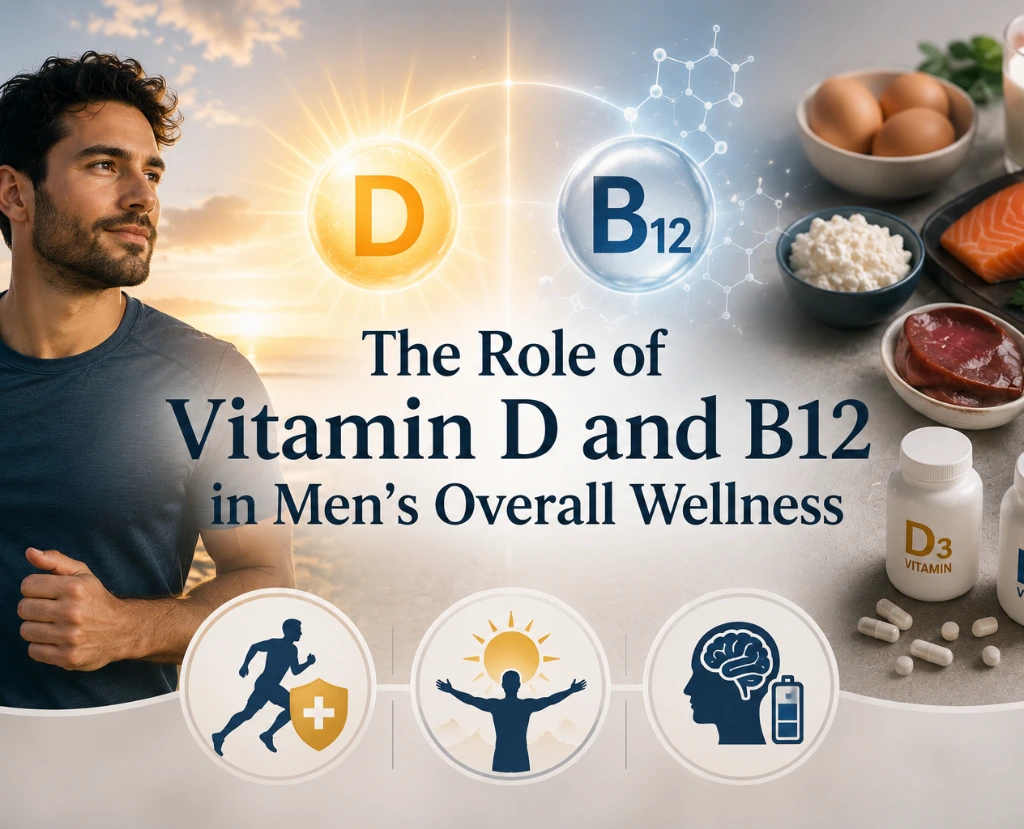
The Role of Vitamin D and B12 in Men’s Overall Wellness
If there are two vitamins that come up in practically every conversation about men’s health and wellness, it is vitamin D and B12. Both are involved in an extraordinary range of bodily functions — from bone density and immune regulation to neurological health, energy, mood, and hair growth. And both are among the most commonly deficient nutrients in men in the UK, often without any dramatic symptoms signalling the problem until it has been present for months or years.
At Cosmeticstar in Leeds, we see the downstream effects of these deficiencies regularly — in patients whose hair is shedding without an obvious reason, whose skin looks persistently tired, and whose energy has been lower than expected for longer than they can explain. This blog covers what vitamin D and B12 actually do, why men are particularly at risk, and what the most effective approach to correction looks like.
Vitamin D: What It Does and Why Men Are Often Low
Vitamin D is technically a hormone precursor rather than a traditional vitamin — and its effects in the body reflect that. It regulates gene expression in hundreds of cell types, modulates immune function, supports testosterone production, maintains bone density, and plays a direct role in hair follicle cycling through its receptors on follicular cells. The NHS guidance on vitamin D recommends that everyone in the UK consider supplementation through autumn and winter — and for men with known deficiency, this advice extends year-round.
The Hair Connection
Vitamin D receptors are expressed on hair follicle cells, and these receptors need to be adequately stimulated for follicles to move efficiently through the growth cycle. Low vitamin D is associated with increased hair shedding, a shorter anagen phase, and a higher incidence of alopecia areata in men. In men who already carry a genetic predisposition to androgenetic alopecia, low vitamin D can accelerate the visible progression of that condition.
Why Men Specifically Are at Risk
Men who work indoors, train in gyms rather than outdoors, or consistently use high SPF sunscreen are amongst the most common groups for vitamin D deficiency. Men with darker skin tones require significantly longer sun exposure to synthesise the same amount of vitamin D as those with lighter skin, putting this group at particularly high risk in the UK climate. Men over 50, whose skin’s capacity to synthesise vitamin D declines with age, are also at elevated risk year-round.
What Adequate Vitamin D Looks Like
The NHS lower threshold for vitamin D is 50 nmol/L — but clinical hair specialists and many functional medicine practitioners observe better hair and skin outcomes at levels closer to 75 to 100 nmol/L. A result of 55 nmol/L is technically ‘sufficient’ but may still be insufficient for optimal follicular function and testosterone support. Always ask for the actual number when tested.
Vitamin B12: What It Does and Why Men Are Often Low
B12 is involved in DNA synthesis, red blood cell production, neurological function, and the metabolic processes that drive energy production in every cell. Without adequate B12, the body’s ability to deliver oxygen and nutrients to peripheral tissues — including hair follicles and skin cells — is compromised. The effects accumulate gradually, often dismissed as fatigue, ageing, or stress before the underlying B12 depletion is considered.
The Hair and Skin Connection
B12 deficiency impairs red blood cell production — meaning follicles and skin cells receive reduced oxygen and nutrient delivery over time. For hair, this manifests as diffuse thinning, reduced growth rate, and for some men, premature greying. For skin, B12 deficiency is associated with a persistently dull complexion, patchy pigmentation, and reduced skin repair capacity. The skin around the mouth, in particular, often shows signs of B12 insufficiency before hair changes become obvious.
Why Men Specifically Are at Risk
Men on plant-based or vegan diets are at significant risk of B12 deficiency since the vitamin is found exclusively in animal-derived foods. Men taking metformin for type 2 diabetes or proton pump inhibitors for reflux are at elevated risk due to the depletion effects of these medications. Men over 40 — whose production of intrinsic factor, the protein required for B12 absorption, naturally declines with age — are increasingly vulnerable to functional B12 insufficiency even on diets that contain it. Intensive exercise and high alcohol consumption also deplete B12 more rapidly.
Treatment Options at Cosmeticstar, Leeds
Vitamin Injections
Our Vitamin Injections in Leeds deliver B12 and vitamin D intramuscularly — bypassing the digestive system and any absorption barriers that may be limiting the effectiveness of oral supplementation. This is the most reliable correction route for men with identified deficiencies or absorption issues.
IV Drip Therapy
For a broader nutritional correction that includes vitamin D, B12, and supporting nutrients, our IV Drip Therapy in Leeds delivers a personalised intravenous blend for immediate, complete systemic uptake.
PRP Hair Treatment
Once nutritional foundations are corrected, PRP Hair Treatment in Leeds provides the direct follicular stimulus to support regrowth in areas where shedding or thinning has occurred — combining the internal and clinical approaches for the best outcome.
GFC Hair Therapy
For men with more significant hair thinning, GFC Hair Therapy in Leeds delivers an advanced, more potent growth factor treatment — the strongest non-surgical hair restoration option available in Leeds.
What Men Should Do
- Test vitamin D and B12 specifically — do not assume levels are fine without numbers
- If levels are below the functional optimal range — not just the minimum threshold — consider correction
- Injectable B12 and vitamin D provide significantly more reliable correction than oral supplements for men with absorption issues
- Combine nutritional correction with clinical hair treatment for a meaningfully better hair recovery outcome
Get Assessed at Cosmeticstar, Leeds
If low vitamin D or B12 may be contributing to your hair loss, energy decline, or skin quality, Cosmeticstar in Leeds offers honest, clinically informed consultations and injectable correction that gets levels right quickly. Chat now — click the link and you will be redirected straight to WhatsApp.
Conclusion
Vitamin D and B12 are not peripheral considerations in men’s health — they are central to energy, hair growth, skin quality, hormonal function, and overall resilience. Deficiency in either — or both — has consequences that compound over time. Cosmeticstar in Leeds provides the injectable support and clinical hair treatments to address these deficiencies properly and see the results where they matter most.
Privacy Notice: Your data is handled in accordance with UK GDPR. Please review our Privacy Policy for full details.
Disclaimer: This blog is for educational purposes only. Always consult a qualified professional before beginning any treatment.
Frequently Asked Questions
Q: How do I know if my hair loss is linked to low vitamin D or B12?
A: A targeted blood test including both vitamin D and B12 is the only reliable way to identify whether these deficiencies are contributing to your hair loss.
Q: Can B12 injections improve energy as well as hair health?
A: Yes — B12 injections are well known for their positive effects on energy levels, mental clarity, and mood alongside their benefits for hair and skin.
Q: How often do vitamin D or B12 injections need to be repeated?
A: This depends on your individual levels and how quickly they are depleted. Most patients at Cosmeticstar in Leeds start with a loading course and move to maintenance injections every one to three months.
Q: Is it safe to take both vitamin D and B12 injections together?
A: Yes — these are different vitamins with separate mechanisms and are commonly administered together at Cosmeticstar in Leeds as part of a comprehensive nutritional support plan.