
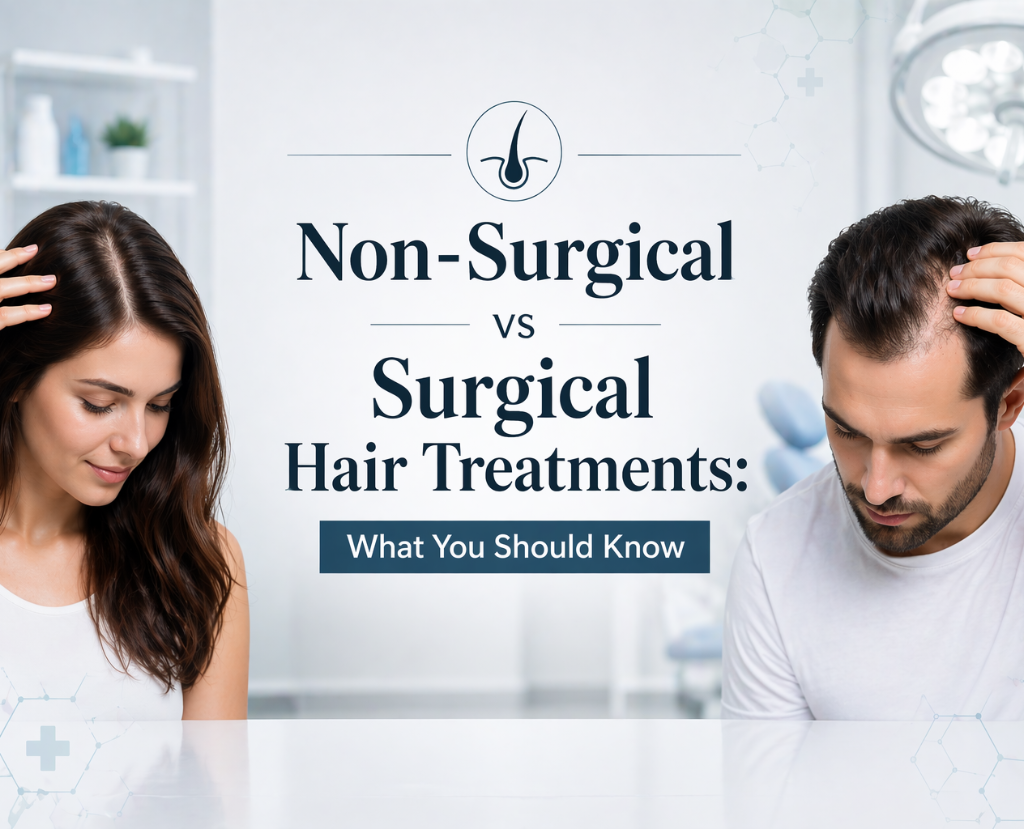
Non-Surgical vs Surgical Hair Treatments: What You Should Know
When hair loss reaches the point where treatment feels necessary, the choice between surgical and non-surgical options can feel overwhelming. Both routes have their place — but they are not equally appropriate for every person, every stage of hair loss, or every lifestyle.
At Cosmeticstar in Leeds, we specialise in advanced non-surgical hair restoration. This blog sets out the key differences between both approaches to help you make a properly informed decision.
What Surgical Hair Treatment Involves
Surgical hair restoration — primarily hair transplant procedures such as FUE (Follicular Unit Extraction) and FUT (Follicular Unit Transplantation) — involves physically relocating hair follicles from a donor area, typically the back of the scalp, to areas experiencing thinning or loss.
Surgical procedures can produce significant, visible results and are considered a permanent solution for suitable candidates. However, they require a sufficient donor supply, carry the risks associated with any surgical procedure, involve a recovery period, and represent a considerable financial commitment. They are also not appropriate for active or progressive hair loss, as continued loss in untreated areas can undermine the visual outcome over time.
What Non-Surgical Hair Treatment Involves
Non-surgical treatments work with the biology of existing follicles — stimulating, regenerating, and supporting them without physical extraction or implantation. They are minimally invasive, carry minimal risk, and require little to no downtime. Most importantly, they can be highly effective when chosen and applied correctly.
Non-Surgical Treatment Options at Cosmeticstar, Leeds
PRP Hair Treatment
Platelet-Rich Plasma therapy uses concentrated growth factors from your own blood to stimulate follicular activity, extend the growth phase, and improve scalp circulation. An accessible, well-evidenced starting point for most patients. Learn about PRP Hair Treatment in Leeds.
GFC Hair Therapy
GFC represents an advanced refinement of PRP, delivering a more potent and precise concentration of growth signals with reduced inflammatory response. Particularly effective for patients seeking stronger results. Explore GFC Hair Therapy in Leeds.
Exosome Therapy
The most advanced non-surgical option currently available, exosome therapy communicates directly with follicular stem cells to trigger deep regenerative responses — without surgery, incisions, or recovery time. Discover Exosome Therapy in Leeds.
Key Differences at a Glance
- Surgical: permanent results, higher cost, recovery period, requires donor hair supply
- Non-surgical: progressive results, lower cost, no downtime, suitable from early stages
- Non-surgical treatments can also be used to maintain and support surgical results post-procedure
- Early-stage hair loss almost always responds better to non-surgical intervention than surgery
Prevention and Maintenance Tips
- Begin non-surgical treatment early — the sooner you act, the more follicles can be preserved
- If surgery is being considered, complete a non-surgical trial first to assess follicular responsiveness
- Combine scalp treatments with nutritional support for best outcomes, regardless of approach
- Maintain results post-treatment with periodic maintenance sessions
Explore Your Options at Cosmeticstar, Leeds
If you are trying to decide between surgical and non-surgical treatment, a professional consultation is the most valuable first step. At Cosmeticstar, we assess your hair loss in full and recommend the most appropriate route based on your specific situation — with no pressure and no guesswork. Chat now — click the link and you will be redirected straight to WhatsApp.
Conclusion
Surgical and non-surgical hair treatments serve different purposes and suit different patients. For many people — particularly those in the early-to-moderate stages of hair loss — non-surgical options offer effective, safe, and accessible results without the commitment of surgery. Cosmeticstar in Leeds is here to help you understand your options and choose with confidence.
Privacy Notice
Your data is handled in accordance with UK GDPR. Please review our Privacy Policy for full details.
Disclaimer
This blog is for educational purposes only. Always consult a qualified professional before beginning any treatment.
Frequently Asked Questions
Q: Is non-surgical treatment effective enough to avoid surgery?
A: For early-to-moderate hair loss, non-surgical treatments can deliver meaningful results that may eliminate the need for surgery altogether.
Q: Can I have non-surgical treatment after a hair transplant?
A: Yes — PRP, GFC, and exosome therapy are often used post-transplant to support graft survival and improve overall density.
Q: How long do non-surgical results last?
A: Results vary, but maintenance sessions every six to twelve months can sustain and build upon initial outcomes effectively.
Q: Is there an age limit for non-surgical hair treatments?
A: No — non-surgical treatments are suitable for most adults, with the treatment plan tailored to age, hair loss stage, and overall health.