
PRP Facial in Leeds: What the Vampire Facial Actually Does to Your Skin
The term “vampire facial” has become one of the most searched skin treatment phrases in the country — and despite the dramatic name, the treatment behind it is genuinely grounded in evidence-based medicine. A PRP facial in Leeds at Cosmeticstar uses your own platelet-rich plasma to deliver a concentrated growth factor stimulus directly into the skin, stimulating collagen production, improving skin texture and tone, and promoting a level of cellular renewal that no topical product can replicate.
At Cosmeticstar in Leeds, PRP skin treatment is used both as a standalone facial and in combination with microneedling for patients who want the strongest available non-surgical skin rejuvenation result. This blog explains exactly what a PRP facial does to your skin, the science behind it, and what results you can realistically expect.
What Is a PRP Facial?
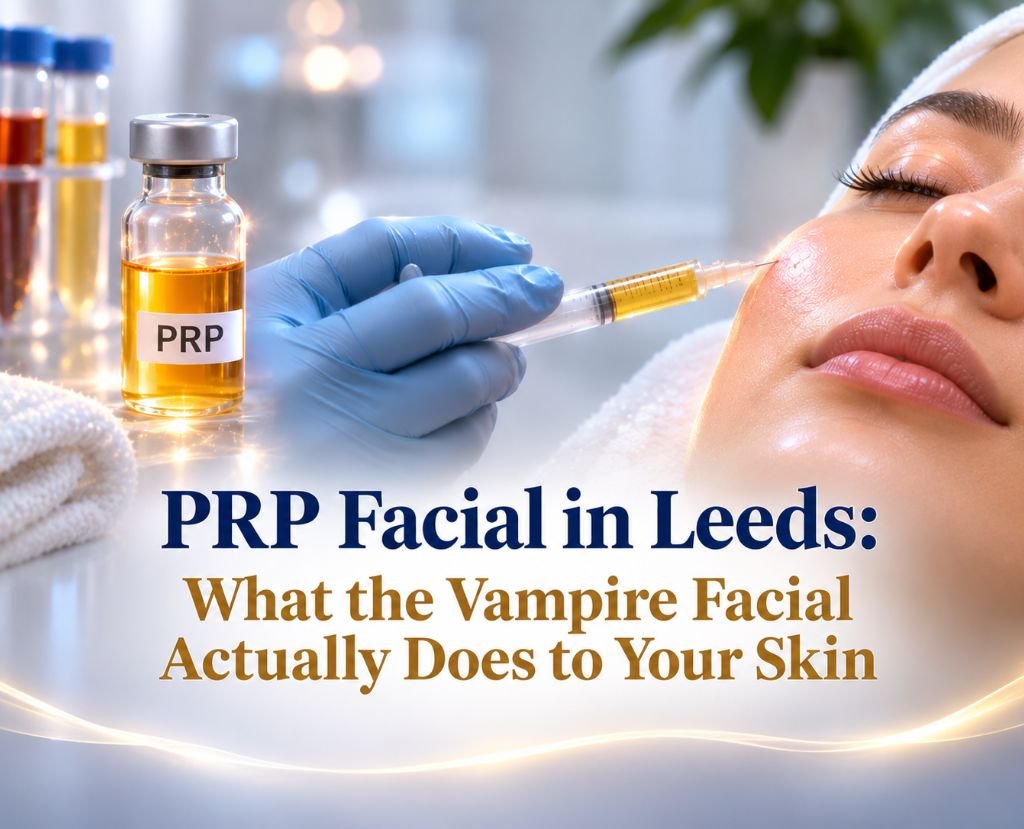
A PRP facial — also known as a vampire facial in Leeds — involves drawing a small blood sample from your arm, centrifuging it to concentrate the platelet-rich plasma fraction, and applying or injecting that plasma into the face. The platelet-rich plasma is rich in growth factors: PDGF, VEGF, IGF-1, EGF, TGF-β. These are the same proteins your body uses for tissue repair and regeneration — concentrated and delivered directly to the skin to amplify its natural renewal processes.
There are two main ways PRP is delivered in a facial context at Cosmeticstar Leeds. Applied topically during microneedling — the PRP is spread across the skin and allowed to penetrate through the micro-channels created by needling, reaching the dermis where fibroblasts and other regenerative cells are located. Or injected directly into the skin — using fine needles to deliver PRP at a precise depth in targeted areas of concern, such as under-eye hollows, the mid-face, and areas of significant fine lining.
What a PRP Facial Does to the Skin: The Science
Collagen Stimulation
The growth factors in platelet-rich plasma — particularly TGF-β and PDGF — directly stimulate fibroblasts in the dermis to increase collagen and elastin production. This is the fundamental mechanism that makes a PRP facial in Leeds a genuinely anti-ageing treatment rather than a surface-level one. The collagen produced in response to PRP treatment takes weeks to months to mature, which is why results develop gradually — but the change is structural, not cosmetic.
Skin Cell Renewal
EGF (Epidermal Growth Factor) in platelet-rich plasma stimulates the proliferation of skin cells — accelerating the skin’s natural renewal cycle. The result is a fresher, more even complexion as older, damaged surface cells are replaced more rapidly by new ones from beneath. This improvement in cellular turnover contributes to the glow that patients consistently describe after a course of PRP facial treatment in Leeds.
Improved Vascularity
VEGF (Vascular Endothelial Growth Factor) promotes the formation of new capillaries in the skin — improving the delivery of oxygen and nutrients to the cells responsible for skin health and renewal. Better skin vascularity translates to a more luminous, well-hydrated complexion and supports the overall regenerative response that PRP initiates.
Reduced Pigmentation and Improved Tone
The growth factor stimulus from PRP regulates melanocyte activity — the cells responsible for pigment production. This regulatory effect, combined with the accelerated cell turnover PRP promotes, gradually reduces the appearance of hyperpigmentation, sun damage, and uneven skin tone over a course of treatment.
What a PRP Facial in Leeds Treats
- Fine lines and early skin laxity — particularly around the eyes, mouth, and across the mid-face.
- Dull, uneven skin tone and texture — PRP’s cellular renewal effect produces a visible brightening effect over a course of treatment.
- Under-eye hollows and dark circles — where PRP injection improves skin thickness and vascularity in the delicate under-eye zone.
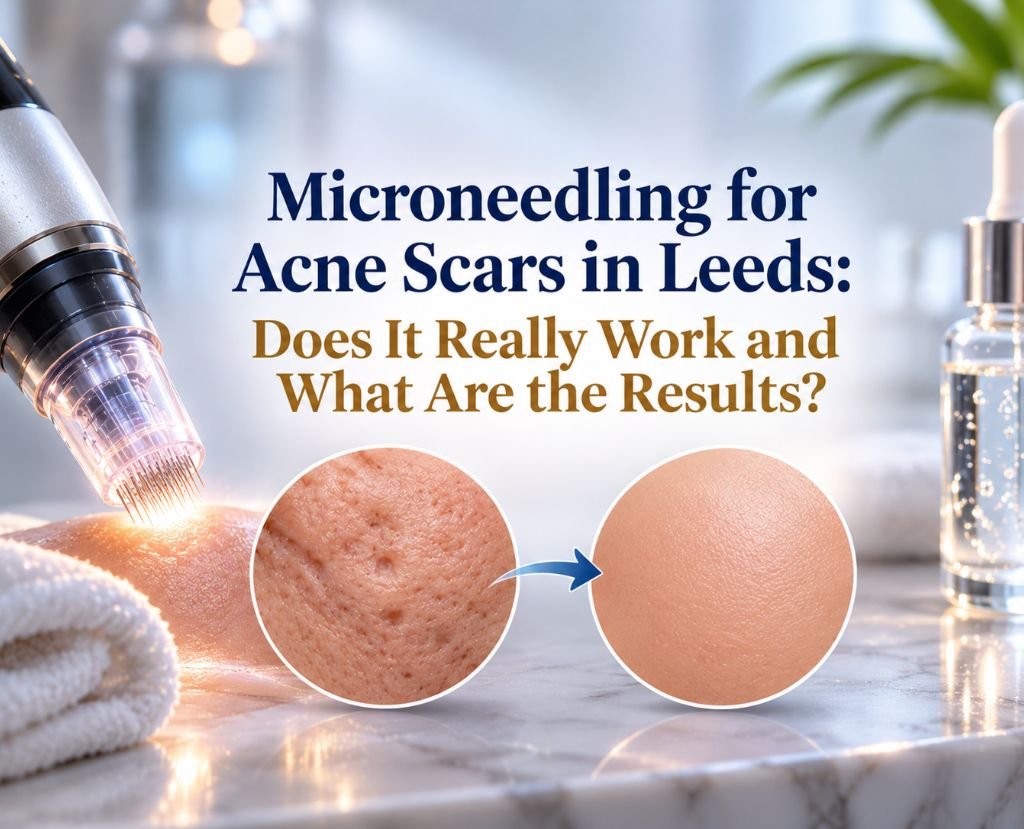
- Acne scarring — particularly when combined with microneedling, where PRP penetrates through the micro-channels to deliver growth factors directly to the scar tissue.
- General skin quality decline — loss of radiance, firmness, and resilience that characterises skin ageing in the thirties, forties, and beyond.
The PRP Facial Procedure at Cosmeticstar Leeds
A PRP facial session at Cosmeticstar Leeds begins with a blood draw from the arm — identical to a routine blood test — followed by centrifugation to prepare the platelet-rich plasma (approximately 10 minutes). A topical anaesthetic cream is applied before any needling or injection, and the PRP is then delivered by the most appropriate method for the concerns being addressed — topically via microneedling, by injection, or a combination of both. The full session takes 60 to 90 minutes. There is no surgical recovery — most patients experience mild redness for 24–48 hours, after which the skin returns to normal and the progressive regenerative response begins.
PRP Facial Results: The Honest Timeline
- Days 1–3: Mild redness and slight puffiness — normal and expected. The skin looks a little reactive rather than improved at this very early stage.
- Weeks 1–4: Skin begins to look brighter and more even. Patients frequently describe their skin as looking “refreshed” and “healthier” at this stage.
- Months 2–4: Visible improvements in skin texture and firmness as the collagen stimulated by PRP matures. Fine lines less pronounced. Complexion more luminous and even.
- Months 3–6: Full result of an initial PRP facial course in Leeds apparent. The most significant improvements in skin quality, firmness, and tone are visible at this stage.
Skin Rejuvenation Treatments at Cosmeticstar Leeds
Microneedling Leeds
Our clinical microneedling in Leeds uses precision-controlled devices to create targeted micro-channels in the skin, stimulating collagen and elastin production for genuine, measurable skin improvement. Every treatment is planned around your specific skin concern and type.
PRP Facial & Skin Treatment Leeds
Our PRP therapy in Leeds uses your own platelet-rich plasma — rich in growth factors — to stimulate skin cell renewal, improve texture and tone, and promote the production of new collagen from within.
GFC Skin Treatment Leeds
Our GFC therapy in Leeds uses a refined, concentrated growth factor preparation to support skin rejuvenation. It offers a targeted regenerative approach for patients seeking non-surgical improvements in skin quality.
Bio-RePeel Leeds
Bio-RePeel is a bi-phasic TCA-based treatment that resurfaces, brightens, and tightens the skin. It is designed to support skin renewal with less visible downtime than many traditional peels. Suitability is assessed individually.
Red Light Therapy for Skin Leeds
Our guide to red light therapy explains photobiomodulation. The same light-based mechanism is also used in skin care to support fibroblast activity, collagen production, reduce inflammation, and improve the appearance of skin tone and texture.
Book Your Skin Consultation at Cosmeticstar Leeds
If you are interested in a PRP facial in Leeds and want to understand what it can realistically do for your specific skin concerns and what a personalised treatment plan would look like, the most useful next step is a proper skin assessment — not a generic quiz or a booking without consultation. At Cosmeticstar in Leeds, every treatment plan starts with understanding your skin, your concerns, and your goals. Chat with us on WhatsApp and our team will come back to you straight away.
Conclusion
A PRP facial in Leeds is a clinically evidenced skin rejuvenation treatment that uses your own biology to stimulate collagen, cellular renewal, and improved vascularity that make skin genuinely look and feel better. At Cosmeticstar in Leeds, it is delivered as part of a properly assessed skin treatment plan — not a one-size-fits-all appointment.
Privacy Notice: Your data is handled in accordance with UK GDPR. Please review our Privacy Policy for full details.
Disclaimer: This blog is for educational purposes only and does not constitute medical advice. Always consult a qualified practitioner before beginning any skin treatment.
Frequently Asked Questions
Q: What is the difference between a PRP facial and a vampire facial in Leeds?
A: They are the same thing. “Vampire facial” is the popular name for PRP facial treatment — referencing the use of your own blood. At Cosmeticstar Leeds, we use the clinical term PRP facial, but the treatment is identical to what is widely described as a vampire facial.
Q: How many PRP facial sessions do I need in Leeds?
A: A course of three PRP facial sessions, spaced four to six weeks apart, is the standard starting point at Cosmeticstar Leeds for most skin rejuvenation goals. Maintenance sessions every three to six months thereafter sustain and build on the results achieved.
Q: Is a PRP facial the same as PRP hair treatment in Leeds?
A: The PRP preparation process is the same — your own blood, centrifuged to concentrate the platelet-rich plasma. The delivery method and the target tissue differ: PRP hair treatment in Leeds targets the scalp and hair follicles; a PRP facial targets the facial skin. Both are available at Cosmeticstar Leeds.
Q: Can a PRP facial help with pigmentation in Leeds?
A: Yes — PRP facial treatment in Leeds has a regulatory effect on melanocyte activity and promotes accelerated cellular turnover, both of which contribute to a gradual reduction in hyperpigmentation and uneven skin tone over a course of treatment. For more significant pigmentation concerns, combining PRP with a chemical peel at Cosmeticstar Leeds may produce a more comprehensive result.
Q: Is a PRP facial suitable for sensitive skin in Leeds?
A: PRP facial treatment uses your own blood products, which eliminates the risk of allergic reaction — making it generally well-suited to sensitive skin. However, the suitability of microneedling alongside PRP for very sensitive or reactive skin should be discussed during your assessment at Cosmeticstar Leeds, where we will recommend the most appropriate delivery method for your skin type.