
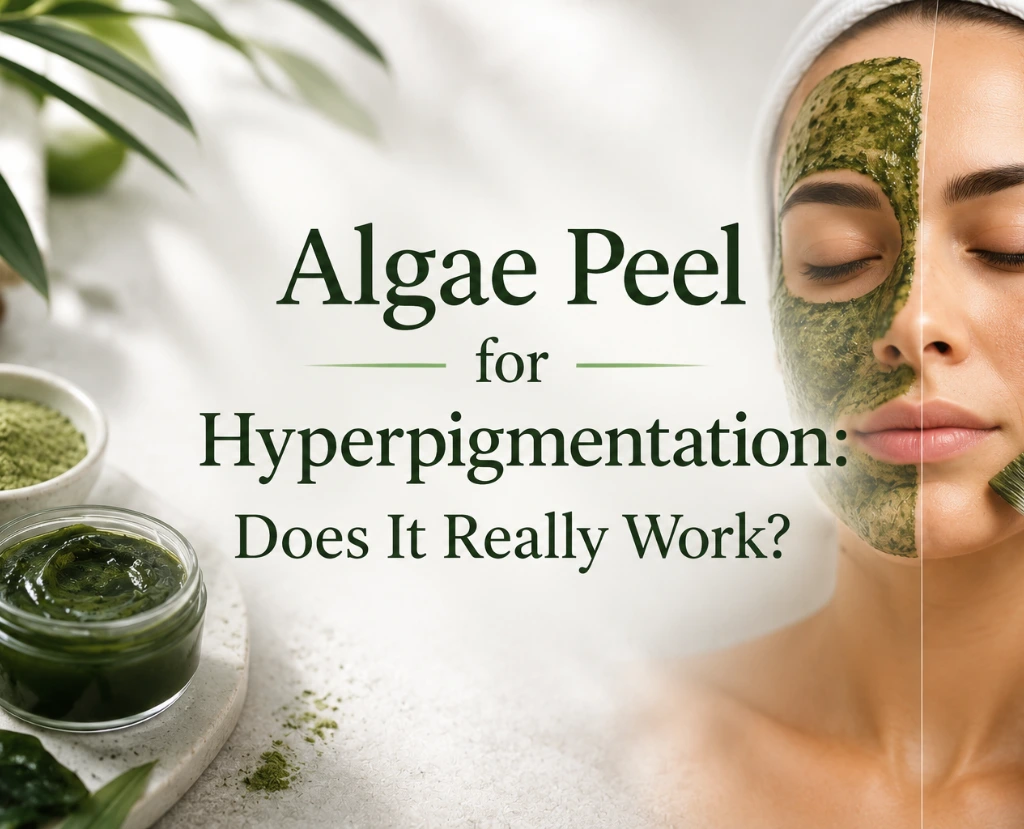
Algae Peel for Hyperpigmentation: Does It Really Work?
Hyperpigmentation is one of the most persistent and frustrating skin concerns people bring to us at Cosmeticstar — dark patches, post-acne marks, or general unevenness that seem to resist most home skincare products. Algae peels have grown in popularity as a gentler alternative to acid-based treatments, but it is worth asking honestly: does an algae peel actually make a meaningful difference to pigmentation, or is it mostly marketing?
Understanding Hyperpigmentation First
Hyperpigmentation happens when certain areas of skin produce more melanin than the surrounding tissue, creating darker patches. It can be caused by sun exposure, inflammation (including from acne), hormonal changes, or skin injury. The Changing Faces guide on hyperpigmentation explains that there are several distinct types, and that the underlying cause has a big influence on which treatments are likely to help — which is exactly why a proper assessment matters before choosing any peel.
How an Algae Peel Approaches Pigmentation
Rather than using acids to strip away pigmented cells directly, an algae peel works by encouraging the skin’s natural turnover process to accelerate. As older, pigmented surface cells are shed more efficiently and replaced with newer cells, the overall appearance of discolouration gradually softens. It is a supportive, renewal-based approach rather than an aggressive, targeted one.
This means an algae peel tends to be most effective on superficial pigmentation — post-acne marks, sun-related dullness, and general unevenness — rather than deep, long-standing pigmentation such as melasma, which typically sits deeper in the skin and often needs a more targeted combination approach.
What Realistic Results Look Like
- Noticeable softening of superficial marks and post-acne discolouration over a course of sessions
- A more even, brighter overall skin tone
- Reduced dullness that can make pigmentation appear more pronounced than it actually is
- Gradual, cumulative improvement rather than instant erasure of dark patches
When an Algae Peel Might Not Be Enough
For deeper or more stubborn pigmentation, an algae peel alone may only produce a modest improvement. In these cases, we often recommend combining it with a more targeted treatment such as our Brightening Face Peel, or, for specific areas, treatments like our Lip Pigmentation Treatment or Underarm Brightening Treatment, depending on where the concern is located.
The honest answer is that an algae peel does work for hyperpigmentation — but it works gradually, and it works best on surface-level discolouration. Anyone expecting a single session to erase deep, long-standing pigmentation is likely to be disappointed, whereas anyone approaching it as part of a considered, ongoing skincare plan tends to be genuinely pleased with the results.
Explore Other Facial Treatments at Cosmeticstar, Leeds
PRP Face Treatment
Refresh your skin with PRP Face Treatment in Leeds, a natural treatment that encourages collagen production to improve skin texture, soften fine lines, and restore a healthier-looking complexion.
GFC Face Therapy
Reveal smoother, firmer skin with GFC Face Therapy in Leeds. This advanced regenerative treatment uses concentrated growth factors to support skin renewal and improve overall skin quality.
Exosome Therapy
Enhance your skin’s natural repair process with Exosome Therapy in Leeds. This innovative treatment helps improve skin tone, texture, and hydration while promoting a more youthful appearance.
IV Drip Therapy
Recharge from within with IV Drip Therapy in Leeds. Our customised vitamin infusions support hydration, skin health, energy levels, and overall wellbeing.
Vitamin Injections
Support healthy skin and overall wellness with Vitamin Injections in Leeds. Fast-acting nutrient injections help maintain energy levels while contributing to healthier hair, skin, and immune function.
Talk to Cosmeticstar in Leeds
If you want an honest opinion on whether an algae peel is the right first step for your pigmentation concerns, Cosmeticstar in Leeds offers straightforward, evidence-informed consultations with no unnecessary upselling. Chat now — click the link and you will be redirected straight to WhatsApp.
Conclusion
Algae peels can meaningfully improve superficial hyperpigmentation by supporting the skin’s natural renewal process, particularly for post-acne marks and general unevenness. For deeper or long-standing pigmentation, combining it with a more targeted treatment usually produces better results. A proper consultation is the best way to work out which approach — or combination — is right for you.
Privacy Notice: Your data is handled in accordance with UK GDPR. Please review our Privacy Policy for full details.
Disclaimer: This blog is for educational purposes only. Always consult a qualified professional before beginning any treatment.
Frequently Asked Questions
Q: Can an algae peel remove melasma?
A: Melasma tends to sit deeper in the skin and usually needs a more targeted, combination approach. An algae peel can support overall skin tone but is unlikely to resolve melasma on its own.
Q: How many sessions are usually needed for pigmentation improvement?
A: Most clients complete a course of three to four sessions, spaced several weeks apart, to see a meaningful reduction in the appearance of pigmentation.
Q: Is an algae peel safe for darker skin tones prone to marking?
A: Because it avoids harsh acids, an algae peel is generally well tolerated across skin tones, though a consultation is always needed to confirm suitability for your specific skin.
Q: Can I combine an algae peel with other pigmentation treatments?
A: Yes, many clients combine it with a targeted brightening peel or area-specific treatment for a more comprehensive result.