
Algae Peel vs Chemical Peel: Which Is Better for Your Skin?
If you have spent any time researching skin resurfacing treatments, you have probably come across two very different names promising the same thing: brighter, clearer, more even-toned skin. Algae peels and chemical peels are both popular at clinics across the UK, yet they work in almost opposite ways. Choosing between them is not really about which one is “stronger” — it is about which one matches your skin type, your tolerance for downtime, and the specific concern you are trying to address.
At Cosmeticstar in Leeds, this is one of the most common questions we are asked during a skin consultation, so we wanted to lay out the differences plainly, without the marketing gloss.
How a Chemical Peel Works
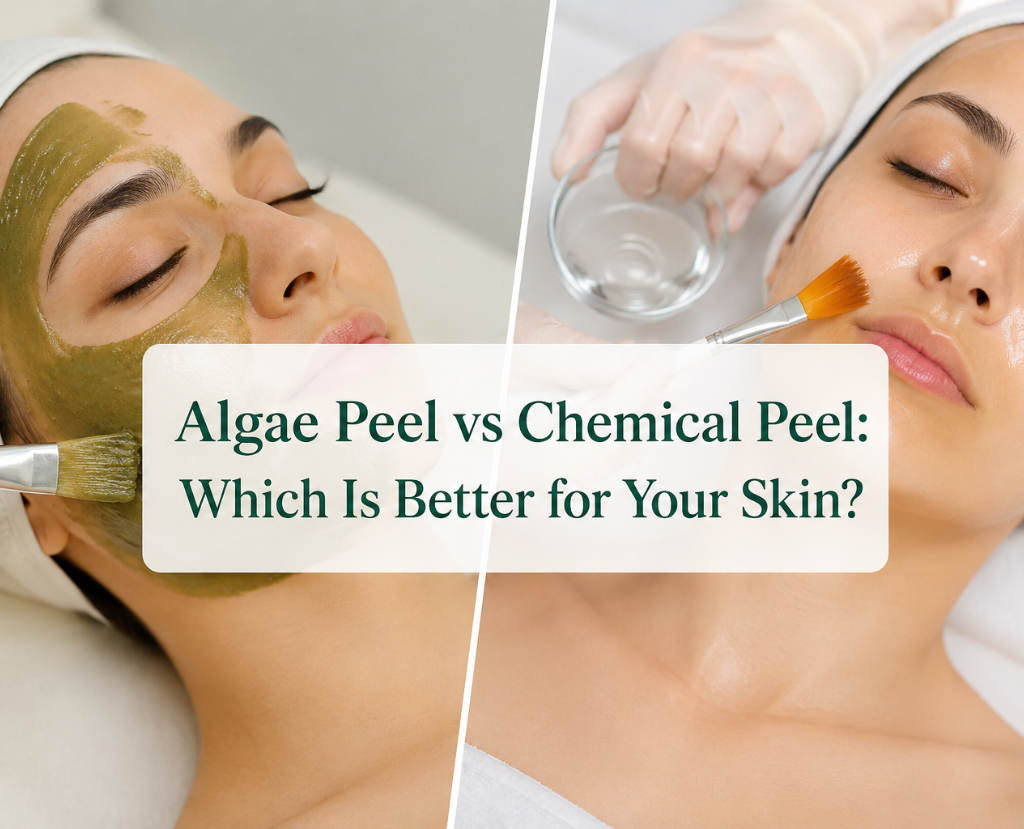
A chemical peel uses an acid solution — commonly glycolic, salicylic, lactic, or trichloroacetic acid — to break down the bonds between dead skin cells on the surface. This controlled injury encourages the outer layers of skin to shed, revealing fresher skin underneath and stimulating some degree of collagen renewal. The NHS page on acne treatment options specifically references chemical peels as one of the resurfacing approaches sometimes used for stubborn breakouts and marks, alongside more conventional topical and oral treatments.
Depending on the acid used and its concentration, a chemical peel can range from a mild “lunchtime” treatment with barely any visible peeling to a medium-depth peel that causes noticeable flaking and redness for several days. The stronger the peel, the more dramatic the results tend to be — but also the greater the risk of irritation, particularly for sensitive or reactive skin types.
How an Algae Peel Works
An algae peel takes a different route entirely. Rather than using acids to dissolve the surface of the skin, it relies on marine-derived, bio-active ingredients that are massaged into the skin to stimulate the body’s own renewal process from within. There is no immediate chemical burn or acid exposure — instead, the skin is encouraged to shed naturally over the following days as part of its regular turnover cycle, just accelerated and intensified.
This makes an algae peel a noticeably gentler experience during the treatment itself, which is why it has become a popular option for people with reactive, sensitised, or acne-prone skin who find traditional acid peels too harsh. Our Sensitive Skin Algae Facial in Leeds is built specifically around this principle — supporting renewal without the acid-driven inflammation that can sometimes follow a chemical peel.
Comparing the Two Head-to-Head
- Sensation during treatment: chemical peels can sting or tingle as the acid is applied; algae peels feel more like an intensive facial massage.
- Downtime: chemical peels often cause visible flaking within 24–72 hours; algae peel shedding tends to be more gradual and less dramatic.
- Suitability: Chemical peels are generally more aggressive on pigmentation and deeper texture issues; algae peels are better tolerated by sensitive, rosacea-prone, or very reactive skin.
- Results speed: chemical peels can show faster surface change; algae peels tend to build results over a short course of sessions.
Which One Should You Choose?
If your main concern is stubborn pigmentation, sun damage, or deeper acne scarring and your skin tolerates active ingredients well, a chemical peel such as our Acne Control Face Peels or Brightening Face Peel may deliver quicker, more visible change. If you have sensitive skin, rosacea tendencies, or you simply cannot afford several days of visible flaking, the algae peel route is usually the more comfortable choice — and it still delivers a genuine improvement in tone and clarity over a short course.
In many cases, the honest answer is that neither option is universally “better” — the right treatment depends entirely on your skin’s individual behaviour, which is exactly what a proper consultation is for.
Explore Other Facial Treatments at Cosmeticstar, Leeds
PRP Face Treatment
Refresh your skin with PRP Face Treatment in Leeds, a natural treatment that encourages collagen production to improve skin texture, soften fine lines, and restore a healthier-looking complexion.
GFC Face Therapy
Reveal smoother, firmer skin with GFC Face Therapy in Leeds. This advanced regenerative treatment uses concentrated growth factors to support skin renewal and improve overall skin quality.
Exosome Therapy
Enhance your skin’s natural repair process with Exosome Therapy in Leeds. This innovative treatment helps improve skin tone, texture, and hydration while promoting a more youthful appearance.
IV Drip Therapy
Recharge from within with IV Drip Therapy in Leeds. Our customised vitamin infusions support hydration, skin health, energy levels, and overall wellbeing.
Vitamin Injections
Support healthy skin and overall wellness with Vitamin Injections in Leeds. Fast-acting nutrient injections help maintain energy levels while contributing to healthier hair, skin, and immune function.
Talk to Cosmeticstar in Leeds
If you are unsure whether an algae peel or a chemical peel suits your skin best, Cosmeticstar in Leeds offers straightforward, evidence-informed consultations with no unnecessary upselling. Chat now — click the link and you will be redirected straight to WhatsApp.
Conclusion
Both algae peels and chemical peels can produce genuinely brighter, clearer skin — they simply take different roads to get there. Chemical peels lean on active acids for faster resurfacing, whilst algae peels favour a gentler, biologically driven renewal process that suits more reactive skin types. The right choice comes down to your skin’s tolerance and your specific goals, which our team at Cosmeticstar in Leeds can help you assess properly.
Privacy Notice: Your data is handled in accordance with UK GDPR. Please review our Privacy Policy for full details.
Disclaimer: This blog is for educational purposes only. Always consult a qualified professional before beginning any treatment.
Frequently Asked Questions
Q: Is an algae peel as effective as a chemical peel?
A: For surface renewal, tone, and clarity, an algae peel can be very effective, particularly over a course of sessions. For deeper pigmentation or scarring, a chemical peel often produces faster, more pronounced results, but with more downtime.
Q: Can I have an algae peel if I have sensitive skin or rosacea?
A: Yes — this is one of the main reasons clients choose an algae peel over a chemical peel. It avoids the acid exposure that can aggravate reactive or rosacea-prone skin.
Q: Do algae peels cause visible peeling like chemical peels do?
A: Some light flaking is normal in the days following treatment, but it is generally more subtle and manageable than the peeling seen after a medium-depth chemical peel.
Q: Can I combine algae peels and chemical peels in a skincare plan?
A: Yes, some clients alternate between the two depending on the season and how their skin is behaving. We can advise on a sensible combination during your consultation.