
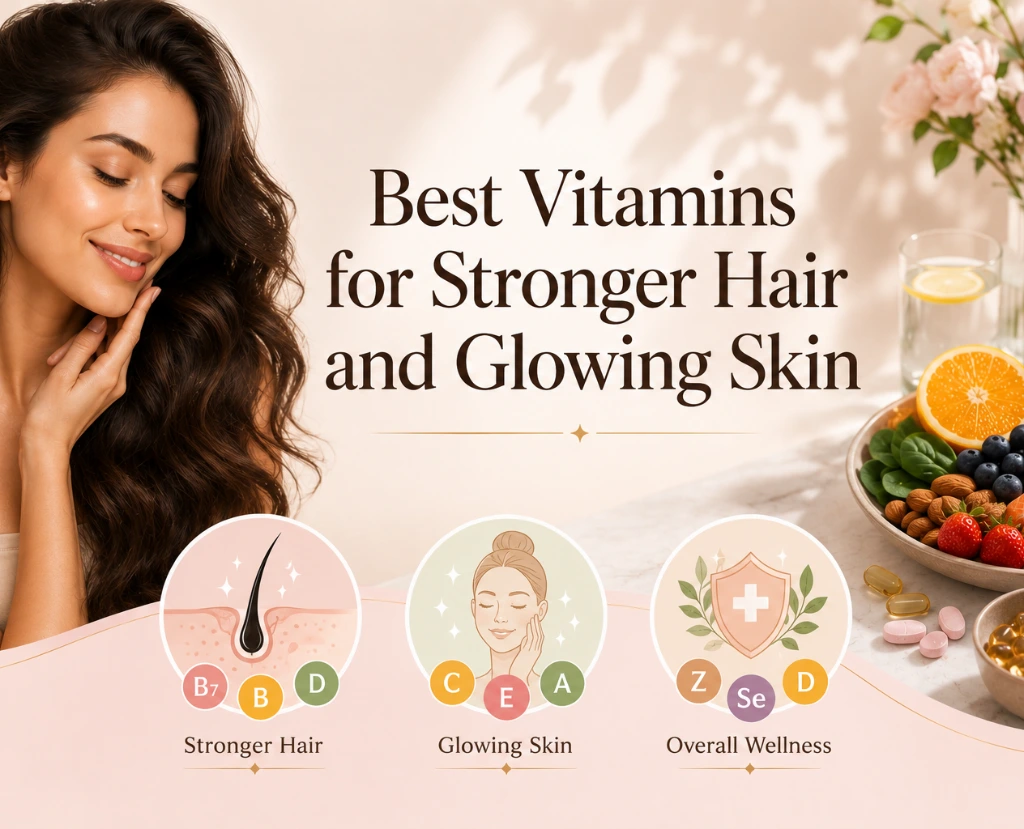
Best Vitamins for Stronger Hair and Glowing Skin
There is no shortage of advice online about what to take for better hair and skin — but a lot of it is vague, commercially motivated, or just not grounded in how the body actually works. The vitamins that genuinely make a difference for hair strength and skin quality are specific, their mechanisms are well understood, and the most effective way to get them into your body is not always through the supplement aisle.
This blog cuts through the noise. At Cosmeticstar in Leeds, we combine clinical hair treatments with nutritional support, so we have a practical, evidence-grounded view of which vitamins produce real results for hair and skin — and what the most effective delivery route looks like for each one.
What ‘Stronger Hair and Glowing Skin’ Actually Requires Biologically
Strong hair is fundamentally about keratin — the structural protein that makes up the hair shaft. Producing keratin requires amino acids (from protein), biotin, zinc, and a functional iron supply. Glowing skin is about collagen integrity, hydration, cell turnover, and a healthy lipid barrier — all of which depend on vitamins C, D, A, E, and adequate essential fatty acids. The British Association of Dermatologists’ patient resource on nutrition and skin provides useful context on how nutritional status affects skin health from a clinical perspective.
The Best Vitamins for Stronger Hair
Biotin — The Structural Foundation
Biotin (vitamin B7) is the most directly relevant vitamin for hair shaft strength. It is a coenzyme involved in keratin synthesis — which means without adequate biotin, the body cannot build the structural protein that makes hair strong, resilient, and resistant to breakage. Women with biotin insufficiency often notice hair that snaps easily, splits at the ends, grows slowly, and lacks lustre. Whilst severe deficiency is uncommon, low-grade insufficiency is far more prevalent than recognised — particularly in women who are pregnant, postpartum, or on certain long-term medications.
Iron and Ferritin — The Growth Fuel
Ferritin is not technically a vitamin, but its impact on hair strength and growth rivals any nutrient on this list. Hair follicles use ferritin as fuel to sustain the anagen phase. When ferritin levels fall — as they commonly do in women of reproductive age — follicles produce finer, weaker strands and shed at a higher rate. Even a modest improvement in ferritin can produce noticeable changes in hair strength and growth rate over a period of months.
Vitamin D — The Growth Cycle Regulator
Beyond its widely known role in bone and immune health, vitamin D plays a direct role in hair follicle cycling through its receptors on follicular cells. Low vitamin D does not just slow hair growth — it can cause follicles to spend longer in the resting phase, resulting in thinner, sparser hair over time. In the UK, where vitamin D from sunlight is only reliably available between April and September, maintaining adequate levels almost always requires supplementation — particularly through the winter months.
Zinc — The Cycle Protector
Zinc supports the enzymatic processes that regulate the hair growth cycle and helps to protect follicles from the miniaturising effect of DHT. It also plays a role in sebum production — the scalp’s natural moisturiser — and in repairing follicular tissue when it is damaged. Women under physical or psychological stress are particularly prone to zinc depletion, which is one reason stress and hair quality tend to decline together.
The Best Vitamins for Glowing Skin
Vitamin C — Collagen’s Essential Co-Factor
Vitamin C is non-negotiable for skin luminosity and firmness. It is required for collagen synthesis — the process through which the body builds the structural matrix that keeps skin plump, smooth, and elastic. Without adequate vitamin C, collagen production falters, skin loses its structural integrity, and the complexion takes on a dull, uneven appearance. Vitamin C is also a potent antioxidant that neutralises free radical damage from UV exposure and environmental pollution — two of the biggest accelerators of visible skin ageing.
Vitamin E — The Skin Protector
Vitamin E works alongside vitamin C to protect skin cell membranes from oxidative damage. It supports the skin’s lipid barrier — the layer that keeps moisture in and irritants out — and has anti-inflammatory properties that can help to calm reactive or sensitive skin. It is found naturally in the sebum secreted by the skin, and deficiency is associated with a drier, more vulnerable skin barrier.
Vitamin A — Cell Turnover and Texture
Vitamin A — in its various forms including retinol and beta-carotene — drives the skin cell renewal process. Adequate vitamin A keeps skin texture smooth, supports sebum production, and maintains the integrity of the skin barrier. It is one of the most clinically supported nutrients for skin quality, though it requires careful management: both deficiency and excess can negatively impact skin and hair health.
B Vitamins — Energy for the Skin
Niacinamide (vitamin B3), panthenol (B5), and B12 all contribute to skin health in different ways. Niacinamide strengthens the skin barrier, reduces redness, and improves uneven skin tone. B5 supports moisture retention. B12 deficiency is associated with skin hyperpigmentation, dryness, and a persistently dull complexion. Together, the B vitamins form an important nutritional layer for both skin quality and energy metabolism.
Treatment Options at Cosmeticstar, Leeds
Vitamin Injections
For targeted, highly absorbed delivery of the vitamins most relevant to your hair and skin concerns, our Vitamin Injections in Leeds provide intramuscular administration of B12, vitamin D, biotin, and other key nutrients — bypassing the digestive system for complete uptake.
IV Drip Therapy
Our IV Drip Therapy in Leeds delivers a comprehensive, personalised blend of vitamins, minerals, and antioxidants intravenously — the most effective method for quickly restoring multiple nutritional deficiencies that affect hair and skin simultaneously.
PRP Hair Treatment
For women whose hair strength has declined due to thinning or follicular miniaturisation, PRP Hair Treatment in Leeds delivers growth factors directly to the follicle — working alongside nutritional support to restore stronger, healthier hair growth.
GFC Hair Therapy
For more pronounced hair thinning, GFC Hair Therapy in Leeds provides a more potent and refined growth factor treatment that accelerates follicular recovery and produces measurably stronger regrowth.
Practical Tips for Hair and Skin Nutrition
- Eat a varied, protein-rich diet — hair and skin are both protein structures and need amino acids to build properly
- Get your ferritin, vitamin D, and B12 tested specifically — do not assume your levels are fine without numbers
- Vitamin C with iron-rich meals significantly improves iron absorption — a simple but clinically meaningful dietary habit
- Consider IV or injectable supplements if oral supplementation has not made a visible difference after three months
- Protect skin from UV exposure — no amount of vitamin supplementation will counteract ongoing sun damage without protection
Explore Your Options at Cosmeticstar, Leeds
Whether you are looking to support your hair and skin from within, or you want to combine nutritional therapy with clinical hair treatment, Cosmeticstar in Leeds offers an honest, personalised approach to getting you the results you are looking for. Chat now — click the link and you will be redirected straight to WhatsApp.
Conclusion
The best vitamins for stronger hair and glowing skin are specific, well-evidenced, and most effective when delivered in a form the body can actually absorb and use. Knowing which ones you need — and how to get them effectively — is the difference between wasting money on supplements and genuinely moving the needle. Cosmeticstar in Leeds is here to help you do this properly.
Privacy Notice: Your data is handled in accordance with UK GDPR. Please review our Privacy Policy for full details.
Disclaimer: This blog is for educational purposes only. Always consult a qualified professional before beginning any treatment.
Frequently Asked Questions
Q: Which single vitamin makes the biggest difference to hair strength?
A: Biotin is the most directly relevant for hair shaft strength and keratin production — but ferritin (stored iron) is the most commonly deficient nutrient in women experiencing hair thinning.
Q: Can vitamins genuinely improve skin glow?
A: Yes — vitamin C, vitamin E, and the B vitamins all have well-evidenced roles in skin luminosity, barrier health, and cell turnover that produce visible improvements when deficiencies are corrected.
Q: Is IV drip therapy better than supplements for hair and skin?
A: For women with identified deficiencies or poor gut absorption, IV drip therapy provides significantly more reliable and complete absorption than oral supplements.
Q: How long does it take for vitamin therapy to improve hair and skin?
A: Skin improvements are typically visible within four to eight weeks. Hair improvements take longer — three to five months — as they follow the biological hair growth cycle.