
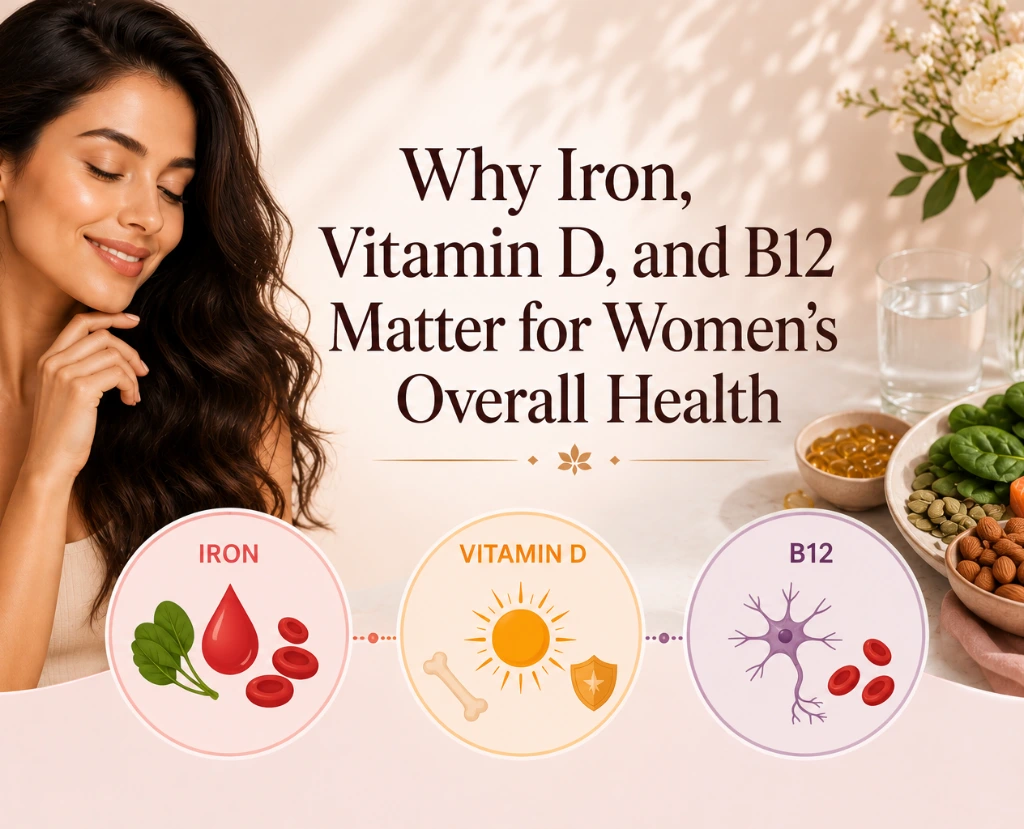
Why Iron, Vitamin D, and B12 Matter for Women’s Overall Health
Ask any clinician which nutritional deficiencies they see most frequently in women, and iron, vitamin D, and vitamin B12 will come up every single time. These three nutrients are not just important for energy levels and general wellbeing — they are deeply involved in hair growth, skin health, immune function, hormonal regulation, and neurological function. And yet, deficiencies in all three are remarkably common, frequently undetected, and regularly underestimated in their impact.
At Cosmeticstar in Leeds, we encounter the consequences of these deficiencies regularly — often in patients who have been told their blood results are normal, but whose hair and skin tell a very different story. This blog explains what each of these nutrients actually does, why women are particularly at risk of deficiency, and what the most effective approach to correction looks like.
Iron: More Than Just Energy
Most people associate iron with energy and anaemia — and whilst those links are real, iron’s role in women’s health extends considerably further. Iron is essential for red blood cell production, oxygen transport, immune function, and — crucially for our patients — hair growth. The NHS overview of iron deficiency anaemia provides a useful starting point, though it is worth noting that hair loss can occur at ferritin levels that standard anaemia tests would not flag as problematic.
The key distinction is between iron and ferritin. Ferritin is the stored form of iron — and hair follicles use it as fuel to sustain the active growth phase. When ferritin falls below approximately 70 micrograms per litre, follicles begin shifting prematurely into the resting phase, increasing shedding and reducing hair density. Many women with ferritin-related hair loss have ‘normal’ iron results because their haemoglobin is still within range — but their stores are depleted. This is why ferritin must be specifically tested and is not captured by a standard blood count alone.
Why Women Are at Higher Risk
Women of reproductive age lose iron through menstruation every month — and for those with heavier periods, this loss can easily outpace dietary intake. Pregnancy and breastfeeding place additional iron demands on the body. Women who follow plant-based or vegetarian diets absorb the non-haem form of iron from food at a significantly lower rate than haem iron from animal sources. Gut conditions like coeliac disease, Crohn’s, or even chronic low-level inflammation can reduce absorption further.
Vitamin D: The Sunshine Vitamin With Year-Round Consequences
Vitamin D is produced by the skin in response to UVB light exposure — which in the UK is only reliably available between April and September, and only when the sun is high enough in the sky. For the rest of the year, the body depends entirely on dietary intake and supplementation to maintain levels. Given how few foods are naturally rich in vitamin D, deficiency is effectively endemic across the UK population during autumn and winter.
For women specifically, vitamin D plays a central role in bone density, immune regulation, mood stability, and — importantly for hair health — follicular cycling. Vitamin D receptors are expressed on hair follicle cells, and without adequate levels, follicles struggle to move efficiently through the growth cycle. Research has associated low vitamin D with increased hair shedding, slower regrowth, and a higher incidence of alopecia areata. For skin, vitamin D supports the barrier function and the skin’s ability to repair itself after damage.
What ‘Normal’ Vitamin D Levels Look Like in Reality
The NHS reference range for vitamin D is 50 nmol/L and above — but many functional medicine practitioners and hair specialists consider 75 to 100 nmol/L to be the range at which hair and skin benefits are most consistently seen. A result of 52 nmol/L might be technically ‘sufficient’ but may still be insufficient for optimal follicular function. If you are having vitamin D tested, ask for the actual number rather than just a pass or fail.
Vitamin B12: The Nutrient That Powers Everything
B12 is involved in DNA synthesis, red blood cell production, neurological function, and the metabolism of every cell in the body. Its impact on hair and skin is significant: B12 deficiency reduces the oxygen and nutrient supply to follicles and skin cells by impairing red blood cell production. The results — diffuse hair shedding, premature greying, a dull complexion, and persistent fatigue — often develop gradually and are attributed to ageing or stress before the underlying deficiency is identified.
Vitamin B12 is found exclusively in animal-derived foods, which means women following plant-based diets are at significant risk of deficiency without targeted supplementation. But B12 absorption also depends on a protein called intrinsic factor, produced by the stomach lining — and production of intrinsic factor naturally declines with age, making B12 deficiency increasingly common in women over 40. Certain medications, including metformin and proton pump inhibitors, also deplete B12 over time.
Treatment Options at Cosmeticstar, Leeds
Vitamin Injections
For women with identified deficiencies in B12, vitamin D, or iron-related nutrients, our Vitamin Injections in Leeds provide intramuscular delivery that bypasses the digestive system entirely — ensuring complete absorption regardless of gut health status. This is particularly valuable for women with absorption issues or those who have not responded adequately to oral supplementation.
IV Drip Therapy
Where multiple deficiencies are present — as is often the case — our IV Drip Therapy in Leeds provides a comprehensive, intravenous correction of nutritional status. Patients frequently report noticeable improvements in energy, skin quality, and hair shedding rate within the first few weeks of treatment.
PRP Hair Treatment
Correcting nutritional deficiencies is the foundation — but follicles that have been dormant or weakened during a period of deficiency often need a direct biological stimulus to recover. PRP Hair Treatment in Leeds provides exactly that, working alongside nutritional correction to accelerate hair regrowth.
GFC Hair Therapy
For women whose hair loss has been more significant, GFC Hair Therapy in Leeds delivers an advanced growth factor treatment that produces a stronger follicular stimulus — particularly effective when combined with the nutritional support described above.
What Every Woman Should Do
- Test for ferritin specifically — not just haemoglobin or serum iron — and aim for levels above 70 micrograms per litre
- Supplement vitamin D through autumn and winter at minimum — the NHS recommends 10 micrograms daily, though higher doses may be needed for deficient individuals
- Check B12 levels if you are plant-based, over 40, or on long-term medication — and consider injectable B12 if oral supplements have not corrected the deficiency
- Do not wait until symptoms become severe — subclinical deficiencies affect hair and skin long before they produce obvious systemic symptoms
Book at Cosmeticstar, Leeds
If you want to understand whether iron, vitamin D, or B12 deficiency is contributing to your hair or skin concerns, Cosmeticstar in Leeds offers the assessment, injectable support, and clinical hair treatments to address it properly. Chat now — click the link and you will be redirected straight to WhatsApp.
Conclusion
Iron, vitamin D, and B12 are three of the most impactful nutrients for women’s hair, skin, and overall health — and three of the most commonly deficient. Getting these right is not a minor detail; it is foundational. Cosmeticstar in Leeds provides the testing guidance, injectable correction, and clinical support needed to address these deficiencies properly and see the results where they matter most.
Privacy Notice: Your data is handled in accordance with UK GDPR. Please review our Privacy Policy for full details.
Disclaimer: This blog is for educational purposes only. Always consult a qualified professional before beginning any treatment.
Frequently Asked Questions
Q: Can low vitamin D cause hair loss in women?
A: Yes — vitamin D receptors are present on hair follicle cells, and deficiency is associated with increased shedding, slower regrowth, and a higher prevalence of certain alopecia conditions.
Q: Why is ferritin more important than iron for hair health?
A: Ferritin is the stored form of iron that hair follicles use directly as fuel during the growth phase. You can have adequate serum iron but still have low ferritin — and it is the ferritin level that determines hair growth.
Q: Are B12 injections better than B12 tablets?
A: For women with absorption issues, pernicious anaemia, or conditions affecting the gut, B12 injections bypass the digestive system and provide complete, reliable correction — making them significantly more effective than oral tablets in these cases.
Q: How long does it take for iron levels to improve with treatment?
A: Oral iron supplementation typically takes three to six months to meaningfully raise ferritin levels. IV iron therapy achieves correction significantly faster — often within weeks.