
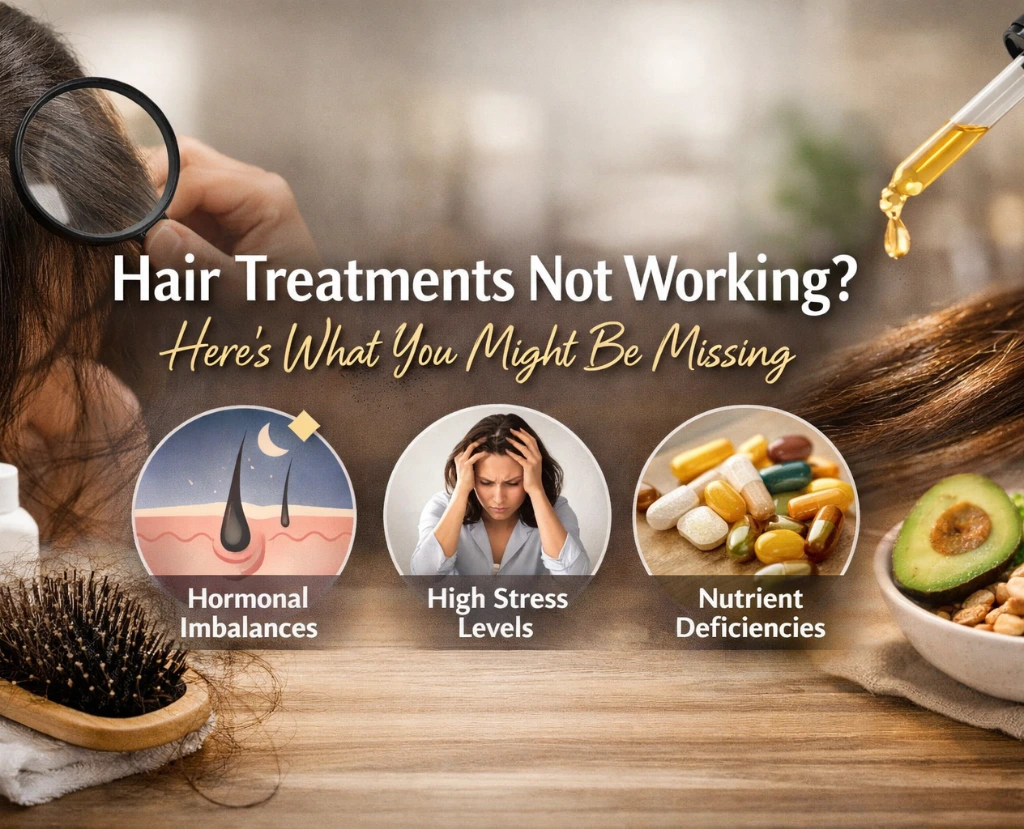
Hair Treatments Not Working? Here’s What You Might Be Missing
It can be frustrating to go through multiple hair treatments and still feel like nothing is changing. Many women try different solutions for thinning hair or increased shedding, expecting visible improvement, only to be left disappointed.
In most cases, the issue is not that treatments do not work. There is something important missing from the overall approach.
Hair growth depends on several factors working together. When one part is overlooked, even effective treatments may not deliver the results you expect.
This blog looks at the key reasons why hair treatments may fall short and what can be done to improve outcomes.
Are you treating the right problem?
Hair loss can occur for different reasons, and not all types respond to the same treatment.
Some common causes include:
- Stress-related shedding
- Hormonal changes
- Post-illness hair loss
- Gradual thinning over time
If the treatment does not match the cause, results may be limited. This is why proper assessment is essential before starting any hair restoration plan.
Are your hair follicles still active?
Non-surgical treatments such as PRP, GFC, and Exosome therapy work by stimulating existing hair follicles.
If follicles are still active but weak, these treatments can improve their function and support regrowth. However, if treatment is delayed and follicles become inactive, the response may be reduced.
Starting treatment at an earlier stage often leads to better and more noticeable results.
The role of treatment consistency
Hair restoration is not a one-time process. It requires a structured and consistent approach.
Irregular sessions can:
- Slow down progress
- Reduce effectiveness
- Interrupt the natural recovery cycle
Following a recommended treatment plan helps ensure that follicles receive continuous stimulation and support.
Could internal deficiencies be affecting your results?
One important factor that is often overlooked is internal health.
Hair follicles rely on essential nutrients to grow and function properly. If the body lacks these nutrients, hair growth may slow down, and treatments may not work as effectively.
Common deficiencies that can affect hair include:
- Low iron levels
- Vitamin D deficiency
- Vitamin B12 deficiency
- Poor protein intake
When these are present, hair may become weaker, shed more easily, and respond slowly to treatment.
This does not mean treatments such as PRP are ineffective. It simply means the follicles may not be receiving enough internal support to respond properly.
In such cases, addressing deficiencies can improve results. Vitamin injections can help restore key nutrients, while IV drip therapy supports overall recovery and balance. When combined with external treatments, this creates a better environment for hair growth.
Are you expecting results too quickly?
Hair growth is a gradual process. Even the most advanced treatments require time to show visible improvement.
In the early stages, the focus is often on reducing shedding and stabilising the hair cycle. Visible changes in thickness and density take longer to develop.
Understanding this timeline helps avoid unnecessary frustration and ensures treatments are given enough time to work.
Why combination treatments can be more effective
In some cases, using a single treatment may not be enough.
PRP is often used as the foundation because it stimulates hair follicles. However, depending on the condition:
- GFC can provide a more concentrated boost
- Exosome therapy can improve the overall scalp environment
A combination approach allows treatment to be adjusted based on individual needs and response.
Lifestyle factors you might be overlooking
Daily habits can also influence how well your hair responds to treatment.
Factors such as:
- High stress levels
- Poor sleep
- Inconsistent nutrition
- Frequent heat or chemical styling
can all impact hair health and slow down progress.
Supporting overall wellbeing can make a noticeable difference in treatment outcomes.
A better way to approach hair restoration
Improving results often comes down to refining your approach rather than changing everything completely.
A more effective strategy includes:
- Identifying the exact cause of hair loss
- Starting treatment early
- Following a consistent plan
- Supporting internal health
- Managing lifestyle factors
This balanced approach allows treatments to work more effectively and deliver better long-term results.
Conclusion
When hair treatments do not seem to be working, it is often not the treatment itself but missing factors that are limiting progress. Hair growth depends on a combination of correct diagnosis, consistency, internal health, and the right treatment plan.
Non-surgical options such as PRP, supported by advanced treatments like GFC and Exosome therapy, can deliver strong results when used correctly. Adding internal support through vitamin injections and IV drip therapy can further enhance outcomes by improving the body’s ability to respond.
If you are looking for a clinic in Leeds that focuses on personalised, non-surgical hair restoration, Cosmeticstar offers tailored treatment plans designed to address both visible and underlying causes of hair loss.
Tried treatments but still not seeing results? 👉 Chat now to understand what might be missing and how to improve your results.
GDPR Notice: All treatment-related information is handled in a GDPR-compliant manner. Your personal data is securely protected. Clicking the WhatsApp link will redirect you to an external platform. Please review our Privacy Policy for more details.
Disclaimer: This blog is for educational purposes only. Always consult a qualified professional before starting any treatment.
FAQs
Q: Why are my hair treatments not showing results?
A: This can be due to incorrect diagnosis, lack of consistency, or missing internal support.
Q: Can PRP work if I have nutrient deficiencies?
A: It may work to some extent, but results are usually better when deficiencies are addressed.
Q: Do I need combination treatments?
A: In some cases, combining treatments like PRP, GFC, or Exosomes can improve outcomes.
Q: How long should I continue treatment?
A: Hair restoration requires a structured plan followed by maintenance sessions.
Q: Can lifestyle affect treatment results?
A: Yes, stress, diet, and overall health can significantly influence hair growth.