
Microneedling in Leeds: A Complete Guide to Results, Sessions and What to Expect
Microneedling in Leeds has become one of the most sought-after skin treatments in the city — and for good reason. It is evidence-based, minimally invasive, requires no surgery, suits a wide range of skin concerns, and when delivered correctly, produces measurable improvements in skin texture, tone, and firmness that most topical products cannot replicate. But like any treatment, the results depend enormously on the quality of the device used, the expertise of the practitioner, and whether the treatment is properly matched to the skin concern being addressed.
At Cosmeticstar in Leeds, microneedling is delivered as part of an assessment-first approach to skin health. This complete guide covers everything — the science, the procedure, what it treats, how many sessions you need, and what results you can realistically expect from microneedling in Leeds.
What Is Microneedling? The Science Explained
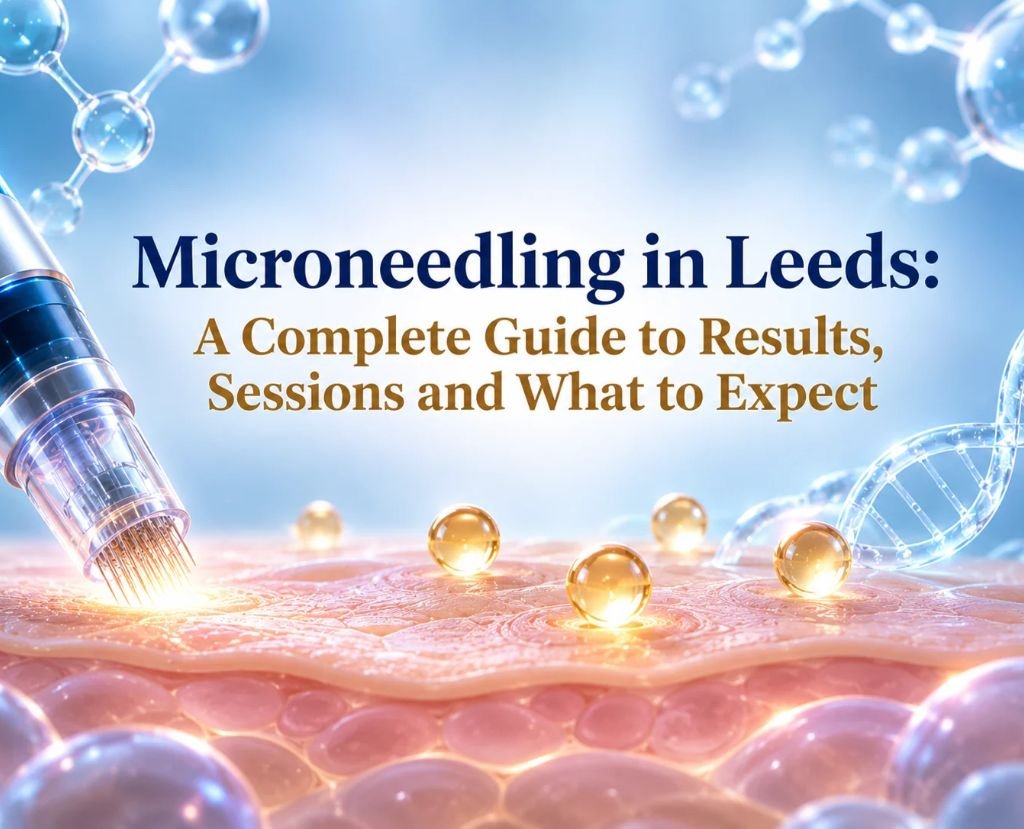
Microneedling — also called collagen induction therapy — uses a precision-controlled device fitted with very fine, sterile needles to create thousands of controlled micro-channels in the skin. At Cosmeticstar in Leeds, we use medical-grade devices that allow precise control over needle depth, allowing treatment to be calibrated specifically to the skin area and concern being addressed.
The micro-channels created by microneedling trigger the skin’s natural wound healing response — without causing actual damage. The body responds to these micro-injuries by increasing production of collagen and elastin — the structural proteins that give skin its firmness, elasticity, and smooth texture. The channels also temporarily increase the skin’s permeability, allowing active ingredients applied during or after treatment to penetrate far more deeply than they can through intact skin.
The result over a course of microneedling sessions in Leeds is a genuine and progressive improvement in skin quality: smoother texture, improved tone, reduced appearance of scarring, fine lines, and open pores, and overall skin that looks and feels more youthful and resilient.
What Microneedling in Leeds Treats
Acne Scarring
Microneedling is one of the most effective non-surgical treatments for acne scarring in Leeds. The collagen induction response gradually fills and smooths the depressions left by atrophic acne scars — ice pick, boxcar, and rolling scars all respond, though the degree of improvement varies by scar type and depth. Multiple sessions are needed, and combining microneedling with PRP at Cosmeticstar Leeds consistently produces stronger and faster improvement in acne scarring than microneedling alone.
Fine Lines and Skin Laxity
The progressive increase in dermal collagen and elastin produced by a course of microneedling in Leeds leads to skin that is visibly firmer, more resilient, and less lined. Fine lines around the eyes and mouth, early jowling, and general loss of skin tone in the mid-face all respond well — with improvements developing gradually over the weeks and months following each session as the new collagen matures.
Enlarged Pores
Enlarged pores are largely a consequence of reduced collagen in the surrounding skin — as the skin loses structural support, pores appear more prominent. Microneedling addresses this directly: the collagen induction response tightens the tissue surrounding each pore, gradually reducing its visible diameter over a course of treatment.
Uneven Skin Tone and Texture
Microneedling in Leeds at Cosmeticstar accelerates skin cell turnover alongside its collagen-stimulating effects — leading to a fresher, more even complexion over the course of treatment. Dullness, rough texture, and uneven pigmentation all improve as the skin’s renewal cycle is enhanced.
Stretch Marks and Body Skin
Microneedling is not limited to the face. Body microneedling at Cosmeticstar Leeds is used for stretch marks on the abdomen, thighs, and buttocks — where the collagen induction mechanism produces the same gradual textural improvement as on the face, over a longer course of treatment.
The Microneedling Procedure at Cosmeticstar Leeds: Step by Step
Step 1 — Consultation and Skin Assessment
Every course of microneedling in Leeds at Cosmeticstar begins with a thorough consultation. Your skin type, skin concerns, medical history, and any active skin conditions are assessed before any treatment is planned. Contraindications — active acne, rosacea flare, recent sunburn, blood thinning medications — are identified at this stage. Baseline photographs are taken for objective progress tracking.
Step 2 — Cleansing and Numbing
The treatment area is thoroughly cleansed. A topical anaesthetic cream is then applied and left for 20–30 minutes to ensure the skin surface is adequately numbed before the needling begins. This step makes microneedling in Leeds at Cosmeticstar well-tolerated — most patients describe the procedure as a mild scratching or pressure sensation rather than pain.
Step 3 — Microneedling
The microneedling device is passed systematically across the treatment area in multiple directions, covering the entire zone evenly. The needle depth is adjusted by your practitioner as the device moves across different areas — deeper in the cheeks and forehead, shallower around the eyes and lips. A hydrating serum or active treatment concentrate is applied to the skin during the procedure to maximise penetration through the open micro-channels.
Step 4 — Post-Treatment Application and Guidance
A calming, hydrating serum is applied after the procedure to support the skin’s initial recovery. You leave the clinic with detailed aftercare guidance — what to avoid for the first 24–48 hours, how to care for your skin during the healing phase, and when to return for your next session.
How Many Microneedling Sessions Are Needed in Leeds?
The number of microneedling sessions needed in Leeds depends on the skin concern being treated:
- General skin rejuvenation and texture improvement: Three to four sessions, spaced four to six weeks apart, produces excellent results for most patients. Many patients choose to continue with maintenance sessions every three to four months.
- Acne scarring: Four to six sessions are typically needed for meaningful improvement in established acne scarring, with deeper or more complex scarring potentially benefitting from additional sessions. Combining with PRP significantly improves outcomes.
- Fine lines and laxity: Three to four sessions for initial improvement, with periodic maintenance. The collagen produced by microneedling continues to mature for up to six months after each session, so patience between sessions is part of the protocol.
- Stretch marks: Six or more sessions are typically needed for visible improvement in stretch marks, as the collagen deficit in these areas is more significant than in facial skin.
Microneedling Results: What to Realistically Expect and When
Microneedling in Leeds produces results on a biological timeline, not an immediate one. Immediately after each session, the skin appears pink and slightly swollen — a normal response that resolves within 24–48 hours. The collagen and elastin produced in response to each session takes four to eight weeks to mature and become visible at the skin surface.
Most patients at Cosmeticstar Leeds notice a first improvement in skin quality — improved texture, reduced pore appearance, brighter complexion — after their second or third session. The most significant cumulative improvement is typically visible at the three to six month mark from the start of treatment, as the collagen from multiple sessions has matured and integrated into the dermal structure.
Maximising Microneedling Results in Leeds
The strongest microneedling results at Cosmeticstar Leeds consistently come from combination approaches. Adding PRP (platelet-rich plasma) to a microneedling session — applying concentrated growth factors to the micro-channels created by the needling — produces significantly stronger collagen stimulation and faster results than microneedling alone. Red light therapy sessions between microneedling appointments maintain the collagen-stimulating stimulus and reduce inflammation, extending and deepening the results of each session.
Skin Rejuvenation Treatments at Cosmeticstar Leeds
Microneedling Leeds
Our clinical microneedling in Leeds uses precision-controlled devices to create targeted micro-channels in the skin, stimulating collagen and elastin production for genuine, measurable skin improvement. Every treatment is planned around your specific skin concern and type.
PRP Facial & Skin Treatment Leeds
Our PRP therapy in Leeds uses your own platelet-rich plasma — rich in growth factors — to stimulate skin cell renewal, improve texture and tone, and promote the production of new collagen from within.
GFC Skin Treatment Leeds
Our GFC therapy in Leeds uses a refined, concentrated growth factor preparation to support skin rejuvenation. It offers a targeted regenerative approach for patients seeking non-surgical improvements in skin quality.
Bio-RePeel Leeds
Bio-RePeel is a bi-phasic TCA-based treatment that resurfaces, brightens, and tightens the skin. It is designed to support skin renewal with less visible downtime than many traditional peels. Suitability is assessed individually.
Red Light Therapy for Skin Leeds
Our guide to red light therapy explains photobiomodulation. The same light-based mechanism is also used in skin care to support fibroblast activity, collagen production, reduce inflammation, and improve the appearance of skin tone and texture.
Book Your Skin Consultation at Cosmeticstar Leeds
If you are considering microneedling in Leeds and want to understand which treatment is right for your specific skin concerns and what a personalised plan would look like, the most useful next step is a proper skin assessment — not a generic quiz or a booking without consultation. At Cosmeticstar in Leeds, every treatment plan starts with understanding your skin, your concerns, and your goals. Chat with us on WhatsApp and our team will come back to you straight away.
Conclusion
Microneedling in Leeds at Cosmeticstar is a clinically grounded, evidence-based skin treatment that produces real, progressive improvements in texture, tone, and firmness — when delivered with the right device, the right technique, and the right supporting approach. At Cosmeticstar in Leeds, we start with a proper skin assessment and design every microneedling plan around what your skin actually needs.
Privacy Notice: Your data is handled in accordance with UK GDPR. Please review our Privacy Policy for full details.
Disclaimer: This blog is for educational purposes only and does not constitute medical advice. Always consult a qualified practitioner before beginning any skin treatment.
Frequently Asked Questions
Q: How much does microneedling cost in Leeds?
A: Microneedling pricing at Cosmeticstar Leeds is discussed during consultation, as the right plan — the number of sessions, the needle depth, any combination with PRP or other treatments — depends on your specific skin concern and type. We are transparent about all costs before any treatment begins.
Q: Is microneedling painful in Leeds?
A: With proper topical anaesthetic preparation — which is standard at Cosmeticstar Leeds — microneedling is consistently described by patients as a mild scratching or pressure sensation. The experience is well-tolerated from the first appointment.
Q: How long does microneedling take in Leeds?
A: A full microneedling session at Cosmeticstar Leeds — including consultation, cleansing, topical anaesthetic, treatment, and post-treatment application — takes approximately 60 to 90 minutes depending on the area being treated.
Q: Can microneedling be combined with PRP in Leeds?
A: Yes — and at Cosmeticstar Leeds, combining microneedling with PRP is one of our most recommended approaches for patients with acne scarring, significant texture concerns, or those wanting the strongest possible skin rejuvenation result. The growth factors in PRP penetrate deeply through the micro-channels created by needling, producing significantly stronger collagen stimulation than microneedling alone.
Q: Is microneedling suitable for all skin types in Leeds?
A: Microneedling is suitable for a wide range of skin types and tones — unlike some laser treatments, it does not carry significant pigmentation risks for darker skin. However, it is not appropriate during active acne flares, rosacea flares, or for patients on certain medications. A proper assessment at Cosmeticstar Leeds establishes suitability before any treatment is planned.