
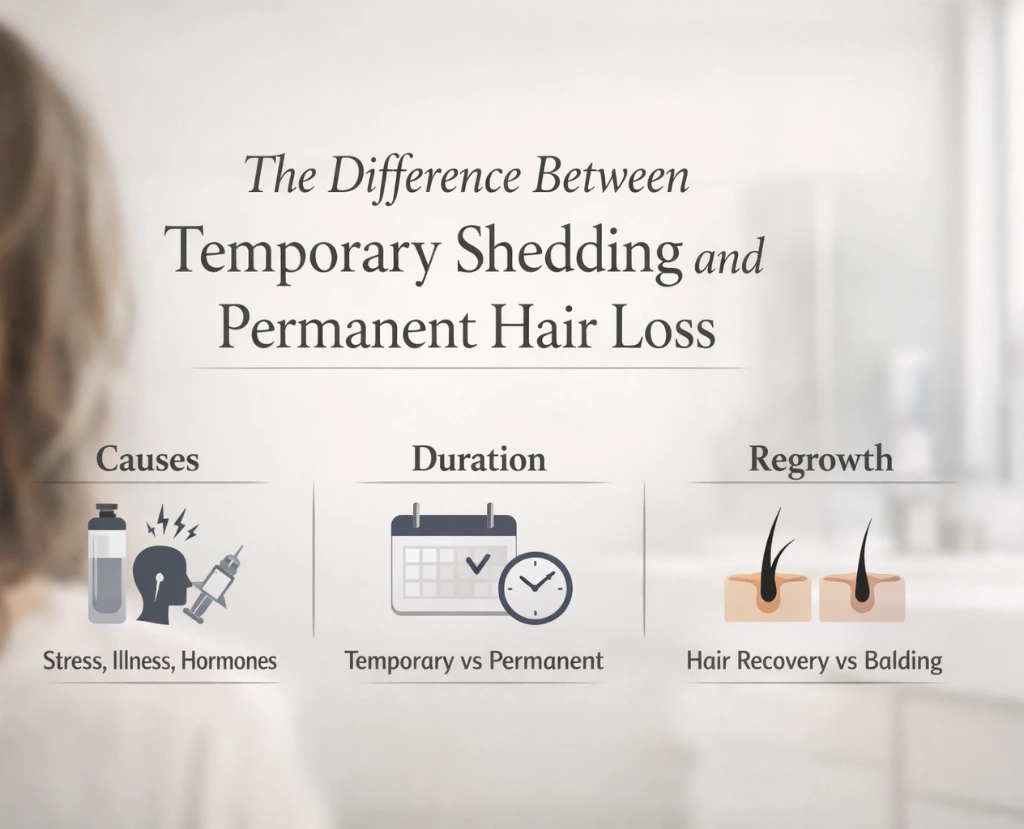
The Difference Between Temporary Shedding and Permanent Hair Loss
Insight: Understanding Hair Loss Before It Progresses
Not all hair loss is permanent. While seeing strands of hair on your pillow or in your shower drain can be concerning, it does not always indicate irreversible thinning. Some forms of hair loss are temporary and resolve naturally, while others require professional intervention. Understanding the difference between temporary shedding and permanent hair loss is essential for timely treatment, effective results, and long-term hair health.
What Is Temporary Hair Shedding?
Temporary hair shedding, medically known as telogen effluvium, occurs when a larger-than-normal number of hair follicles prematurely enter the resting phase of the hair growth cycle. This results in noticeable hair fall but does not permanently damage the follicles.
Common Causes of Temporary Hair Shedding
- Physical or emotional stress
- High fever, illness, or surgery
- Pregnancy and postpartum hormonal changes
- Rapid weight loss or restrictive dieting
- Nutritional deficiencies such as iron or vitamin D
- Thyroid imbalances
- Certain medications
- Seasonal changes
Key Characteristics
- Sudden and excessive hair fall
- Diffuse thinning across the scalp
- No visible bald patches
- Hair follicles remain healthy
- Typically reversible
- Regrowth occurs within a few months once the cause is addressed
What Is Permanent Hair Loss?
Permanent hair loss occurs when hair follicles gradually shrink, weaken, or become inactive. Unlike temporary shedding, it does not resolve on its own and often requires targeted treatment to restore hair growth.
The most common type is androgenetic alopecia, also known as male or female pattern hair loss, which is influenced by genetics and hormones.
Common Causes of Permanent Hair Loss
- Genetic predisposition
- Sensitivity to dihydrotestosterone (DHT)
- Hormonal imbalances
- Age-related follicular miniaturisation
- Chronic scalp inflammation
- Autoimmune conditions such as alopecia areata
- Traction alopecia caused by tight hairstyles
Key Characteristics
- Gradual thinning over time
- Receding hairline or widening parting
- Visible scalp at the crown or temples
- Reduced hair density and volume
- Progressive and long-term condition
- Requires professional treatment for improvement
Temporary vs Permanent Hair Loss: Understanding the Difference
Feature |
Temporary Hair Shedding |
Permanent Hair Loss |
| Duration | Short-term | Progressive and long-term |
| Cause | Stress, illness, or deficiencies | Genetics and hormones |
| Hair Follicles | Remain healthy | Gradually shrink or become inactive |
| Pattern | Diffuse shedding | Patterned thinning |
| Reversibility | Usually reversible | Requires professional treatment |
| Regrowth | Occurs naturally | Needs medical or aesthetic support |
The Science Behind Hair Loss
Hair grows through a continuous biological cycle:
- Anagen (Growth Phase): The active stage lasting several years.
- Catagen (Transition Phase): A short period where follicles shrink.
- Telogen (Resting Phase): The stage during which hair naturally sheds.
Temporary shedding occurs when a higher proportion of follicles shift into the telogen phase. Permanent hair loss, however, involves progressive miniaturisation of hair follicles, resulting in thinner, shorter strands. Advanced regenerative treatments aim to stimulate dormant follicles and extend the anagen phase.
Non-Surgical Hair Restoration Treatments in Leeds
At Cosmeticstar in Leeds, advanced non-surgical treatments are designed to address both temporary and permanent hair loss, promoting natural and sustainable regrowth.
PRP Hair Treatment
Platelet-Rich Plasma therapy utilises growth factors derived from your own blood to stimulate dormant follicles, enhance circulation, and encourage natural hair regrowth.
GFC Hair Therapy
Growth Factor Concentrate therapy delivers highly purified growth factors to strengthen hair follicles, improve scalp health, and increase hair density.
Exosome Therapy
Exosome therapy represents a breakthrough in regenerative medicine, promoting cellular repair, reducing inflammation, and reactivating dormant hair follicles.
Supporting Hair Regrowth from Within
IV Drip Therapy
IV Drip Therapy delivers essential vitamins, minerals, and antioxidants directly into the bloodstream to support hydration, energy, and overall hair health.
Vitamin Injections
Vitamin injections help address nutritional deficiencies that contribute to excessive shedding and thinning hair.
Benefits of Non-Surgical Hair Restoration Treatments
- Non-invasive procedures with minimal downtime
- Safe and clinically informed solutions
- Natural-looking and gradual results
- Suitable for both men and women
- Improves scalp health and hair density
- Personalised treatment plans
- Enhances confidence and overall wellbeing
Prevention and Maintenance Tips
- Maintain a balanced diet rich in iron, protein, and essential vitamins
- Manage stress through regular exercise and relaxation techniques
- Avoid excessive heat styling and harsh chemical treatments
- Use gentle, sulphate-free hair care products
- Stay hydrated to support optimal hair growth
- Address underlying medical or hormonal conditions promptly
- Seek professional advice at the earliest signs of hair thinning
If you are experiencing excessive hair shedding or permanent hair loss, chat now—expert guidance can help identify the cause and provide effective solutions tailored to your needs.
Conclusion
Understanding the difference between temporary shedding and permanent hair loss is essential for choosing the right treatment. While temporary shedding often resolves once the underlying cause is addressed, permanent hair loss requires targeted intervention to restore follicular health and stimulate regrowth. Early diagnosis ensures the best outcomes and helps prevent further progression.
For personalised care and science-led treatments, visit Cosmeticstar.
GDPR Notice: Your personal data is handled in accordance with UK GDPR. Please review our Privacy Policy for full details.
Disclaimer: This blog is for educational purposes only. Always consult a qualified professional before beginning any treatment.
Frequently Asked Questions
Q: Can temporary hair shedding become permanent?
A: Yes, if the underlying cause is not addressed, temporary shedding may progress into chronic hair loss.
Q: How can I tell whether my hair loss is temporary or permanent?
A: A professional consultation, scalp assessment, and diagnostic tests can accurately determine the cause.
Q: How long does temporary hair shedding last?
A: It typically lasts between three to six months, depending on the trigger and overall health.
Q: Are regenerative treatments effective for permanent hair loss?
A: Yes, treatments such as PRP Hair Treatment, GFC Hair Therapy, and Exosome Therapy can stimulate dormant follicles and improve hair density.
Q: Can nutritional deficiencies cause excessive hair shedding?
A: Yes, deficiencies in iron, vitamin D, and vitamin B12 are common contributors to hair loss.
Q: When should I seek professional help for hair loss?
A: If hair shedding persists for more than three months or worsens over time, a professional consultation is recommended.