
How Growth Factors Stimulate Hair Follicles
The growing popularity of PRP and GFC therapy as hair restoration treatments in Leeds and across the UK is grounded in a body of scientific research into growth factors — the biological proteins responsible for regulating cellular growth, repair, and regeneration. Understanding how these molecules interact with hair follicles is not only scientifically compelling; it also explains why these treatments consistently produce results that surgery and topical medications cannot replicate.
This blog provides an educational deep-dive into the science of growth factors, their specific role in the hair growth cycle, and how PRP and GFC therapy in Leeds harness that biology to restore thinning hair.
What Are Growth Factors?
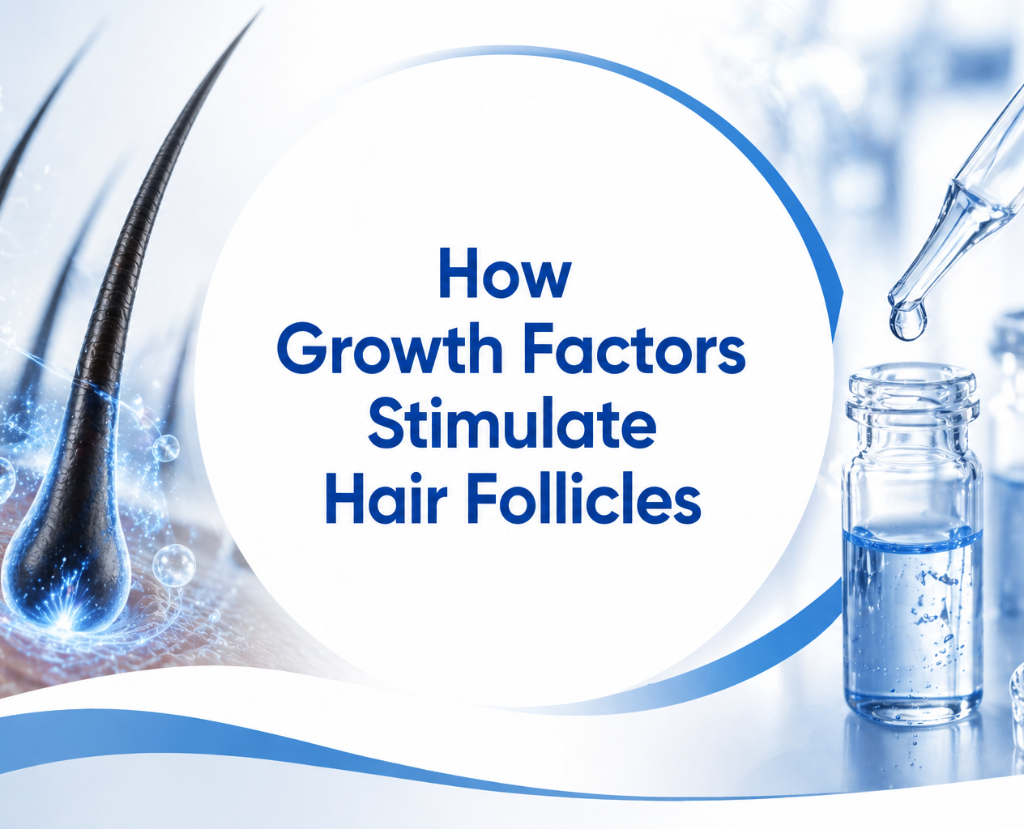
Growth factors are naturally occurring proteins produced by cells throughout the body. They function as signalling molecules — binding to specific receptors on target cells and triggering a defined biological response. In the context of hair restoration, the growth factors of primary interest are those found in platelets: specialised blood cells whose primary role is wound response and tissue repair.
When a wound occurs, platelets aggregate at the site and release a concentrated burst of growth factors to initiate healing. PRP and GFC therapy replicate this mechanism in a controlled clinical environment — concentrating these growth factors and delivering them directly to the scalp, where they stimulate the same repair and regeneration response in hair follicles.
The Key Growth Factors Involved in Hair Restoration
Platelet-Derived Growth Factor (PDGF)
PDGF is one of the most potent drivers of follicular regeneration. It stimulates the proliferation of dermal papilla cells — the specialised cells at the base of the follicle that control the hair growth cycle. PDGF also promotes angiogenesis: the formation of new blood vessels that improve nutrient and oxygen delivery to the follicle.
Vascular Endothelial Growth Factor (VEGF)
VEGF plays a critical role in scalp microcirculation. Adequate blood supply is essential for sustaining an active anagen (growth) phase, and VEGF supports the development and maintenance of the capillary network surrounding each follicle. Poor scalp circulation is a contributing factor in many cases of hair thinning, and VEGF directly addresses this.
Epidermal Growth Factor (EGF)
EGF regulates the proliferation and differentiation of cells in the outer root sheath of the hair follicle. It plays a key role in follicular cycling — specifically in the transition between the growth and resting phases — and supports the structural integrity of the hair shaft itself.
Insulin-Like Growth Factor (IGF-1)
IGF-1 is a powerful promoter of the anagen phase. It has been shown in clinical research to extend the active growth period of hair follicles and to counteract the miniaturising effects of DHT. Patients with androgenetic alopecia often show reduced IGF-1 signalling at the scalp level, making its restoration through PRP or GFC therapy particularly meaningful.
Transforming Growth Factor Beta (TGF-β)
TGF-β has a dual role in follicular biology. In controlled concentrations, it supports the transition between growth phases and contributes to normal follicular cycling. GFC therapy, through its more refined preparation process, is able to deliver growth factor profiles with greater precision — including more favourable ratios of stimulating to inhibitory signals compared to standard PRP preparations.
How PRP Delivers Growth Factors to the Scalp
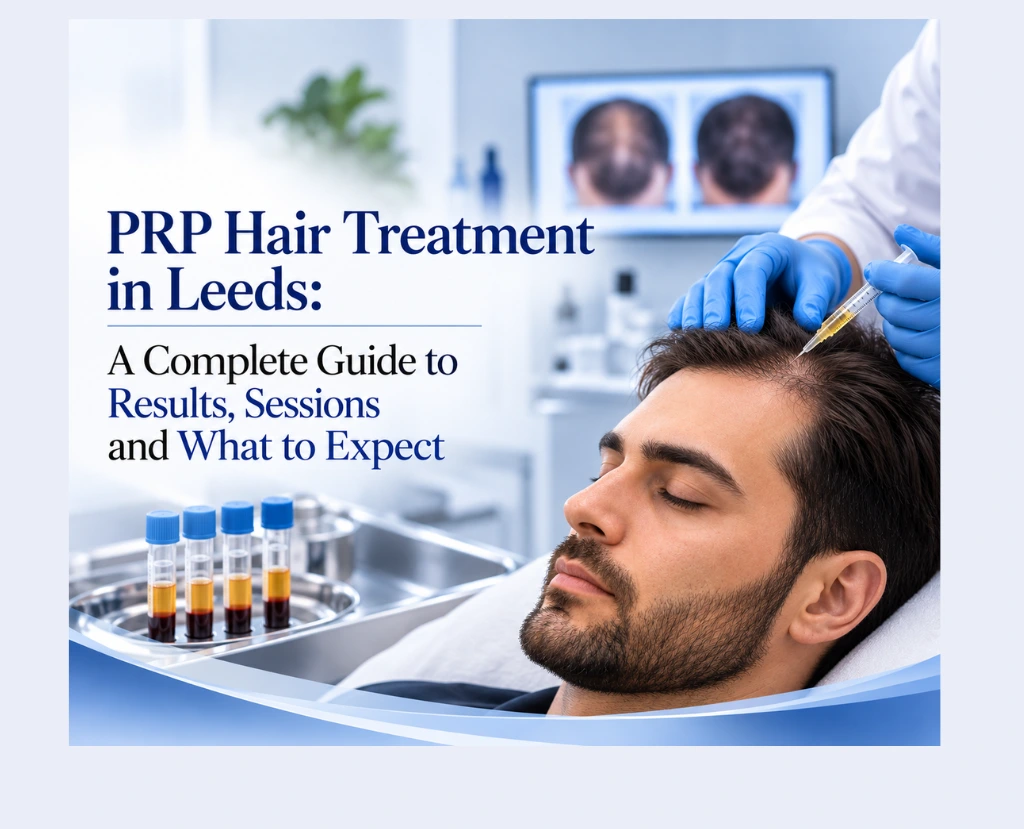
In PRP therapy, a small volume of the patient’s blood is drawn and placed in a centrifuge. Through controlled centrifugation, the blood is separated into its constituent layers: red blood cells settle at the bottom, platelet-poor plasma forms the upper layer, and the platelet-rich plasma — concentrated with growth factors — is isolated in the middle.
This PRP is then activated — either through the addition of calcium chloride or by the body’s own tissue contact — triggering the platelets to degranulate and release their growth factor cargo. The activated PRP is delivered to the scalp via a series of micro-injections at follicular depth, placing the growth factors precisely where they are needed.
PRP hair treatment in Leeds at Cosmeticstar uses a protocol that optimises platelet concentration and injection depth for consistent, clinically meaningful results.
How GFC Refines the Growth Factor Profile
GFC therapy uses an advanced preparation kit that refines the PRP process significantly. Rather than concentrating all platelet-derived content, GFC selectively isolates specific growth factor proteins whilst excluding red blood cells, inflammatory white blood cells, and other components that can generate post-injection inflammation and reduce treatment comfort.
The result is a preparation with a significantly higher concentration of the specific growth factors most relevant to hair follicle stimulation — without the biological noise that can dilute the signal in standard PRP. For patients undergoing GFC hair therapy in Leeds, this translates to a more comfortable procedure, fewer sessions required to see results, and a more targeted biological response at the follicular level.
Treatment Options at Cosmeticstar, Leeds
PRP Hair Treatment
Growth factor therapy using your own blood to stimulate dormant follicles — a well-established, science-backed treatment. Learn about PRP Hair Treatment in Leeds.
GFC Hair Therapy
A more refined and concentrated growth factor treatment that delivers a stronger biological signal with greater precision. Explore GFC Hair Therapy in Leeds.
Exosome Therapy
Stem-cell-derived exosomes carry growth signals that work at a cellular level to reactivate follicular stem cells and reset disrupted growth cycles. Discover Exosome Therapy in Leeds.
IV Drip Therapy
Ensuring the body has the micronutrients required to support optimal growth factor activity and follicular function. View our IV Drip Therapy in Leeds.
Vitamin Injections
Targeted nutritional injections that directly support the cellular processes underpinning healthy hair growth. Learn about our Vitamin Injections in Leeds.
Prevention and Maintenance
- Ensure adequate dietary intake of biotin, zinc, vitamin D, and iron — the cofactors that support growth factor activity.
- Avoid scalp inflammation from harsh products, which can interfere with growth factor receptor signalling.
- Maintain treatment sessions as recommended — growth factor therapy works cumulatively over time.
- Protect scalp health with gentle, sulphate-free hair care to preserve the follicular environment.
Speak to Cosmeticstar in Leeds
If you are considering PRP or GFC hair therapy in Leeds and want to understand the science behind your options before committing, Cosmeticstar offers a thorough consultation process designed to answer your questions and build your confidence in the treatment pathway. At Cosmeticstar, every treatment plan is built on evidence, not assumptions. Chat now — click the link and you will be redirected straight to WhatsApp.
Conclusion
Growth factors are the biological foundation of both PRP and GFC hair therapy. By understanding how PDGF, VEGF, IGF-1, and EGF interact with follicular stem cells, dermal papilla cells, and scalp microcirculation, it becomes clear why these treatments — applied correctly and at the right stage — produce results that are both scientifically sound and clinically meaningful. Cosmeticstar in Leeds is here to deliver that science in a professional, personalised, and results-driven environment.
Privacy Notice: Your data is handled in accordance with UK GDPR. Please review our Privacy Policy for full details.
Disclaimer: This blog is for educational purposes only. Always consult a qualified professional before beginning any treatment.
Frequently Asked Questions
Q: Are the growth factors in PRP and GFC the same as those produced naturally by the body?
A: Yes — PRP and GFC use growth factors derived from your own blood, so they are biologically identical to those naturally occurring in your tissue.
Q: Does GFC contain more growth factors than PRP?
A: GFC preparations typically contain a significantly higher concentration of specific growth factors, with fewer inflammatory components than standard PRP.
Q: How long do the growth factor effects last after a session?
A: Growth factor activity at the scalp diminishes over weeks, which is why a course of treatment sessions spaced four to six weeks apart is recommended for cumulative benefit.
Q: Is there any risk of an allergic reaction since the growth factors come from my own blood?
A: The risk of allergic reaction is extremely low — since PRP and GFC use autologous (your own) blood components, the body recognises them as self and does not mount an immune response.