
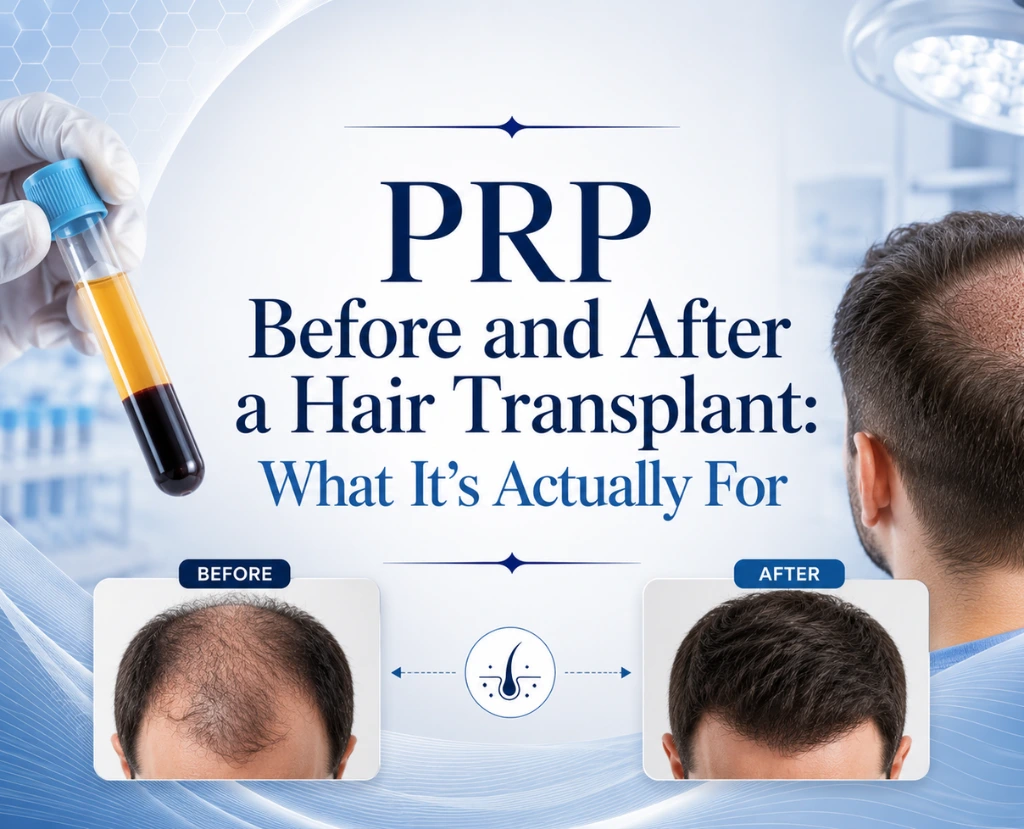
PRP Before and After a Hair Transplant: What It’s Actually For
If you have had a hair transplant — or are planning one — you may have come across the suggestion that PRP should be part of the process. Some surgeons recommend it beforehand, some suggest it afterwards, and some recommend both. If you are not sure what PRP actually does in this context, or whether it is worth the additional investment, this blog gives you the clear, honest picture.
At Cosmeticstar in Leeds, we work with patients who are preparing for transplant surgery and those who are in recovery. PRP — and increasingly GFC — plays a specific and clinically meaningful role at both stages. Here is what that role actually is.
What PRP Does Before a Hair Transplant
Optimising the Scalp Environment
The quality of the scalp environment at the time of a hair transplant has a direct bearing on how well the procedure goes. A scalp that is well vascularised — meaning it has a healthy blood supply — provides better conditions for graft survival. A scalp where follicles in the surrounding non-transplanted areas are still active and responding well to regenerative stimulus is a healthier starting point for surgery.
PRP hair treatment in Leeds in the months before a planned transplant helps to achieve both of these things. VEGF — one of the primary growth factors in PRP — directly promotes new blood vessel formation in the scalp, improving localised vascular density. PDGF and IGF-1 stimulate existing follicular activity in the broader scalp, creating a more active and responsive tissue environment for the transplant. Improving Density in Areas Not Covered by the Transplant
Most hair transplants focus on the areas of most significant baldness — the crown, the hairline, or specific zones of thinning. The surrounding areas, where follicles are in early-to-moderate stages of miniaturisation, are often not directly treated. Pre-transplant PRP in Leeds stimulates these follicles and improves their density before surgery — creating a more consistent overall result when the transplanted zones are combined with the improved surrounding hair.
What PRP Does After a Hair Transplant
Accelerating Graft Vascularisation
After transplant surgery, the primary biological challenge is establishing a blood supply around the newly placed grafts as quickly as possible. VEGF from PRP directly promotes the formation of new blood vessels — meaning grafts receive adequate oxygen and nutrients sooner, significantly improving their survival rate. Patients who receive PRP hair treatment in Leeds following their transplant consistently show better graft survival outcomes.
Reducing Post-Surgical Inflammation
Post-surgical scalp inflammation is a natural part of the healing process — but when it persists longer than necessary, it creates a less ideal environment for graft survival and early growth. PRP’s growth factors — particularly TGF-β — modulate the inflammatory response, helping it resolve more efficiently. Patients report reduced swelling and redness in the days following their transplant when PRP is incorporated into their recovery plan.
Shortening the Shock Loss Phase
Shock loss — the temporary shedding of both transplanted and native hairs following transplant surgery — is a normal and expected part of the recovery. PRP growth factors support the follicular recovery process, helping follicles re-enter the anagen phase more quickly following the stress of surgery. Patients who begin PRP treatment in Leeds post-transplant often notice new growth emerging slightly earlier than the standard timeline — a meaningful benefit given how long the waiting period can feel.
Protecting Non-Transplanted Hair
Hair loss in the non-transplanted areas of the scalp tends to continue after surgery. Without intervention, the gradual recession in these zones can create an uneven appearance over time that undermines the visual outcome of even an excellent transplant. Post-transplant PRP at Cosmeticstar in Leeds treats the wider scalp alongside the transplant recovery, preserving and improving density in areas not covered by the surgery.
GFC vs PRP for Pre and Post Transplant Support
GFC hair therapy in Leeds offers a stronger growth factor preparation than standard PRP and is increasingly preferred by patients who want to give their transplant the most powerful biological support available. The enhanced VEGF and PDGF concentrations in GFC produce a more pronounced vascularisation stimulus pre-transplant and a faster recovery response post-transplant. For patients making a significant investment in transplant surgery, GFC is a compelling upgrade on standard PRP in this context.
Treatment Options at Cosmeticstar, Leeds
PRP Hair Treatment
Our PRP Hair Treatment in Leeds is frequently used both before and after hair transplant surgery to optimise the scalp environment and maximise the quality and longevity of transplant results.
GFC Hair Therapy
For patients wanting the strongest available biological support for their transplant — before or after — GFC Hair Therapy in Leeds provides an enhanced growth factor stimulus that consistently outperforms standard PRP in terms of vascularisation and follicular recovery.
Exosome Therapy
Combined with PRP or GFC, Exosome Therapy in Leeds provides a cellular-level regenerative signal that can further support post-transplant healing and graft survival — the most comprehensive recovery support available.
IV Drip Therapy & Vitamin Injections
Post-surgical recovery depends on nutritional status. Our IV Drip Therapy in Leeds and Vitamin Injections in Leeds ensure your body has the vitamins and minerals it needs to support healing, graft survival, and hair regrowth following transplant surgery.
When to Start PRP Around Your Transplant
- Before transplant: ideally begin two to four sessions of PRP or GFC in the two to three months before your procedure
- After transplant: begin PRP or GFC four to six weeks post-surgery, once the graft sites have healed and the surface has closed
- Maintenance: continue PRP or GFC every six to twelve months following the transplant to preserve results in non-transplanted areas
Speak to Cosmeticstar, Leeds
Whether you are preparing for a hair transplant or recovering from one, Cosmeticstar in Leeds is here to build a PRP or GFC plan around your surgical timeline. Chat now — click the link and you will be redirected straight to WhatsApp.
Conclusion
PRP before and after a hair transplant is not a marketing add-on — it is a clinically meaningful intervention that improves graft survival, shortens recovery, protects surrounding hair, and helps the overall result reach its full potential. Cosmeticstar in Leeds offers tailored PRP and GFC protocols that fit around your transplant timeline.
Privacy Notice: Your data is handled in accordance with UK GDPR. Please review our Privacy Policy for full details.
Disclaimer: This blog is for educational purposes only. Always consult a qualified professional before beginning any treatment.
Frequently Asked Questions
Q: When should I start PRP before a hair transplant?
A: Ideally, two to four PRP or GFC sessions in the two to three months before surgery to optimise scalp vascularisation and follicular density ahead of the procedure.
Q: When can I have PRP after a hair transplant?
A: Most patients begin PRP or GFC at Cosmeticstar in Leeds four to six weeks post-surgery, once the graft sites have closed and the initial healing phase is complete.
Q: Is GFC better than PRP for post-transplant recovery?
A: GFC delivers a more concentrated VEGF stimulus for vascularisation and a stronger overall follicular recovery signal — making it the preferred choice for patients who want the most effective post-transplant support.
Q: How many PRP sessions are needed around a hair transplant?
A: Two to four sessions before surgery and three sessions after, followed by maintenance every six to twelve months, is the typical plan at Cosmeticstar in Leeds for transplant patients.