
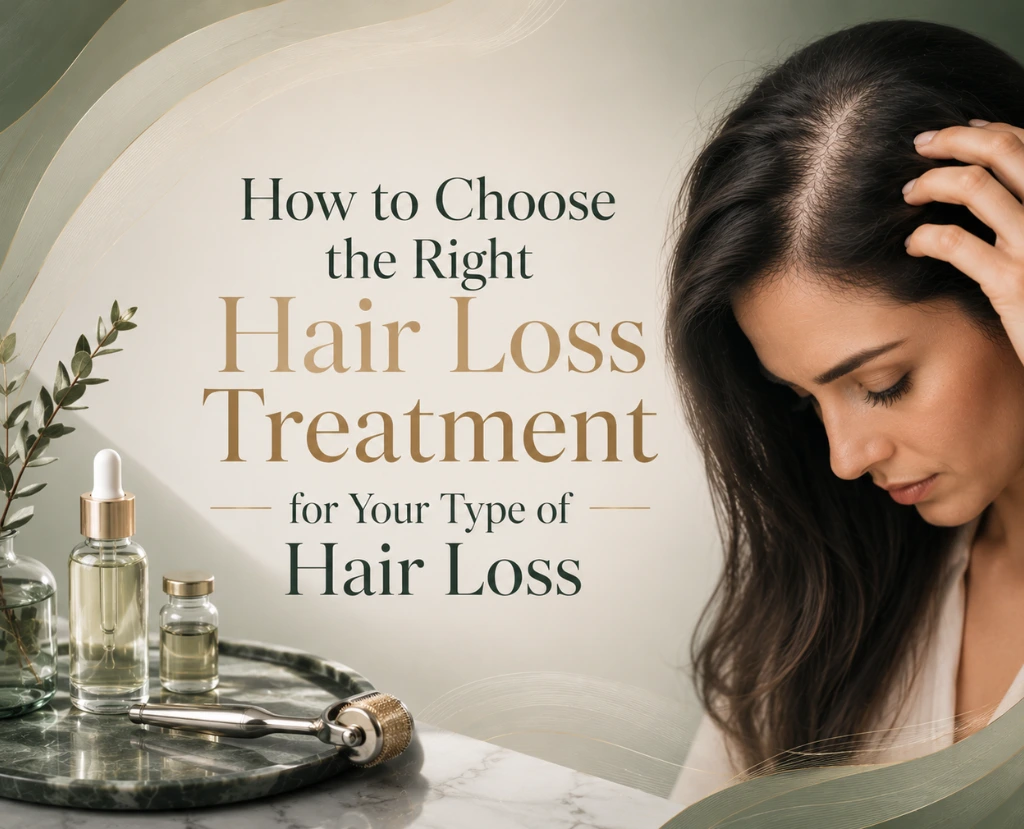
How to Choose the Right Hair Loss Treatment for Your Type of Hair Loss
The range of hair loss treatments available in Leeds has expanded significantly in recent years — PRP, GFC, red light therapy, exosome therapy, IV nutritional support, hair transplant — and navigating this landscape without a proper understanding of which treatments suit which patterns of hair loss is genuinely difficult. Adding to the confusion is the fact that many clinics promote specific treatments without first establishing whether those treatments are appropriate for the individual patient.
At Cosmeticstar in Leeds, the right hair loss treatment is always determined by assessment first, not by what happens to be available or what the patient has already decided they want. This blog gives you the framework to understand how to match treatment options to your specific pattern, cause, and stage of hair loss.
Step One: Identify the Type of Hair Loss You Have
Before any treatment decision can be made, the type of hair loss needs to be identified. The most common types and their key characteristics:
- Androgenetic alopecia: Genetically driven, DHT-mediated follicular miniaturisation. Follows predictable patterns (Norwood in men, Ludwig in women). Progressive without treatment. Responds well to PRP, GFC, and red light therapy at early to moderate stages.
- Telogen effluvium: Diffuse shedding triggered by a physiological or psychological stressor. Often temporary and self-limiting, but may require treatment if prolonged or if nutritional deficiency is the ongoing driver. Responds well to nutritional correction and PRP.
- Nutritional deficiency hair loss: Diffuse thinning driven by low ferritin, vitamin D, B12, or zinc. Responds very well to targeted nutritional correction and improves meaningfully with IV therapy or injections alongside scalp treatment.
- Alopecia areata: Autoimmune condition causing patchy hair loss. Requires specialist management; PRP can be supportive but is not a primary treatment for the autoimmune component.
- Scarring alopecia: Inflammatory conditions that permanently destroy follicles. Requires early specialist management; non-surgical hair treatment is supportive rather than restorative in these cases.
Step Two: Assess the Stage of Your Hair Loss
The stage of hair loss determines which treatments are realistically appropriate. At early to moderate stages — Norwood 1 to 4 for men, Ludwig 1 to 2 for women — non-surgical hair loss treatment in Leeds including PRP, GFC, and red light therapy produces the strongest results, because there is still a meaningful population of biologically active follicles to work with.
At more advanced stages — Norwood 5 to 7 for men — non-surgical treatment remains useful for maintaining surrounding areas and improving scalp health, but the primary option for restoring coverage in significantly denuded zones is a hair transplant. Being honest about which stage you are at is the most important thing a practitioner can do for you at the outset of a hair loss treatment conversation in Leeds.
Step Three: Identify Contributing Factors
Androgenetic alopecia rarely operates in isolation. Nutritional deficiencies, stress, hormonal imbalance, and poor scalp health all compound the primary driver and limit the effectiveness of treatment directed only at the scalp level. A proper assessment at Cosmeticstar in Leeds identifies these contributing factors so they can be addressed alongside primary treatment.
Matching Treatment to Pattern: A Practical Guide
Early Androgenetic Alopecia
PRP hair treatment in Leeds is the first-line recommendation for early-stage androgenetic alopecia — combined with red light therapy for enhanced follicular stimulation and nutritional support where deficiencies are identified. This combination produces strong density improvements and meaningful slowing of progression in most patients at this stage.
Moderate Androgenetic Alopecia
GFC hair therapy in Leeds — which delivers a more concentrated growth factor preparation than standard PRP — is increasingly the preferred option for patients at moderate stages of androgenetic alopecia, combined with red light therapy and, where appropriate, exosome therapy for a deeper regenerative stimulus. The combined approach produces the strongest available non-surgical response for this stage.
Telogen Effluvium
Nutritional correction first — through IV Drip Therapy in Leeds or Vitamin Injections in Leeds where deficiencies are identified. PRP alongside nutritional support accelerates follicular recovery and reduces the duration and severity of the shedding phase. Red light therapy supports scalp health and follicular reactivation throughout the recovery period.
Advanced Hair Loss
An honest conversation about the role of hair transplant surgery, combined with PRP or GFC for the non-transplanted surrounding areas and red light therapy post-transplant for graft survival and recovery optimisation.
Treatment Options at Cosmeticstar, Leeds
PRP Hair Treatment Leeds
Our PRP Hair Treatment in Leeds uses your own platelet-rich plasma to deliver a concentrated growth factor stimulus directly to thinning follicles — stimulating the dermal papilla cells that regulate the hair growth cycle and supporting the production of stronger, denser strands from follicles that are still biologically active.
GFC Hair Therapy Leeds
For patients who want a more powerful growth factor intervention or who have seen a limited response to standard PRP, GFC Hair Therapy in Leeds provides a more refined, higher-concentration preparation — with a lower inflammatory response at the injection site and consistently stronger outcomes for patients with more significant or faster-progressing thinning.
Red Light Therapy Leeds
Used alongside PRP or GFC, Red light therapy In leeds by increasing cellular energy in the scalp, reducing perifollicular inflammation, and improving blood flow to thinning areas — creating a significantly more receptive environment for growth factor treatments to work within, and maintaining that environment between sessions.
Exosome Therapy Leeds
For patients who want to deepen their treatment response, Exosome Therapy in Leeds delivers concentrated regenerative signals directly to follicular tissue at the cellular communication level — working synergistically with both PRP and red light therapy to produce a more comprehensive biological stimulus.
Ready to Take the Next Step?
If you want to understand which hair loss treatments in Leeds are genuinely appropriate for your specific pattern and stage before committing to any treatment plan, the most useful thing you can do is speak to a clinic that takes the time to assess your specific situation properly before recommending anything. At Cosmeticstar in Leeds, that is exactly what we do. Chat now on WhatsApp — click the link and our team will be with you straight away.
Conclusion
Choosing the right hair loss treatment in Leeds starts with knowing what type of hair loss you have, what stage it is at, and what contributing factors need to be addressed alongside the primary treatment. At Cosmeticstar in Leeds, we start every consultation with that assessment — and give you an honest, clear picture of which treatments are right for your situation and what they can realistically achieve.
Privacy Notice: Your data is handled in accordance with UK GDPR. Please review our Privacy Policy for full details.
Disclaimer: This blog is for educational purposes only. Always consult a qualified professional before beginning any treatment.
Frequently Asked Questions
Q: How do I know which hair loss treatment in Leeds is right for me?
A: A proper clinical assessment at Cosmeticstar in Leeds — covering your hair loss pattern, stage, family history, and nutritional status — is the only reliable starting point. We do not recommend treatments before we understand what we are treating.
Q: Is PRP the best hair loss treatment in Leeds for everyone?
A: PRP is the most widely appropriate non-surgical hair loss treatment for early to moderate androgenetic alopecia and for telogen effluvium. For more significant thinning, GFC is often more appropriate. For very advanced loss, a hair transplant discussion is warranted. The best treatment is always the one matched to the specific clinical picture.
Q: Can I combine multiple hair loss treatments in Leeds?
A: Yes — and combining complementary treatments typically produces better outcomes than any single modality alone. The most effective combinations at Cosmeticstar in Leeds are PRP or GFC with red light therapy, and both alongside nutritional correction where deficiencies are identified.
Q: How long before I see results from hair loss treatment in Leeds?
A: Reduced shedding is typically the earliest sign of improvement, usually observable within six to ten weeks of starting a treatment course at Cosmeticstar in Leeds. Visible density improvements develop over three to six months from the start of treatment.
Q: What if I have tried hair loss treatment before without results?
A: Previous treatment without adequate response often reflects a mismatch between the treatment used and the specific type and stage of hair loss, or an unaddressed contributing factor such as nutritional deficiency. At Cosmeticstar in Leeds, we review your full history and identify what may have been missed before recommending an adjusted approach.