
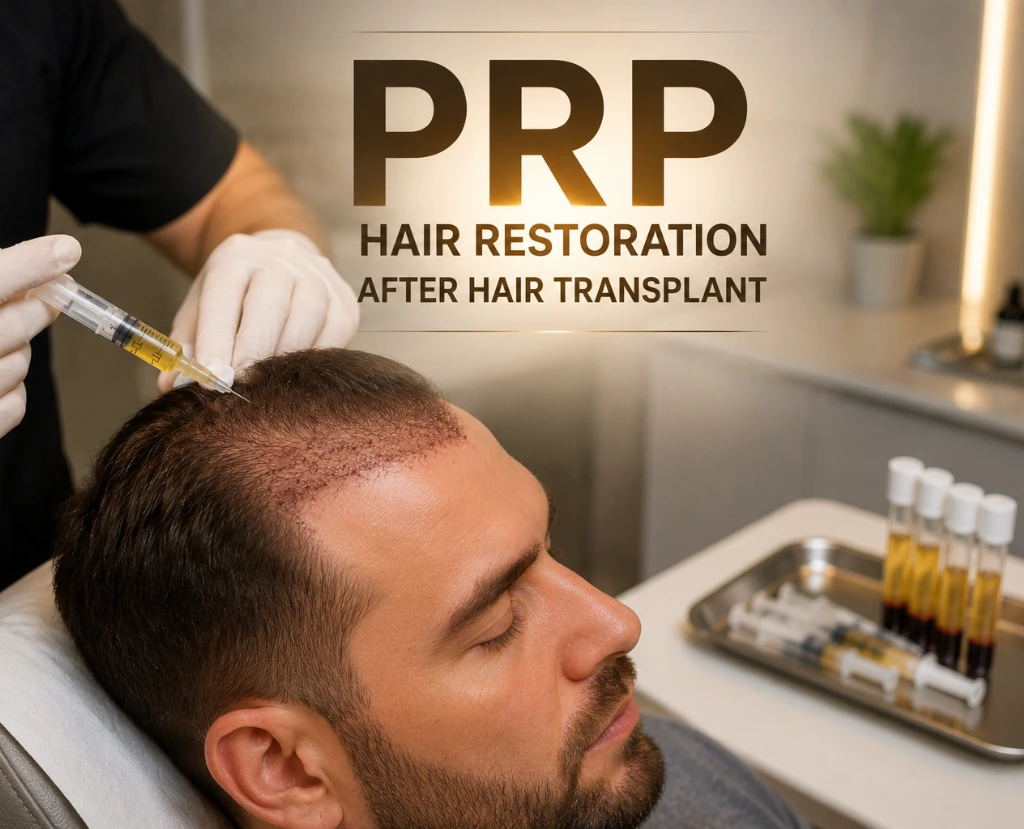
PRP Hair Restoration After Hair Transplant
A hair transplant is one of the biggest investments a person can make for their appearance — and once it is done, the natural next question is: what can I do to make sure it works as well as possible? The honest answer from the clinical community is increasingly consistent: PRP hair treatment after a transplant makes a measurable difference to how well and how quickly the result develops.
At Cosmeticstar in Leeds, we work with patients both before and after hair transplant surgery. Many come to us specifically because their transplant surgeon mentioned PRP as part of the recovery process — others find us independently and want to know whether it is worth doing. This blog explains exactly what happens to the scalp after a transplant, why the recovery window matters so much, and how PRP hair treatment in Leeds can significantly improve the outcome you end up with.
What the Scalp Goes Through After a Hair Transplant
When a hair transplant is performed, thousands of tiny follicular units — called grafts — are placed into recipient sites across the thinning areas of the scalp. Each graft has had its blood supply temporarily interrupted during the extraction and implantation process. In the hours and days that follow, the scalp mounts an inflammatory response: there is swelling, redness, and crusting at the graft sites, and the transplanted follicles are in a vulnerable state while they work to establish a new blood supply in their new location.
Over the following weeks, the transplanted hairs typically shed — this is completely normal and does not mean the grafts have failed. It is known as shock loss, and it happens because the follicles temporarily enter a resting phase during the stress of relocation. New growth from the established follicles then begins to emerge at around three to four months, with the full cosmetic result typically developing between months eight and eighteen. For more context on the post-transplant recovery process, Wimpole Clinic’s guide to hair transplant recovery provides a clear patient-facing overview of what to expect at each stage.
What most patients do not fully appreciate is how much the quality of that recovery period — specifically, how well the scalp environment supports the grafts during this window — influences the final density and appearance of their result.
How PRP Hair Treatment Actively Improves Transplant Outcomes
Faster Vascularisation Around the Grafts
The single most important factor in graft survival is how quickly the transplanted follicles re-establish their blood supply. VEGF — one of the primary growth factors delivered through PRP hair treatment in Leeds — directly stimulates the formation of new blood vessels in the tissue surrounding the grafts. The faster this vascularisation occurs, the more grafts survive, and the denser the final result. Patients who receive PRP after a transplant consistently show higher graft survival rates compared to those who do not — and that directly translates into a better-looking outcome.
Reducing the Inflammatory Response
Post-surgical inflammation is a natural part of healing, but when it persists or is more significant than necessary, it creates an environment that is less than ideal for graft survival. The growth factors in PRP — particularly TGF-β — help to modulate and resolve this inflammatory response more efficiently, reducing the window during which the grafts are in a compromised environment. Patients at Cosmeticstar in Leeds who use PRP after their transplant typically report reduced swelling, less prolonged redness, and a noticeably more comfortable recovery overall.
Accelerating the Regrowth Timeline
One of the things transplant patients find most difficult is the waiting. The first three to four months — during which shock loss occurs and new growth has not yet appeared — can feel frustratingly long. PRP growth factors, particularly PDGF and IGF-1, directly stimulate the dermal papilla cells in the transplanted grafts to re-enter the anagen phase. Clinical observations suggest that patients who begin PRP hair treatment in Leeds following their transplant typically start to see new growth emerging earlier — often by four to six weeks ahead of the standard timeline.
Protecting the Non-Transplanted Areas
This is a point that does not get discussed enough. Hair loss in the areas surrounding the transplant zones often continues after surgery — and over time, if those areas are left untreated, they can create a visual imbalance that undermines the result. PRP treatment applied to the wider scalp at Cosmeticstar in Leeds stimulates and preserves follicular density in these non-transplanted zones simultaneously, contributing to a more uniform, natural-looking result across the entire scalp.
When Should PRP Begin After a Transplant?
Timing matters here. The scalp needs adequate initial healing before PRP injections are appropriate — most clinicians, including the team at Cosmeticstar in Leeds, recommend waiting approximately four to six weeks post-surgery before beginning PRP treatment. At this point, the grafts have established their initial blood supply, the surface healing is well underway, and the scalp is ready to respond to the regenerative stimulus that PRP provides.
A standard course of three PRP sessions, spaced four to six weeks apart, is the typical recommendation for post-transplant patients at Cosmeticstar. This is then followed by periodic maintenance every six to twelve months to sustain density improvements across the treated scalp.
Treatment Options at Cosmeticstar, Leeds
PRP Hair Treatment
PRP hair treatment in Leeds is the most widely used post-transplant regenerative therapy — improving graft survival, accelerating growth, and enhancing overall scalp density. Learn about PRP Hair Treatment in Leeds.
GFC Hair Therapy
For patients who want to give their transplant the strongest possible biological support, GFC hair therapy in Leeds delivers a more concentrated and refined growth factor preparation than standard PRP. The enhanced vascularisation and follicular stimulation it provides makes it an increasingly popular post-transplant choice. Explore GFC Hair Therapy in Leeds.
Exosome Therapy
Exosome Therapy adds a cellular communication layer to the post-transplant recovery process — particularly valuable for patients seeking the most comprehensive biological support for their result. Discover Exosome Therapy in Leeds.
IV Drip Therapy & Vitamin Injections
The body’s ability to recover from surgery is directly influenced by its nutritional status. Our IV Drip Therapy in Leeds and Vitamin Injections in Leeds correct key deficiencies and support the systemic healing process — an often-overlooked but genuinely impactful part of post-transplant care.
Protect Your Transplant Investment
A hair transplant is a significant undertaking. PRP hair treatment in Leeds at Cosmeticstar is one of the most clinically effective things you can do to protect and maximise that investment. Our team will design a post-transplant treatment plan tailored to your timeline and your recovery. Chat now — click the link and you will be redirected straight to WhatsApp.
Conclusion
PRP hair treatment in Leeds is a powerful post-transplant tool — improving graft survival, accelerating regrowth, and maintaining density across the wider scalp. It turns a good transplant result into a great one. Cosmeticstar in Leeds provides tailored PRP and GFC protocols for post-transplant patients, ensuring every result reaches its full potential.
Privacy Notice: Your data is handled in accordance with UK GDPR. Please review our Privacy Policy for full details.
Disclaimer: This blog is for educational purposes only. Always consult a qualified professional before beginning any treatment.
Frequently Asked Questions
Q: When can I start PRP after a hair transplant?
A: Most patients begin PRP hair treatment in Leeds four to six weeks post-surgery, once the initial healing phase is complete and the graft sites have closed properly.
Q: How many PRP sessions are recommended after a transplant?
A: A standard course of three sessions, spaced four to six weeks apart, followed by maintenance every six to twelve months, is the typical recommendation at Cosmeticstar.
Q: Does PRP genuinely improve transplant density?
A: Yes — clinical evidence supports that PRP improves graft survival rates and accelerates the follicular reactivation timeline, leading to a measurably denser final result.
Q: Is GFC better than PRP after a hair transplant?
A: GFC hair therapy in Leeds offers a stronger growth factor concentration and is increasingly preferred for post-transplant support due to its enhanced vascularisation and lower inflammatory profile.
Q: Can PRP help with shock loss after a transplant?
A: Yes — PRP supports the recovery of both transplanted and native follicles affected by post-surgical shock loss, helping to restore density across the treated scalp more quickly.