
PRP vs Minoxidil for Hair Loss in Leeds: Which One Wins?
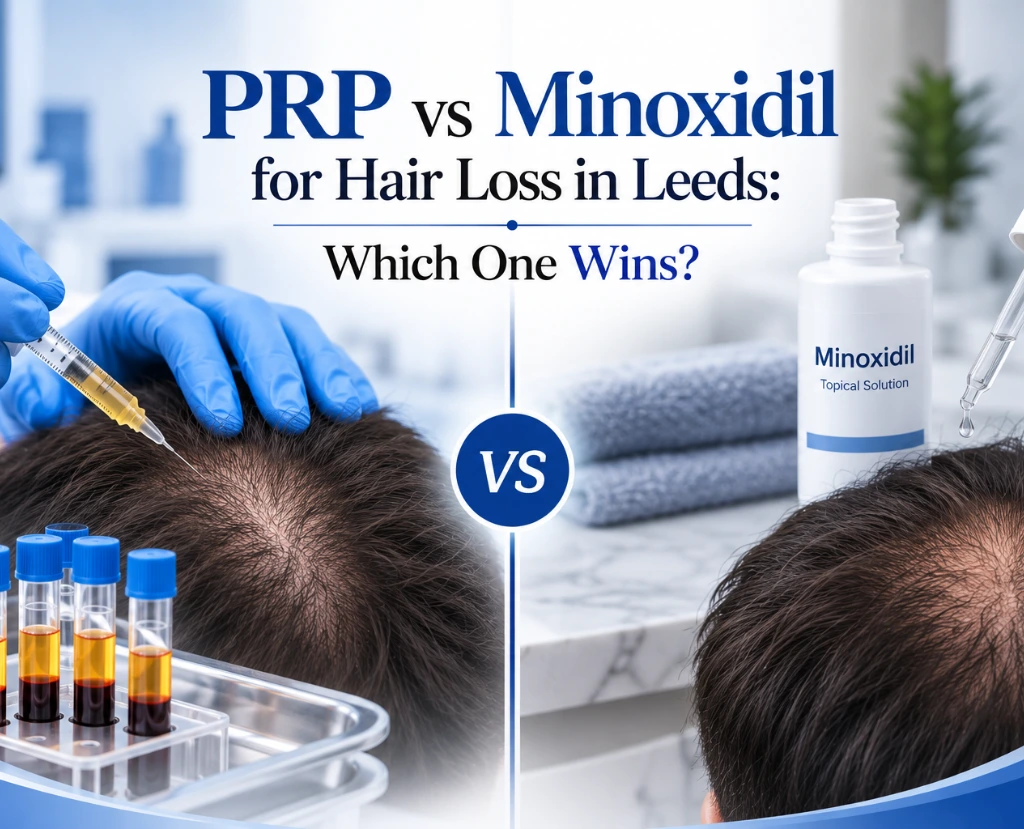
If you have been researching hair loss treatment in Leeds, two options come up repeatedly: PRP (platelet-rich plasma) and minoxidil. They are both widely discussed, both have clinical evidence behind them, and both are used by people with androgenetic alopecia and other patterns of hair thinning. But they work through fundamentally different mechanisms, suit different situations, and produce different types of results. Understanding the distinction helps you make a genuinely informed decision — not just go with whichever you heard about first.
At Cosmeticstar in Leeds, we are frequently asked this question during consultations for PRP hair treatment in Leeds. This is our honest, evidence-based comparison.
How Minoxidil Works
Minoxidil is a topical vasodilator — it widens the blood vessels in the scalp, increasing blood flow to the follicular tissue. It was originally developed as an oral medication for hypertension and was observed to cause hypertrichosis (excess hair growth) as a side effect. That side effect became a product: topical minoxidil for hair loss, available in 2% and 5% concentrations, and more recently as a low-dose oral formulation.
Minoxidil does not address DHT — the hormone that drives androgenetic alopecia — and does not have a direct growth factor effect on follicular biology. It primarily works by prolonging the anagen (growth) phase through the vasodilatory mechanism, improving follicular nutrition via better scalp blood flow. It is most effective for early-stage androgenetic alopecia and requires continuous daily application to maintain results. Stopping minoxidil typically results in the reversal of any gains within three to six months.
How PRP Hair Treatment in Leeds Works
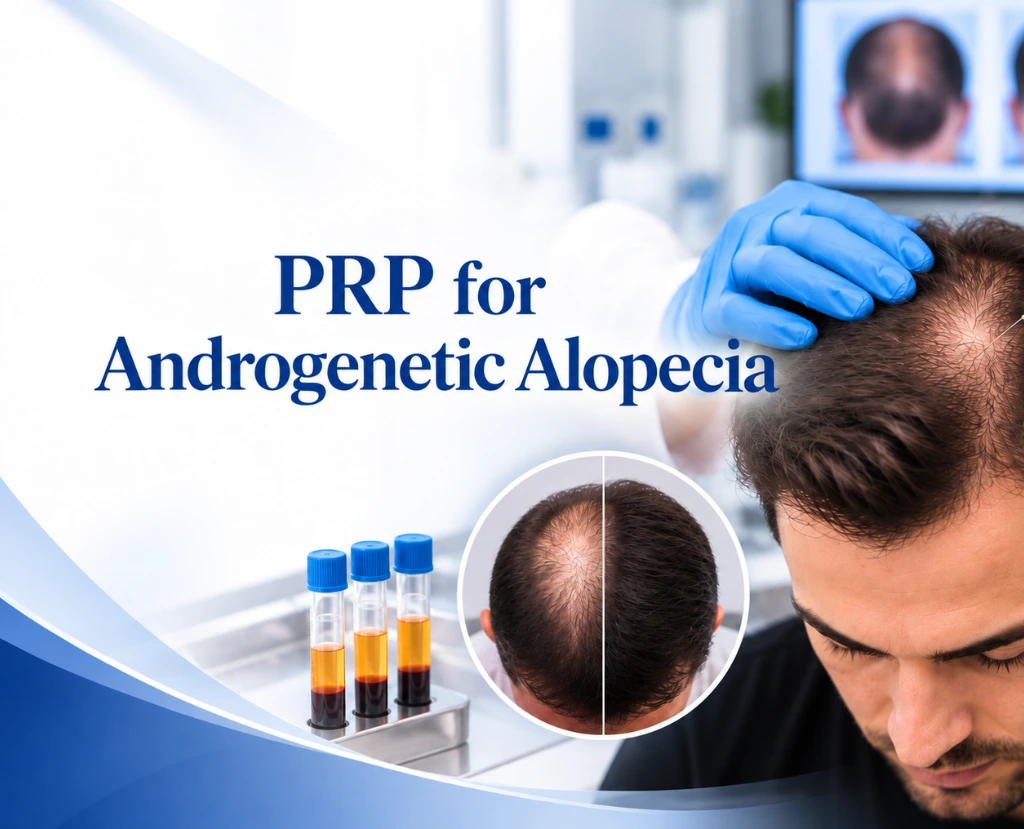
PRP hair treatment in Leeds works through a completely different mechanism. Platelet-rich plasma — concentrated from your own blood and injected into the scalp at the thinning zones — delivers a targeted payload of growth factors directly to the follicular tissue. These growth factors (PDGF, VEGF, IGF-1, EGF, TGF-β) stimulate dermal papilla cells, promote new blood vessel formation around the follicle, extend the anagen phase, and support the production of thicker, stronger strands from miniaturising follicles.
Unlike minoxidil, platelet-rich plasma treatment in Leeds does not require daily application — it is delivered in clinic sessions, typically three to four in an initial course. It has a direct biological action on follicular cells at a level of specificity that topical minoxidil cannot achieve. And unlike minoxidil, the improvements from PRP do not immediately reverse if treatment pauses — the follicular cycle changes it initiates persist for several months after each session.
Head-to-Head Comparison: PRP vs Minoxidil
Mechanism
Minoxidil: vasodilation — improves scalp blood flow to prolong anagen.
PRP: growth factor delivery — directly stimulates dermal papilla cells and follicular biology. PRP operates at a more fundamental biological level and is more specifically targeted to follicular function.
Evidence Base
Both have published randomised controlled trial data. A comparison study published in a peer-reviewed journal found that PRP combined with minoxidil produced greater improvement in hair shaft diameter than PRP alone at three months — suggesting the two are complementary rather than competing. Minoxidil has a longer evidence history; PRP’s evidence base has grown substantially in the last decade and now includes multiple systematic reviews confirming its effectiveness for androgenetic alopecia.
Commitment and Compliance
Minoxidil requires daily application — morning and evening for most formulations — with indefinite continuation to maintain results. Non-compliance reduces effectiveness, and stopping causes regress. PRP hair treatment in Leeds requires clinic visits — three to four in the initial course, then one every six months for maintenance. No daily home routine is needed between sessions. For patients who struggle with daily topical compliance, PRP is a more sustainable approach.
Side Effects
Minoxidil commonly causes initial shedding (temporary), scalp dryness and irritation, and in some cases unwanted facial hair growth — particularly in women. Oral minoxidil carries cardiovascular considerations.
PRP hair treatment in Leeds side effects are limited to mild, temporary scalp tenderness and occasional redness at injection sites, resolving within 24 to 48 hours. Because platelet-rich plasma uses your own blood, there is no risk of allergic reaction.
Cost Over Time
Minoxidil has a lower monthly cost when bought over the counter, but the cost is indefinite — it never stops.
PRP hair treatment in Leeds has a higher per-session cost but a lower long-term commitment (maintenance sessions every six months rather than daily indefinite application). Over a three to five year period, the total investment is often broadly comparable.
Can PRP and Minoxidil Be Used Together in Leeds?
Yes — and the evidence suggests combining them produces better results than either alone. The platelet-rich plasma growth factor stimulus and the vasodilatory effect of minoxidil address hair follicle health through complementary pathways. At Cosmeticstar in Leeds, patients who are already using minoxidil and add PRP to their plan frequently notice an acceleration of their response — and patients who begin PRP alongside minoxidil tend to achieve stronger density improvements than with either treatment in isolation.
If you are currently using minoxidil but are not satisfied with the results, adding PRP hair treatment in Leeds at Cosmeticstar is one of the most clinically sensible upgrades available. If you have been using minoxidil for several months and are experiencing diminishing returns, transitioning to a PRP-centred plan with our team is worth a proper assessment.
Which One Is Right for You?
Choose minoxidil if: you want an affordable, accessible daily maintenance option for very mild thinning; you are not yet ready for clinical treatment; or you want to use it as a complement to PRP. Choose PRP hair treatment in Leeds if: you have established thinning that has not responded adequately to topical treatment; you want a clinically targeted intervention with a more direct biological effect; or you prefer a clinic-based approach that does not require daily compliance. Choose both if: you want the strongest combined approach and your stage of hair loss warrants it.
Hair Loss Treatments at Cosmeticstar Leeds
PRP Hair Treatment Leeds
Our PRP hair treatment in Leeds uses your own platelet-rich plasma — concentrated via centrifuge and injected precisely into thinning scalp zones — to deliver a targeted growth factor stimulus directly to dormant and miniaturising hair follicles. Every session is individually mapped to your hair loss pattern.
GFC Hair Therapy Leeds
For patients who want a more powerful growth factor intervention than standard platelet-rich plasma therapy, GFC Hair Therapy in Leeds provides a more refined, higher-concentration preparation with a lower inflammatory response and consistently stronger outcomes — particularly for moderate to advanced androgenetic alopecia.
Red Light Therapy Leeds
Used alongside PRP or GFC, Red light therapy increases cellular energy in the scalp at the mitochondrial level, reducing perifollicular inflammation and improving blood flow to thinning follicles — creating a significantly more receptive environment for platelet-rich plasma growth factors to work within.
Exosome Therapy Leeds
For patients who want to deepen their hair restoration response beyond what PRP or GFC alone can achieve, Exosome Therapy in Leeds delivers concentrated regenerative signals directly to follicular tissue — working synergistically with platelet-rich plasma to produce a more comprehensive biological stimulus.
IV Drip Therapy & Vitamin Injections Leeds
Nutritional deficiencies in ferritin, vitamin D, and B12 are among the most common silent contributors to hair loss in Leeds patients — and they limit how well platelet-rich plasma treatment can perform. Our IV Drip Therapy in Leeds and Vitamin Injections in Leeds correct these deficiencies at the cellular level, giving every PRP session the internal environment it needs to produce its strongest results.
Book a PRP Hair Consultation in Leeds
If you have been using minoxidil for hair loss in Leeds and want to understand whether PRP would produce better results for your specific pattern and stage, or whether combining both makes the most clinical sense, the most useful next step is a proper clinical assessment — not a generic online quiz or a sales call. At Cosmeticstar in Leeds, we assess your specific hair loss pattern, stage, and contributing factors before making any recommendation. Chat with us now on WhatsApp and our team will get back to you straight away.
Conclusion
PRP hair treatment in Leeds and minoxidil are not rivals — they are different tools with different mechanisms and different strengths. For established hair thinning, PRP delivers a more targeted, more biologically specific intervention than topical minoxidil alone. For mild early-stage loss, minoxidil is an accessible starting point. For the strongest combined result, both together — guided by a proper clinical assessment — produce the most comprehensive approach. At Cosmeticstar in Leeds, we help you understand exactly which option suits your specific situation.
Privacy Notice: Your data is handled in accordance with UK GDPR. Please review our Privacy Policy for full details.
Disclaimer: This blog is for educational purposes only and does not constitute medical advice. Always consult a qualified practitioner before beginning any hair loss treatment.
Frequently Asked Questions
Q: Is PRP better than minoxidil for hair loss in Leeds?
A: PRP hair treatment in Leeds operates at a more direct biological level than minoxidil and does not require daily compliance. For established thinning, PRP typically produces stronger and more targeted results. For very mild early-stage loss, minoxidil remains a reasonable first-line option. Many patients use both in combination.
Q: Can I stop minoxidil if I start PRP in Leeds?
A: This should be discussed with our team at Cosmeticstar during your consultation. Stopping minoxidil abruptly typically causes a shedding episode. In many cases, the transition from minoxidil to a PRP-centred plan is managed gradually to avoid an unnecessary shed.
Q: Does PRP work faster than minoxidil?
A: The timelines are broadly similar — both produce visible results over three to six months from the start of treatment. PRP hair treatment in Leeds may produce a more significant density improvement over the same timeframe, particularly at moderate stages of androgenetic alopecia.
Q: Will minoxidil affect my PRP results in Leeds?
A: Minoxidil should be paused for 48 hours around each PRP session to avoid applying an active chemical to a temporarily more permeable scalp. Outside of that window, continuing minoxidil alongside PRP hair treatment in Leeds is clinically appropriate and may enhance the combined result.
Q: Is there any hair loss treatment in Leeds that works better than PRP alone?
A: Yes — combining PRP with GFC Hair Therapy in Leeds and Red light therapy consistently produces stronger results than PRP alone. For patients at moderate to advanced stages of androgenetic alopecia, this combination is one of the most effective non-surgical approaches available in Leeds.