
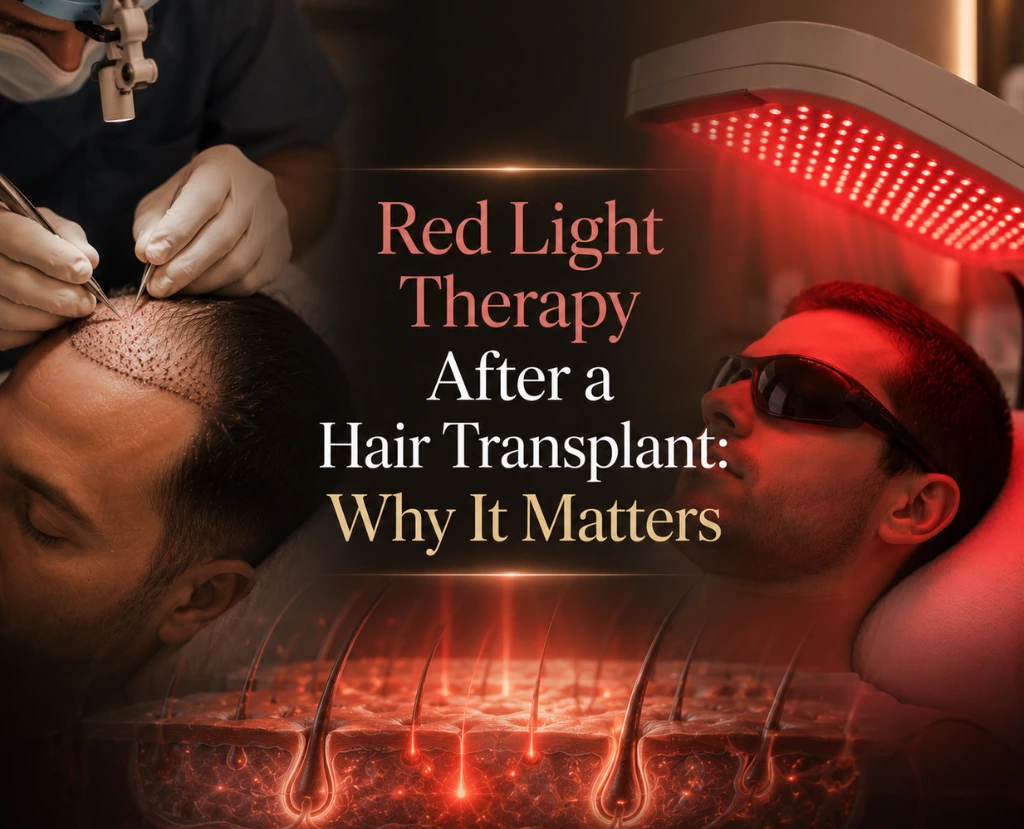
Red Light Therapy After a Hair Transplant: Why It Matters
A hair transplant is one of the most significant investments a person can make in their appearance. The surgery itself is only the beginning — what happens to the scalp in the months that follow determines how well and how quickly the final result develops. And increasingly, the clinical evidence points to red light therapy as one of the most valuable additions to the post-transplant recovery process.
At Cosmeticstar in Leeds, we work with post-transplant patients looking to protect and maximise their result. This blog explains exactly what the scalp goes through after a transplant, why the recovery window is so critical, and how red light therapy supports better outcomes during that window.
What Happens to Transplanted Grafts After Surgery
During a hair transplant, thousands of follicular units — grafts — are extracted from the donor area and implanted into recipient sites across the thinning zones of the scalp. Each graft’s blood supply is interrupted during extraction and implantation. In the days and weeks that follow, the scalp mounts an inflammatory response: swelling, redness, and crusting at the graft sites are normal, and the transplanted follicles are in a vulnerable state while they establish new vascular connections.
Most transplanted hairs shed in the first few weeks — a normal process known as shock loss. New growth from established grafts typically begins emerging at around three to four months.
How Red Light Therapy Supports Post-Transplant Recovery
Faster Vascularisation Around the Grafts
The most important factor in graft survival is how quickly transplanted follicles re-establish their blood supply. VEGF — vascular endothelial growth factor — is the key protein in this process, and red light therapy has been shown to upregulate VEGF production in the treated tissue. More rapid vascularisation means more grafts receive the oxygen and nutrients they need during the vulnerable early weeks.
Reduced Post-Surgical Inflammation
Post-transplant inflammation is a natural part of healing, but when it is more pronounced or prolonged than necessary, it creates an environment that is less than ideal for graft survival. Red light therapy has a well-established anti-inflammatory effect — reducing the production of pro-inflammatory cytokines and accelerating the resolution of the inflammatory phase. Patients consistently report reduced swelling, faster surface healing, and a more comfortable recovery overall.
Accelerated Regrowth Timeline
Red light therapy stimulates dermal papilla cell activity and enhances cellular energy production in the transplanted follicles, encouraging them to re-enter the anagen phase earlier than they otherwise would. Clinical observation suggests that patients using red light therapy post-transplant typically begin seeing new growth several weeks ahead of the standard timeline.
Supporting Non-Transplanted Areas
Hair loss in the areas surrounding the transplant zones often continues after surgery — and over time, the visual imbalance this creates can undermine the result. Red light therapy applied across the wider scalp simultaneously stimulates and supports follicular health in these non-transplanted zones, contributing to a more uniform, natural-looking result.
When to Start Red Light Therapy After a Transplant
Timing is important. The scalp needs adequate initial healing before any additional energy input is appropriate. At Cosmeticstar, we typically recommend beginning red light therapy sessions around two to four weeks post-surgery — once surface healing at the graft sites is well established and the acute inflammatory phase has resolved.
Treatment Options at Cosmeticstar, Leeds
Red Light Therapy
Our red light therapy sessions in Leeds are delivered using clinical-grade devices calibrated to the wavelengths with the strongest evidence for hair follicle stimulation and skin rejuvenation. Learn more about Red Light Therapy in Leeds.
PRP Hair Treatment
For targeted follicular stimulation through your body’s own growth factors, PRP Hair Treatment in Leeds at Cosmeticstar is tailored to your specific thinning pattern and delivered with clinical precision.
GFC Hair Therapy
For patients with more significant thinning or faster progression, GFC Hair Therapy in Leeds delivers a more concentrated, more refined growth factor preparation than standard PRP — with a lower inflammatory response and stronger outcomes.
Exosome Therapy
Working at the cellular communication level, Exosome Therapy in Leeds carries regenerative signals directly to follicular tissue — and combines powerfully with both red light therapy and growth factor treatments.
IV Drip Therapy & Vitamin Injections
Scalp health depends on what the body is working with internally. Our IV Drip Therapy in Leeds and Vitamin Injections in Leeds correct nutritional deficiencies that can otherwise limit how well any hair treatment performs.
Ready to Take the Next Step?
If you have recently had a hair transplant or are preparing for one and want to understand how to protect and maximise your result, the most useful thing you can do is get a proper assessment from a clinic that takes the time to understand your specific situation. That is exactly what we offer at Cosmeticstar in Leeds. Chat now — click the link and you will be redirected straight to WhatsApp where our team is ready to help.
Conclusion
Red light therapy after a hair transplant is not an optional add-on — it is one of the most clinically supported things a patient can do to improve their result. By enhancing vascularisation, reducing inflammation, and accelerating follicular recovery, it turns a good transplant into a significantly better one. Cosmeticstar in Leeds provides post-transplant red light therapy as part of a tailored recovery support protocol.
Privacy Notice: Your data is handled in accordance with UK GDPR. Please review our Privacy Policy for full details.
Disclaimer: This blog is for educational purposes only. Always consult a qualified professional before beginning any treatment.
Frequently Asked Questions
Q: How soon after a hair transplant can I start red light therapy?
A: At Cosmeticstar, we typically begin red light therapy two to four weeks post-surgery, once the surface healing at the graft sites is well established. Exact timing is determined on a patient-by-patient basis following assessment.
Q: How many red light therapy sessions are recommended after a transplant?
A: An initial intensive course of two to three sessions per week for the first four to six weeks post-transplant is typical at Cosmeticstar, reducing to a maintenance schedule of one session per week thereafter.
Q: Can red light therapy genuinely improve graft survival?
A: The clinical evidence suggests yes — by promoting faster vascularisation around the grafts, reducing inflammatory stress, and stimulating dermal papilla activity, red light therapy creates conditions in which a higher proportion of grafts establish successfully.
Q: Should I combine red light therapy with PRP after a hair transplant?
A: Yes — combining post-transplant red light therapy with PRP Hair Treatment in Leeds provides complementary biological support: PRP delivers growth factors for graft survival; red light therapy maintains the improved cellular and vascular environment in which those growth factors work.
Q: Is red light therapy painful after a hair transplant?
A: No — red light therapy is entirely comfortable, produces no heat stress, and requires no recovery time. It is one of the most patient-friendly additions to the post-transplant recovery process.