
Hair Loss After Stress or Illness: Can PRP Restore Hair Growth?
Introduction
Hair loss that appears suddenly after a stressful event or illness can feel alarming. Many women notice increased shedding weeks or even months after recovering from physical or emotional stress, often without understanding why it is happening.
This type of hair loss is commonly linked to a temporary disruption in the hair growth cycle. Whether triggered by illness, high stress, or recovery from medical conditions, it can lead to noticeable thinning and reduced hair density.
Non-surgical hair restoration treatments such as PRP, GFC, and Exosome therapy are increasingly used to support recovery. However, results are most effective when both external treatment and internal health are addressed together.
This blog explains why stress-related hair loss occurs and how modern treatments can help restore hair growth.
Why does hair loss happen after stress or illness?
Hair growth follows a natural cycle that includes growth, rest, and shedding phases. When the body undergoes stress, this cycle can be disrupted.
A large number of hair follicles may prematurely enter the shedding phase, leading to noticeable hair loss after a delay of several weeks.
This can happen due to:
- Physical illness or infection
- High emotional stress
- Hormonal changes during recovery
- Nutritional imbalance during illness
The result is often sudden shedding, reduced volume, and visible thinning across the scalp.
Can hair grow back naturally after stress?
In many cases, this type of hair loss is temporary. Once the body recovers, the hair cycle can gradually return to normal.
However, recovery is not always quick or complete. Some individuals may experience prolonged shedding or slower regrowth, especially if internal health is not fully restored.
This is where non-surgical treatments can play an important role in supporting and accelerating the recovery process.
How PRP supports hair recovery
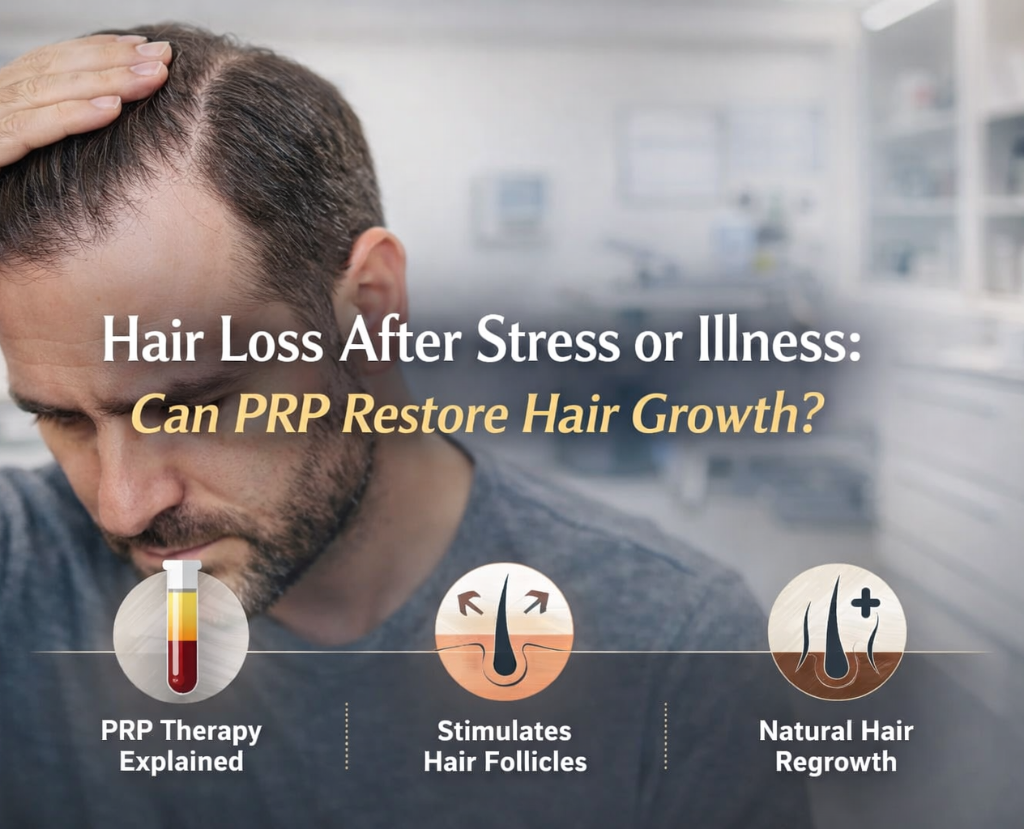
PRP (platelet-rich plasma) is one of the most widely used treatments for stimulating hair follicles.
It works by using growth factors from your own blood to:
- Reactivate weakened hair follicles
- Improve blood flow to the scalp
- Support stronger and healthier hair growth
- Reduce ongoing shedding
PRP does not create new follicles but helps existing ones function more effectively, which is particularly useful after stress-related hair loss.
Role of advanced hair restoration treatments
While PRP is often the primary treatment, other regenerative options can enhance results when needed.
GFC (growth factor concentrate) therapy provides a more concentrated form of growth signals, which can help in cases where recovery is slower.
Exosome therapy supports cellular repair and communication within the scalp, making it beneficial for improving overall follicle health.
These treatments are not replacements for PRP but can complement it depending on the severity of hair loss and individual response.
Why internal support is essential
Hair recovery does not depend on external treatment alone. After illness or stress, the body may be depleted of essential nutrients needed for proper hair growth.
Deficiencies can affect:
- Strength of new hair
- Speed of regrowth
- Overall treatment response
Supporting the body internally is therefore important.
Vitamin injections can help restore key nutrient levels, while IV drip therapy supports hydration and overall recovery. When combined with treatments like PRP, this approach helps create a better environment for hair growth.
What results can you expect?
Hair regrowth after stress-related loss takes time. Even with treatment, the process is gradual.
Typical progress may include:
- Reduced shedding in the early stages
- Improvement in hair texture
- Gradual increase in density over time
Consistency with treatment and internal support plays a key role in achieving better outcomes.
How to support hair recovery after stress or illness
To improve results and prevent further hair loss:
- Focus on overall recovery and health
- Maintain a balanced diet
- Manage stress levels
- Follow a consistent treatment plan
- Avoid damaging hair practices
These steps help restore the natural hair cycle and support long-term improvement.
Conclusion
Hair loss after stress or illness can be temporary, but recovery is not always immediate. While the body may begin to restore balance on its own, additional support can significantly improve both the speed and quality of hair regrowth.
Non-surgical treatments such as PRP, supported by advanced options like GFC and Exosome therapy, can help reactivate follicles and improve scalp health. When combined with internal support such as vitamin injections and IV drip therapy, results tend to be more consistent and long-lasting.
If you are looking for a clinic in Leeds that focuses on personalised, non-surgical hair restoration, Cosmeticstar offers tailored treatments designed to support natural and effective recovery.
Experiencing hair loss after stress or illness, and unsure which treatment is right for you? 👉 Chat now to get professional guidance based on your condition.
GDPR Notice: All treatment-related information is handled in a GDPR-compliant manner. Your personal data is securely protected. Clicking the WhatsApp link will redirect you to an external platform. Please review our Privacy Policy for more details.
Disclaimer: This blog is for educational purposes only. Always consult a qualified professional before starting any treatment.
FAQs
Q: Can stress really cause hair loss?
A: Yes, stress can disrupt the hair growth cycle and lead to temporary shedding.
Q: Will hair grow back after illness-related hair loss?
A: In many cases, yes. However, recovery speed varies and may benefit from treatment support.
Q: How does PRP help in this type of hair loss?
A: PRP supports follicle activity and helps improve the quality and strength of regrowth.
Q: Are additional treatments necessary along with PRP?
A: In some cases, combining treatments like GFC or Exosomes can improve outcomes.
Q: Does internal health affect hair recovery?
A: Yes, nutrient levels and overall health play a major role in how well hair grows back.