
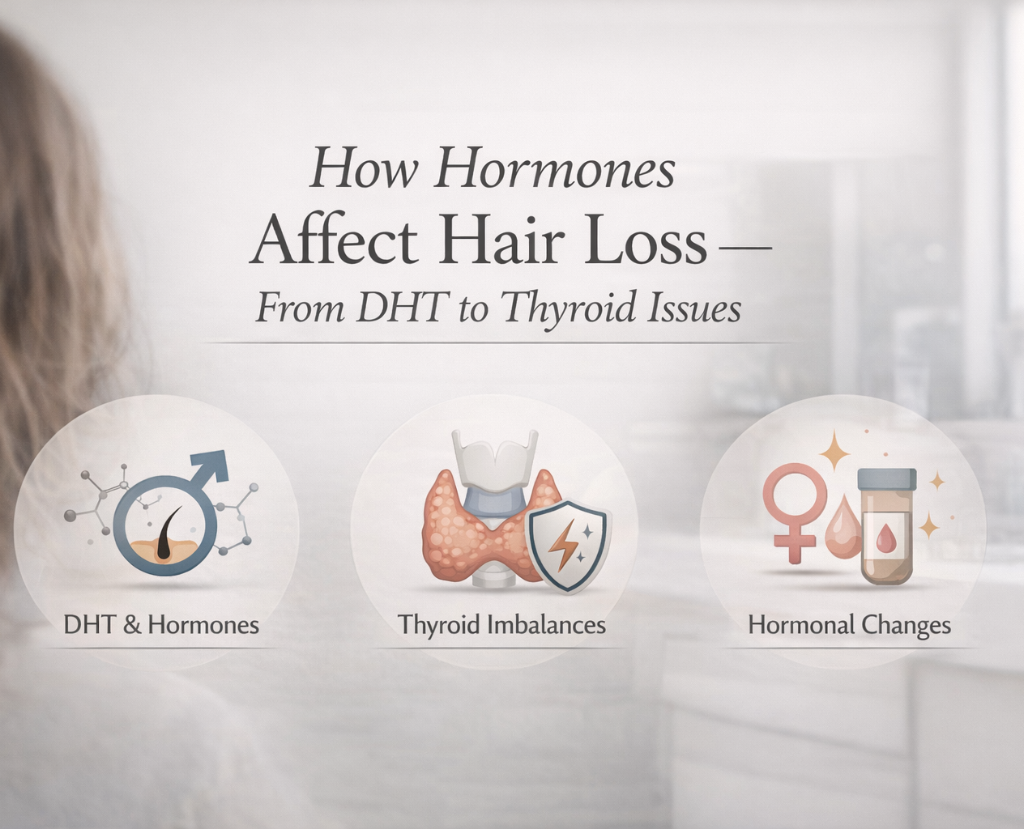
How Hormones Affect Hair Loss — From DHT to Thyroid Issues
Insight: The Hormonal Connection to Hair Health
Hormones act as the body’s silent regulators, influencing everything from metabolism and mood to skin and hair health. When these delicate chemical messengers fall out of balance, one of the earliest visible signs can be hair thinning or excessive shedding. Understanding how hormones impact hair growth is essential for identifying the root cause of hair loss and selecting the most effective treatment. With modern non-surgical solutions available, hormone-related hair loss can be managed effectively and confidently.
Understanding the Relationship Between Hormones and Hair Loss
Hair growth follows a structured biological cycle that is heavily influenced by hormonal activity. When hormonal levels fluctuate or become imbalanced, this cycle can be disrupted, leading to thinning hair, excessive shedding, or slowed regrowth.
The Hair Growth Cycle
- Anagen (Growth Phase): Active hair growth lasting several years.
- Catagen (Transition Phase): A brief stage where hair follicles shrink.
- Telogen (Resting Phase): The phase during which hair sheds naturally.
Hormonal imbalances can shorten the anagen phase or prolong the telogen phase, resulting in noticeable hair loss over time.
Key Hormones That Influence Hair Loss
Dihydrotestosterone (DHT)
DHT is one of the primary hormones responsible for genetic hair loss. Derived from testosterone, it binds to hair follicles and causes them to shrink, a process known as follicular miniaturisation.
Effects of DHT on Hair:
- Receding hairline in men
- Thinning at the crown
- Gradual hair loss in women
- Reduced hair density over time
This condition, known as androgenetic alopecia, is the most common cause of permanent hair loss.
Thyroid Hormones
The thyroid gland regulates metabolism and energy production. Both hypothyroidism and hyperthyroidism can disrupt the hair growth cycle, leading to diffuse hair thinning.
Symptoms of Thyroid-Related Hair Loss:
- Excessive shedding across the scalp
- Dry and brittle hair
- Fatigue and weight fluctuations
- Changes in skin texture
Early diagnosis and treatment often restore normal hair growth.
Oestrogen
Oestrogen plays a vital role in maintaining healthy hair by prolonging the anagen phase. When oestrogen levels decline, hair may become thinner and more fragile.
Common Triggers:
- Menopause
- Postpartum hormonal changes
- Discontinuation of contraceptives
- Polycystic ovary syndrome (PCOS)
Progesterone
Progesterone helps counteract the effects of DHT. Low levels can increase hair follicle sensitivity to androgens, contributing to thinning hair.
Cortisol (The Stress Hormone)
Chronic stress leads to elevated cortisol levels, which can disrupt the hair growth cycle and trigger telogen effluvium.
Signs of Stress-Related Hair Loss:
- Sudden shedding
- Diffuse thinning
- Slower regrowth
- Increased hair fall after stressful events
Insulin
Insulin resistance, commonly associated with PCOS and metabolic disorders, can lead to elevated androgen levels and contribute to hair thinning.
Common Hormonal Conditions Linked to Hair Loss
- Polycystic Ovary Syndrome (PCOS)
- Thyroid disorders
- Menopause and perimenopause
- Postpartum hormonal changes
- Androgenetic alopecia
- Chronic stress and adrenal imbalance
- Insulin resistance
Recognising these conditions early allows for timely treatment and improved outcomes.
Signs Your Hair Loss May Be Hormonal
- Gradual thinning along the crown or hairline
- Widening parting in women
- Sudden or excessive shedding
- Hair loss accompanied by acne or irregular periods
- Fatigue and unexplained weight changes
- Dry or brittle hair
- Slow regrowth after shedding
If you notice these symptoms, a professional consultation and diagnostic tests can help determine the cause.
Non-Surgical Hair Restoration Treatments in Leeds
At Cosmeticstar in Leeds, advanced regenerative treatments are designed to combat hormonal hair loss by stimulating follicles and promoting natural regrowth.
PRP Hair Treatment
Platelet-Rich Plasma therapy utilises growth factors derived from your own blood to stimulate dormant follicles, improve circulation, and encourage natural hair growth.
GFC Hair Therapy
Growth Factor Concentrate therapy delivers purified growth factors that strengthen hair follicles and enhance scalp health.
Exosome Therapy
Exosome therapy represents the forefront of regenerative medicine, promoting cellular repair, reducing inflammation, and reactivating dormant follicles.
Supporting Hormonal Balance from Within
IV Drip Therapy
IV Drip Therapy delivers essential nutrients directly into the bloodstream, supporting energy levels, hormonal balance, and hair health.
Vitamin Injections
Vitamin injections help address deficiencies that contribute to fatigue, hormonal imbalances, and hair thinning.
Benefits of Non-Surgical Hair Restoration Treatments
- Non-invasive procedures with minimal downtime
- Natural and progressive results
- Stimulates dormant hair follicles
- Improves hair thickness and density
- Suitable for both men and women
- Personalised treatment plans
- Supports overall scalp and hair health
Prevention and Maintenance Tips
- Maintain a balanced diet rich in iron, protein, and essential vitamins
- Manage stress through exercise, meditation, and quality sleep
- Monitor thyroid and hormonal health regularly
- Stay hydrated to support healthy hair growth
- Avoid excessive heat styling and harsh chemical treatments
- Seek professional advice at the earliest signs of hair thinning
- Follow a consistent and personalised treatment plan
Expert Guidance: If you are experiencing hair thinning or hormonal hair loss, chat now—expert guidance can help identify the cause and provide effective solutions tailored to your needs.
Conclusion
Hormones play a crucial role in maintaining healthy hair, and even minor imbalances can lead to noticeable thinning or excessive shedding. From DHT-driven genetic hair loss to thyroid disorders and stress-related imbalances, understanding the root cause is essential for effective treatment. With advanced non-surgical solutions and personalised care, restoring hair health is achievable and sustainable.
For expert consultation and science-led treatments, visit Cosmeticstar.
GDPR Notice: Your personal data is handled in accordance with UK GDPR. Please review our Privacy Policy for full details.
Disclaimer: This blog is for educational purposes only. Always consult a qualified professional before beginning any treatment.
Frequently Asked Questions
Q: Can hormonal imbalances cause hair loss?
A: Yes, fluctuations in hormones such as DHT, oestrogen, thyroid hormones, and cortisol can disrupt the hair growth cycle and lead to thinning or shedding.
Q: Is hormonal hair loss reversible?
A: In many cases, hormonal hair loss can be managed or reversed with proper diagnosis, medical care, and regenerative treatments.
Q: How do I know if my hair loss is caused by DHT?
A: Signs include a receding hairline, thinning at the crown, and gradual hair loss. A professional assessment can confirm the diagnosis.
Q: Can thyroid disorders lead to hair thinning?
A: Yes, both hypothyroidism and hyperthyroidism can disrupt the hair growth cycle, resulting in diffuse hair loss.
Q: Which treatments are effective for hormonal hair loss?
A: Treatments such as PRP Hair Treatment, GFC Hair Therapy, and Exosome Therapy are highly effective.
Q: Can vitamin deficiencies worsen hormonal hair loss?
A: Yes, deficiencies in essential nutrients can exacerbate hair thinning. IV Drip Therapy and Vitamin Injections can support overall wellness and hair health.