
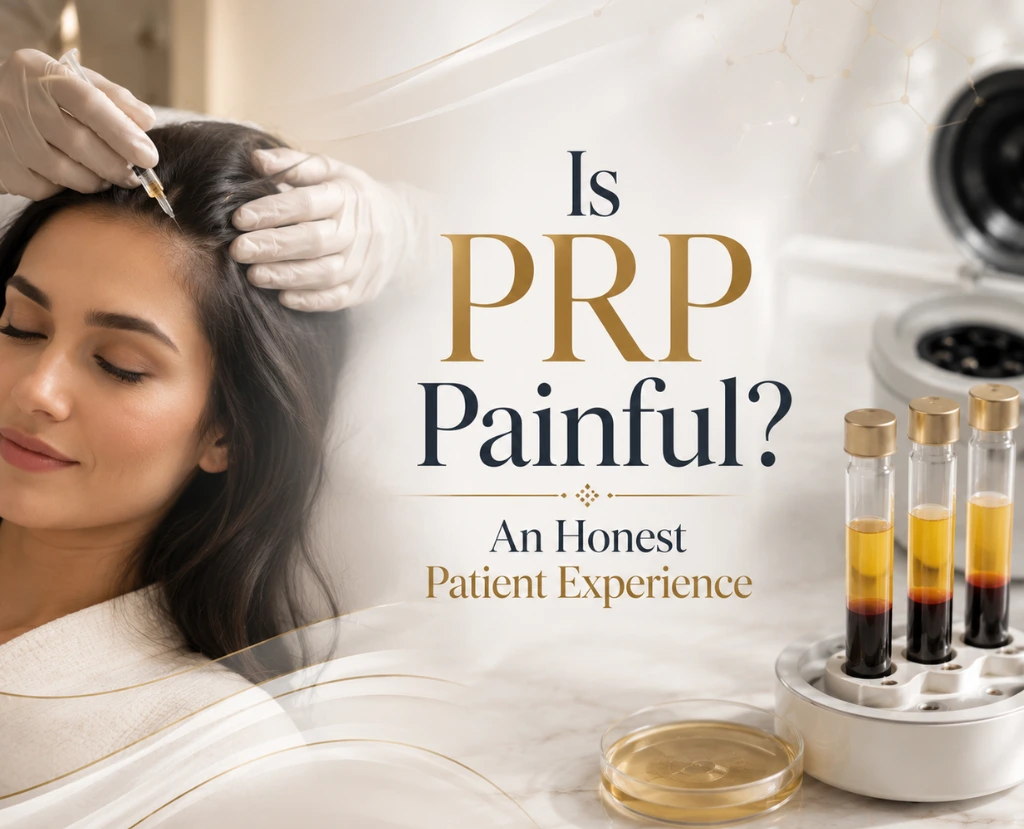
Is PRP Painful? An Honest Patient Experience
It is one of the most frequently asked questions before a first PRP hair treatment in Leeds appointment: how much does it hurt? And the honest answer is that the experience varies — from one person to another, from one clinic’s technique to another, and depending on how well the preparation is handled. What we can give you here is a completely honest, step-by-step account of what PRP hair treatment in Leeds at Cosmeticstar actually involves, so you know exactly what to expect before you walk through the door.
Before the Appointment: Managing Expectations
PRP hair treatment in Leeds involves injections into the scalp. If the word “injection” causes immediate concern, it is worth being specific about what those injections involve — because scalp injections for PRP are meaningfully different from, say, a dental injection or a blood test.
The needles used for PRP scalp injections are very fine — much finer than a standard medical needle — and the volume injected at each point is small. The injections are delivered across the scalp in a pattern appropriate to your specific thinning zone, and the whole injection phase of the appointment typically takes fifteen to twenty minutes.
Step One: The Blood Draw
PRP hair treatment in Leeds begins with a standard venepuncture — drawing blood from a vein in your arm, exactly as you would experience with any blood test. For most people, this is the most familiar part of the procedure and produces minimal discomfort. The blood draw takes one to two minutes.
Step Two: Centrifugation — Nothing to Feel
Your blood sample is placed in a centrifuge and spun to separate the platelet-rich plasma from the red blood cells and other components. This takes approximately ten minutes and happens entirely outside your body. You wait, relax, and feel nothing during this stage.
Step Three: Topical Anaesthetic Application
At Cosmeticstar in Leeds, a topical numbing cream is applied to the scalp before any injections begin. This is left in place for approximately twenty to thirty minutes, during which the surface of the scalp becomes significantly desensitised. The topical anaesthetic meaningfully reduces the sensation of the injections that follow — and is one of the most important factors in how comfortable the experience is.
This is also where clinic technique matters. Clinics that skip the numbing step, use less effective formulations, or do not allow adequate time for the cream to work fully create a more uncomfortable experience than is necessary. At Cosmeticstar, the topical anaesthetic is a non-negotiable part of our PRP hair treatment in Leeds protocol.
Step Four: The Injections — What They Actually Feel Like
Once the topical anaesthetic has taken effect, the PRP is injected into the scalp using a fine needle at multiple points across the treatment zone. The sensation most commonly described by patients at Cosmeticstar in Leeds is a series of small, brief pressure feelings — occasionally a mild sharp sensation at certain points, depending on scalp sensitivity and the specific injection site.
The forehead hairline area and the temples tend to be more sensitive than the crown. The crown itself is typically the most comfortable area to treat. Patients who have experienced significant anxiety about the pain beforehand frequently remark that the actual experience was considerably more manageable than they expected.
It is fair to say that PRP hair treatment in Leeds is not painless. But for the vast majority of patients, the discomfort is mild to moderate, brief, and well within what most people would describe as entirely manageable — particularly with good topical anaesthetic preparation.
Step Five: Immediately After — What to Expect
Immediately following the injections, most patients experience a mild aching or tight sensation across the scalp — similar to the feeling after a firm scalp massage. This typically resolves within a few hours. Some patients notice mild redness or small wheals at the injection sites, which generally settle within twenty-four hours.
There is no significant recovery period. Most patients at Cosmeticstar in Leeds return to their normal activities immediately after a PRP hair treatment session — including going back to work. Exercise and heat (saunas, steam rooms) are best avoided for twenty-four to forty-eight hours, as is washing the hair within the first twelve hours, but these are minor lifestyle adjustments rather than real recovery constraints.
Pain Across Multiple Sessions: Does It Get Easier?
Many patients find that PRP hair treatment in Leeds becomes progressively more comfortable over the course of a treatment plan. Familiarity with the procedure reduces anxiety, which in turn reduces the perception of discomfort. Practitioners also develop a clearer picture of which areas of a particular patient’s scalp are more or less sensitive, allowing the injection approach to be adjusted accordingly.
Managing Discomfort: Tips That Actually Help
- Stay well hydrated before your PRP hair treatment in Leeds appointment — dehydration increases scalp sensitivity.
- Avoid alcohol for twenty-four hours before treatment — it increases tissue sensitivity.
- Let your practitioner know if you are particularly anxious — this allows them to adjust the pace of the procedure and ensure the topical anaesthetic is given maximum time to work.
- Avoid caffeine on the day of treatment if you are sensitive to it — it can increase heart rate and heighten the perception of discomfort.
Treatment Options at Cosmeticstar, Leeds
PRP Hair Treatment Leeds
Our PRP Hair Treatment in Leeds uses your own platelet-rich plasma to deliver a targeted growth factor stimulus directly to thinning follicles. Each session is individually planned around your hair loss pattern and current stage of thinning.
GFC Hair Therapy Leeds
For patients who want a more concentrated growth factor preparation or who have had a limited response to standard PRP, GFC Hair Therapy in Leeds delivers a more refined, higher-potency treatment with a lower inflammatory response and consistently stronger outcomes.
Red Light Therapy Leeds
Used alongside PRP or GFC, how red light therapy supports hair restoration by increasing cellular energy in the scalp, reducing perifollicular inflammation, and improving blood flow to thinning areas — creating a significantly more receptive environment for growth factor treatments to work within.
Exosome Therapy Leeds
For patients who want to deepen their treatment response or who have not achieved the density improvement they were hoping for from PRP or GFC alone, Exosome Therapy in Leeds delivers concentrated regenerative signals directly to follicular tissue at the cellular communication level.
IV Drip Therapy & Vitamin Injections
Nutritional deficiencies in ferritin, vitamin D, and B12 are among the most common silent contributors to hair loss — and they limit how well any scalp treatment can perform. Our IV Drip Therapy in Leeds and Vitamin Injections in Leeds correct these deficiencies at the cellular level, giving your PRP treatment the internal environment it needs to produce its best results.
Ready to Take the Next Step?
If you have been putting off PRP hair treatment in Leeds because of concerns about pain and want an honest conversation about what the experience actually involves, the most useful thing you can do is speak to a clinic that takes the time to assess your specific situation properly before recommending anything. At Cosmeticstar in Leeds, that is exactly what we do. Chat now on WhatsApp — click the link and our team will be with you straight away.
Conclusion
PRP hair treatment in Leeds is not painless — but it is consistently described by patients at Cosmeticstar as much more manageable than they expected. With proper topical anaesthetic preparation, a practitioner who takes technique seriously, and realistic expectations going in, the discomfort involved is brief and very rarely a reason to avoid a treatment that could make a meaningful difference to your hair. If you have been hesitating for this reason, come and talk to us at Cosmeticstar in Leeds. A conversation is free.
Privacy Notice: Your data is handled in accordance with UK GDPR. Please review our Privacy Policy for full details.
Disclaimer: This blog is for educational purposes only. Always consult a qualified professional before beginning any treatment.
Frequently Asked Questions
Q: Is PRP hair treatment in Leeds more painful than a hair transplant?
A: PRP hair treatment in Leeds involves much less discomfort than a hair transplant, which is a surgical procedure performed under local anaesthetic and involves a recovery period of several days to weeks. PRP requires no downtime and produces a much milder post-procedure sensation.
Q: Can I take painkillers before PRP hair treatment in Leeds?
A: You should avoid non-steroidal anti-inflammatory drugs (NSAIDs) such as ibuprofen for several days before PRP hair treatment in Leeds, as these can affect platelet function and reduce the effectiveness of the treatment. Paracetamol is acceptable if needed, but should be discussed with your practitioner at Cosmeticstar before your appointment.
Q: How long does a PRP hair treatment session take in Leeds?
A: A full PRP hair treatment session at Cosmeticstar in Leeds, including blood draw, centrifugation, topical anaesthetic application, and injections, takes approximately sixty to ninety minutes.
Q: Will the scalp be sore after PRP hair treatment in Leeds?
A: Mild aching or tenderness across the scalp is common for a few hours after PRP hair treatment in Leeds. This typically resolves within twenty-four hours and is managed comfortably with paracetamol if needed.
Q: Do I need sedation for PRP hair treatment in Leeds?
A: No — PRP hair treatment in Leeds does not require sedation. Topical numbing cream provides adequate surface anaesthesia for the vast majority of patients. Patients with significant needle phobia should discuss this specifically with our team at Cosmeticstar in Leeds so we can ensure the approach is tailored appropriately.